THE ADVENTURE COLLECTIVE® · Independent discovery and booking for outdoor travel

Rise before dawn and follow a guided ascent up Mount Sinai to reach a summit that greets the sun with sweeping desert views, then return to tour St. Catherine’s Monastery—one of the world’s oldest active monastic sites. This overnight hike pairs physical challenge with historical depth.
Rise before dawn and follow a guided ascent up Mount Sinai to reach a summit that greets the sun with sweeping desert views, then return to tour St. Catherine’s Monastery—one of the world’s oldest active monastic sites. This overnight hike pairs physical challenge with historical depth.
The desert wind sharpens as a small group climbs the stone steps toward the summit of Mount Sinai. Under a vault of stars the trail snakes upward, Bedouin guides setting a steady rhythm; by the time the horizon blanches the first light spills over serrated ridges, turning sandstone to copper and cobalt.
Verified experiences and guided adventures in the surrounding area.
Operated by eu travel · St. Catherine, South Sinai
The desert wind sharpens as a small group climbs the stone steps toward the summit of Mount Sinai. Under a vault of stars the trail snakes upward, Bedouin guides setting a steady rhythm; by the time the horizon blanches the first light spills over serrated ridges, turning sandstone to copper and cobalt.
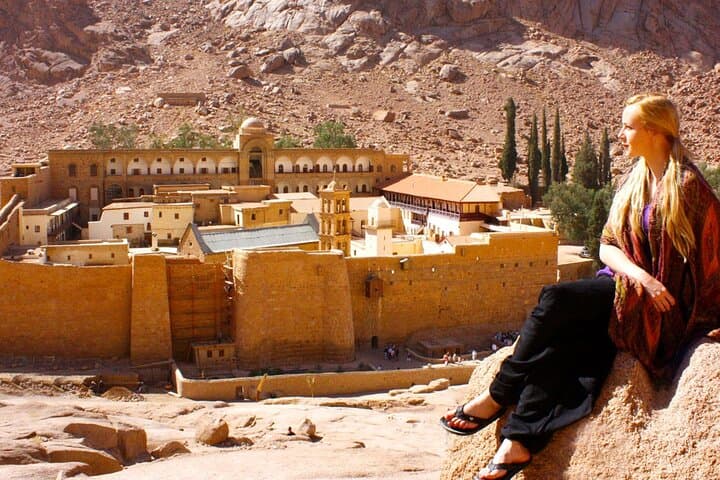
This is a route through deep time: the granite and gneiss of Jebel Musa were shaped by ancient tectonics and long erosion, and human history sits layered atop it. St. Catherine’s Monastery below holds icons and manuscripts from the 6th century CE, an active religious site and UNESCO World Heritage location with a library that predates many modern institutions.
Cultural notes: Bedouin communities still guide and host visitors, and their knowledge of the routes and campsites makes an overnight ascent feasible for hikers with moderate fitness. Expect star-filled skies, cold air near dawn, and a sunrise that pushes across a barren, geometric landscape.
Practical guidance: the overnight approach combines hiking, a short night rest, and a pre-dawn push to the summit—bring layers for a 10–15°C swing between night and sunrise, carry 2–3 liters of water, and plan for uneven stone steps and loose scree on descents. The monastery tour the following day is mostly flat but requires modest walking and respectful attire. Transport from Sharm El-Sheikh typically uses air-conditioned vans; confirm pickup times and carry identification for entrance.
moderate.
10–14 hours (overnight hike + monastery visit).
Moderate cardiovascular fitness and the ability to handle 6–8 hours of hiking with elevation gain at night
You should be comfortable walking 6–8 hours with sustained uphill sections; regular walkers and those who train with stair climbs will find it manageable.
Modest clothing that covers shoulders and knees is required; bring a light scarf for extra coverage inside sacred areas.
Sunrise conditions depend on weather; clear mornings deliver the best color, but guides plan early ascents to maximize the chance of good visibility.
Tours typically include bottled water and a breakfast after descent; bring extra snacks and any personal hydration you prefer.
St. Catherine’s Monastery dates to the 6th century CE and houses an ancient library and icons; the mountain is traditionally linked to the biblical story of Moses.
The Sinai’s fragile desert ecosystem is sensitive to trampling and litter—stick to trails, avoid collecting artifacts, and support local guides who follow sustainable practices.
eu travel operates guided outdoor trips and adventures with an emphasis on safety, stewardship, and memorable experiences.
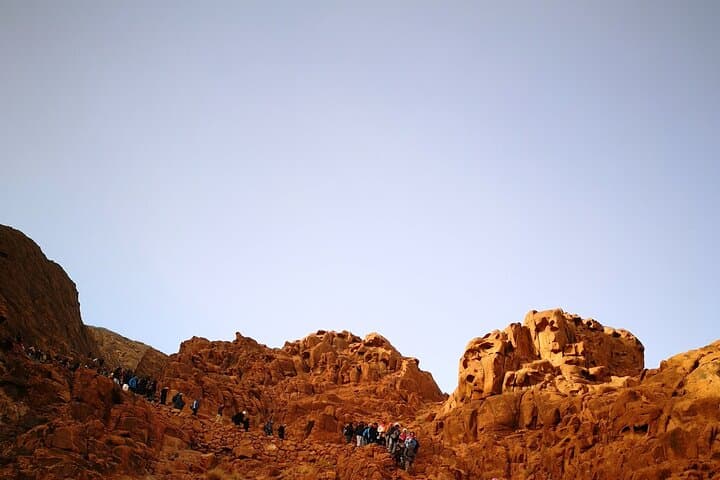
The desert wind sharpens as a small group climbs the stone steps toward the summit of Mount Sinai. Under a vault of stars the trail snakes upward, Bedouin guides setting a steady rhythm; by the time the horizon blanches the first light spills over serrated ridges, turning sandstone to copper and cobalt.
The desert wind sharpens as a small group climbs the stone steps toward the summit of Mount Sinai. Under a vault of stars the trail snakes upward, Bedouin guides setting a steady rhythm; by the time the horizon blanches the first light spills over serrated ridges, turning sandstone to copper and cobalt.
This is a route through deep time: the granite and gneiss of Jebel Musa were shaped by ancient tectonics and long erosion, and human history sits layered atop it. St. Catherine’s Monastery below holds icons and manuscripts from the 6th century CE, an active religious site and UNESCO World Heritage location with a library that predates many modern institutions.
Cultural notes: Bedouin communities still guide and host visitors, and their knowledge of the routes and campsites makes an overnight ascent feasible for hikers with moderate fitness. Expect star-filled skies, cold air near dawn, and a sunrise that pushes across a barren, geometric landscape.
Practical guidance: the overnight approach combines hiking, a short night rest, and a pre-dawn push to the summit—bring layers for a 10–15°C swing between night and sunrise, carry 2–3 liters of water, and plan for uneven stone steps and loose scree on descents. The monastery tour the following day is mostly flat but requires modest walking and respectful attire. Transport from Sharm El-Sheikh typically uses air-conditioned vans; confirm pickup times and carry identification for entrance.