THE ADVENTURE COLLECTIVE® · Independent discovery and booking for outdoor travel

An 18‑day guided climb of Aconcagua follows a careful acclimatization plan from Mendoza through high Andean camps to the 6,962 m summit. Expect long approach days, thin air, and alpine weather — this is a logistical and physiological challenge more than a technical one.
An 18‑day guided climb of Aconcagua follows a careful acclimatization plan from Mendoza through high Andean camps to the 6,962 m summit. Expect long approach days, thin air, and alpine weather — this is a logistical and physiological challenge more than a technical one.
You stand at the Laguna de Horcones trailhead as the valley wind pushes dust across gravel, the peak of Aconcagua hanging like a pale shoulderbone against the sky. Each step northbound feels deliberate: the route moves from scrub and stone to skeletal scree, then into an alpine world where wind and altitude set the pace.
Verified experiences and guided adventures in the surrounding area.
Operated by Клуб 7 Вершин · Mendoza, Mendoza Province
You stand at the Laguna de Horcones trailhead as the valley wind pushes dust across gravel, the peak of Aconcagua hanging like a pale shoulderbone against the sky. Each step northbound feels deliberate: the route moves from scrub and stone to skeletal scree, then into an alpine world where wind and altitude set the pace.
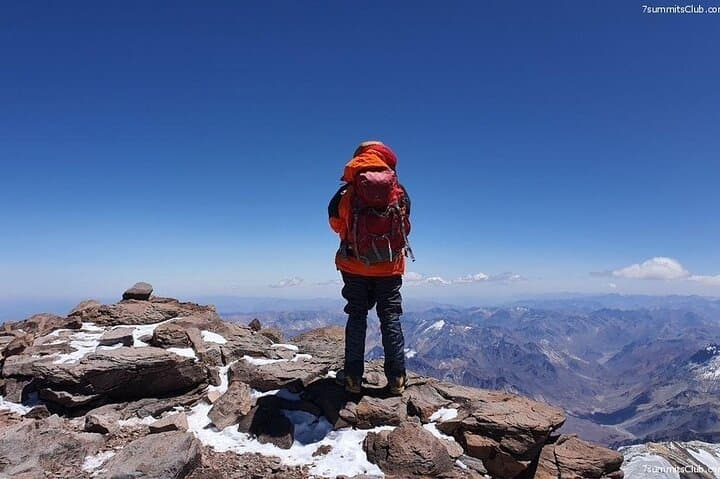
Aconcagua (6,962 m) is the highest peak in the Americas and one of the Seven Summits. Geologically the mountain is a product of the Andean uplift where tectonic collision piled sedimentary and volcanic rock into steep faces; the normal north route is largely non-technical but unforgiving because of exposure and elevation. The region around Mendoza carries ranching and mining history; Penitentes and Puente del Inca are practical waypoints with visible traces of early explorers. The first recorded summit came in 1897 and the mountain now draws international teams during the austral summer window.
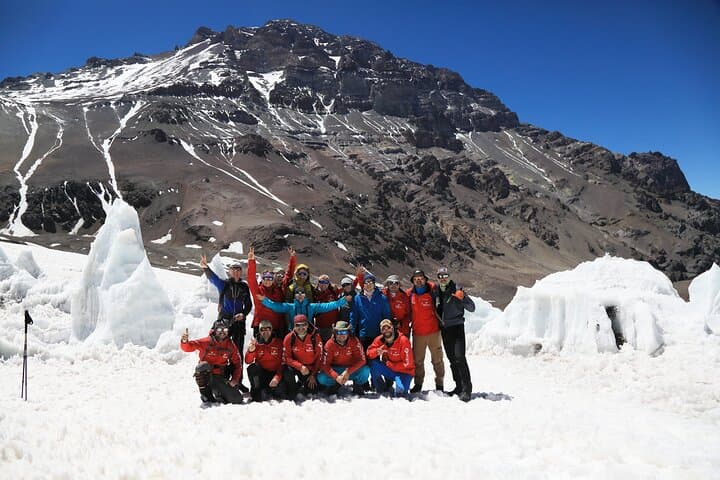
On this 18‑day guided itinerary you follow a measured acclimatization schedule: short approaches to Confluencia (3,300 m), long haul to Plaza de Mulas (4,300 m), and staged camps at Nido de Cóndores (5,500 m) and Cólera (6,000 m) before a summit push. Expect long days, thin air, rocky scree and occasional hard-packed snow fields; mules and base camp services lighten loads but altitude remains the principal obstacle.
Practical advice: keep a slow ascent profile, hydrate, monitor for altitude illness, carry strong sun protection and a -20°C sleeping bag, and plan travel in December–February when routes are most stable. Park permits, guided logistical support, and weather contingency days are essential; the mountain demands respect and preparation, not technical prowess alone.
expert.
18 days.
High aerobic endurance, multi‑day trekking fitness, and prior multi‑day backpacking or high‑altitude experience are strongly recommended.
The normal north route is largely non-technical (no fixed ropes or steep ice), but high‑altitude trekking experience and good fitness are essential; guides manage technical tasks and route safety.
The austral summer (December–February) is the standard season for guided ascents due to more stable weather and base camp services.
Yes — Aconcagua Provincial Park requires permits and registration; guided trips typically handle permits, park fees and mule logistics.
Altitude sickness, high winds, sudden storms, and poor acclimatization are the most common causes of retreat; respect turnaround times and guide recommendations.
Aconcagua’s first recorded ascent was in 1897; the peak has long been a landmark on Andean trade and exploration routes and is now a Seven Summits objective for climbers worldwide.
Aconcagua Provincial Park enforces permit systems, limits on group size and strict waste management; visitors should pack out trash, avoid disturbing fragile alpine vegetation and respect mule lines.
Клуб 7 Вершин operates guided outdoor trips and adventures with an emphasis on safety, stewardship, and memorable experiences.
You stand at the Laguna de Horcones trailhead as the valley wind pushes dust across gravel, the peak of Aconcagua hanging like a pale shoulderbone against the sky. Each step northbound feels deliberate: the route moves from scrub and stone to skeletal scree, then into an alpine world where wind and altitude set the pace.
You stand at the Laguna de Horcones trailhead as the valley wind pushes dust across gravel, the peak of Aconcagua hanging like a pale shoulderbone against the sky. Each step northbound feels deliberate: the route moves from scrub and stone to skeletal scree, then into an alpine world where wind and altitude set the pace.
Aconcagua (6,962 m) is the highest peak in the Americas and one of the Seven Summits. Geologically the mountain is a product of the Andean uplift where tectonic collision piled sedimentary and volcanic rock into steep faces; the normal north route is largely non-technical but unforgiving because of exposure and elevation. The region around Mendoza carries ranching and mining history; Penitentes and Puente del Inca are practical waypoints with visible traces of early explorers. The first recorded summit came in 1897 and the mountain now draws international teams during the austral summer window.
On this 18‑day guided itinerary you follow a measured acclimatization schedule: short approaches to Confluencia (3,300 m), long haul to Plaza de Mulas (4,300 m), and staged camps at Nido de Cóndores (5,500 m) and Cólera (6,000 m) before a summit push. Expect long days, thin air, rocky scree and occasional hard-packed snow fields; mules and base camp services lighten loads but altitude remains the principal obstacle.
Practical advice: keep a slow ascent profile, hydrate, monitor for altitude illness, carry strong sun protection and a -20°C sleeping bag, and plan travel in December–February when routes are most stable. Park permits, guided logistical support, and weather contingency days are essential; the mountain demands respect and preparation, not technical prowess alone.