THE ADVENTURE COLLECTIVE® · Independent discovery and booking for outdoor travel

Glide the Grijalva beneath 1,000-meter cliffs, spot crocodiles and king vultures, and finish in historic Chiapa de Corzo. This five-hour boat-and-viewpoint tour from Tuxtla combines geology, wildlife viewing and easy local culture.
Glide the Grijalva beneath 1,000-meter cliffs, spot crocodiles and king vultures, and finish in historic Chiapa de Corzo. This five-hour boat-and-viewpoint tour from Tuxtla combines geology, wildlife viewing and easy local culture.
You slide down the Grijalva, and the canyon walls rise as if the earth itself decided to stand upright; wind and water argue softly, and birds call from ledges a kilometer above. The boat hums along a river that dares you to keep looking up: caves gape, narrow channels push you forward, and occasional waterfalls thread the cliff face.
Verified experiences and guided adventures in the surrounding area.
Operated by OTISA · Tuxtla Gutiérrez, Chiapas
You slide down the Grijalva, and the canyon walls rise as if the earth itself decided to stand upright; wind and water argue softly, and birds call from ledges a kilometer above. The boat hums along a river that dares you to keep looking up: caves gape, narrow channels push you forward, and occasional waterfalls thread the cliff face.
Geology here is blunt: uplifted limestone and volcanic tuff sculpted by the river over millions of years to form sheer walls up to 1,000 meters high. The canyon became a national park in 1980, protecting not only geology but the cultural crossroads below — Chiapa de Corzo, a colonial settlement founded in 1528 and still home to Mudejar architecture and market life.
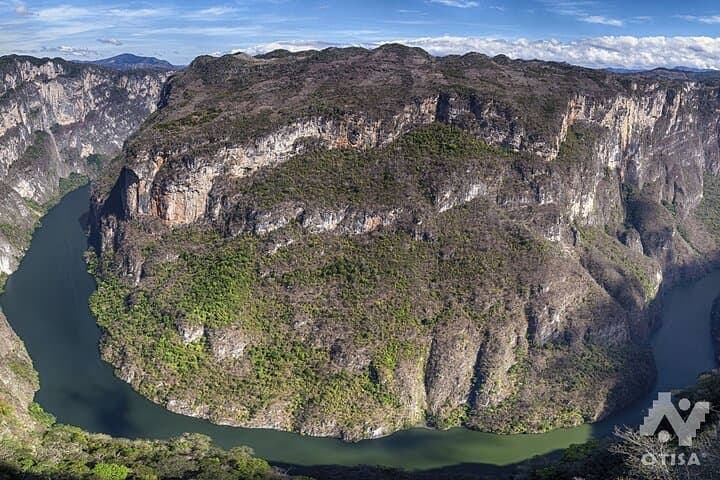
Onboard, guides point out Morelet’s crocodiles basking like misplaced logs and raptors circling thermal drafts. From rim viewpoints (note: closed on Tuesdays) you get a different scale — green ridgelines and the sinuous Grijalva threading through them. The final stretch drops you in Chiapa de Corzo, where La Pila fountain and street food invite a slow walk after the boat’s steady motion.
Practical edge: tours run about five hours including transfers; bring layered rain protection, sunscreen, and binoculars. Boats are shared and generally accessible, but infants must sit on laps and pregnant guests are advised against joining. Morning departures give softer light and calmer water. Respect marked boundaries, avoid feeding wildlife, and carry water — the canyon is dramatic, but the logistics are simple: arrive with ID, follow the guide, and let the river set the pace.
easy.
5 hours.
Minimal fitness required; mostly sitting on a boat and short walks at viewpoints
Viewpoint access is part of the itinerary but note that viewpoints are closed on Tuesdays — confirm your tour date in advance.
The tour listing indicates wheelchair accessibility, but transfer ramps and assistance may vary by operator — request accommodations when booking.
Infants may ride but must sit on an adult’s lap; the operator advises that the activity is not suitable for pregnant guests or children under one year.
The full tour runs about five hours; the boat cruise through the canyon is approximately 90 minutes within that timeframe.
Chiapa de Corzo was founded in 1528 and features La Pila, a unique 16th-century Mudejar fountain; the canyon was designated a national park in 1980.
Boat traffic and litter can strain river habitats; follow guides’ rules, avoid feeding wildlife, and pack out plastics to reduce impact.
OTISA operates guided outdoor trips and adventures with an emphasis on safety, stewardship, and memorable experiences.
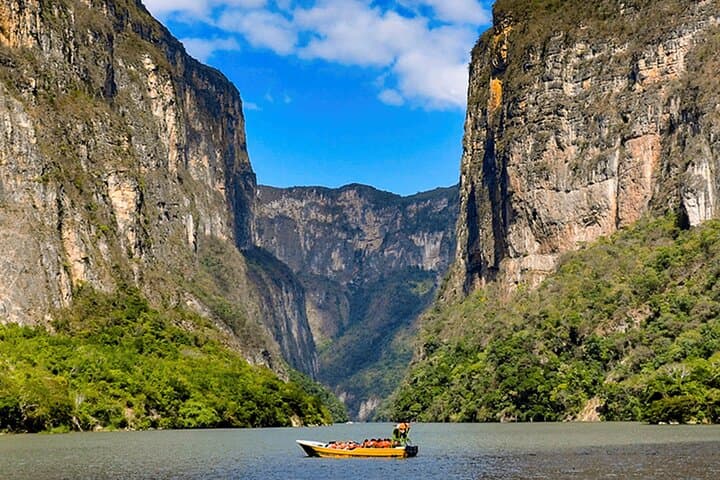


You slide down the Grijalva, and the canyon walls rise as if the earth itself decided to stand upright; wind and water argue softly, and birds call from ledges a kilometer above. The boat hums along a river that dares you to keep looking up: caves gape, narrow channels push you forward, and occasional waterfalls thread the cliff face.
You slide down the Grijalva, and the canyon walls rise as if the earth itself decided to stand upright; wind and water argue softly, and birds call from ledges a kilometer above. The boat hums along a river that dares you to keep looking up: caves gape, narrow channels push you forward, and occasional waterfalls thread the cliff face.
Geology here is blunt: uplifted limestone and volcanic tuff sculpted by the river over millions of years to form sheer walls up to 1,000 meters high. The canyon became a national park in 1980, protecting not only geology but the cultural crossroads below — Chiapa de Corzo, a colonial settlement founded in 1528 and still home to Mudejar architecture and market life.
Onboard, guides point out Morelet’s crocodiles basking like misplaced logs and raptors circling thermal drafts. From rim viewpoints (note: closed on Tuesdays) you get a different scale — green ridgelines and the sinuous Grijalva threading through them. The final stretch drops you in Chiapa de Corzo, where La Pila fountain and street food invite a slow walk after the boat’s steady motion.
Practical edge: tours run about five hours including transfers; bring layered rain protection, sunscreen, and binoculars. Boats are shared and generally accessible, but infants must sit on laps and pregnant guests are advised against joining. Morning departures give softer light and calmer water. Respect marked boundaries, avoid feeding wildlife, and carry water — the canyon is dramatic, but the logistics are simple: arrive with ID, follow the guide, and let the river set the pace.