THE ADVENTURE COLLECTIVE® · Independent discovery and booking for outdoor travel

Board at Cahuaré and glide into Sumidero Canyon, where sheer walls, nesting birds and riverside crocodiles frame a two-hour boat passage. This full-day excursion pairs easy river travel with three cliff-top lookouts and seasonal waterfalls—perfect for travelers who want dramatic geology without technical hiking.
Board at Cahuaré and glide into Sumidero Canyon, where sheer walls, nesting birds and riverside crocodiles frame a two-hour boat passage. This full-day excursion pairs easy river travel with three cliff-top lookouts and seasonal waterfalls—perfect for travelers who want dramatic geology without technical hiking.
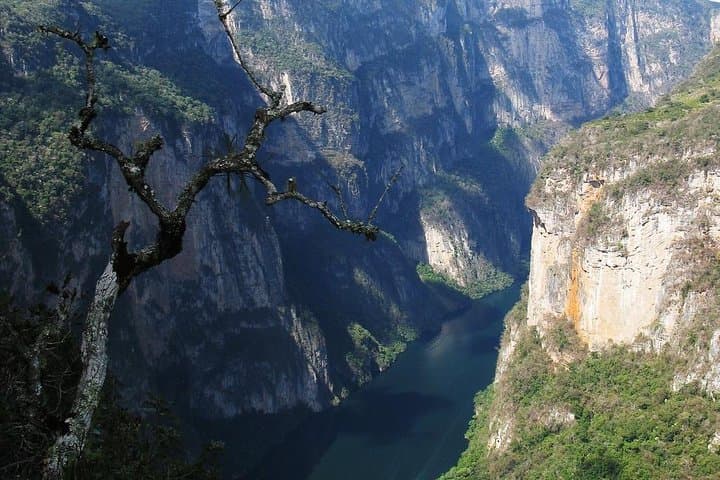
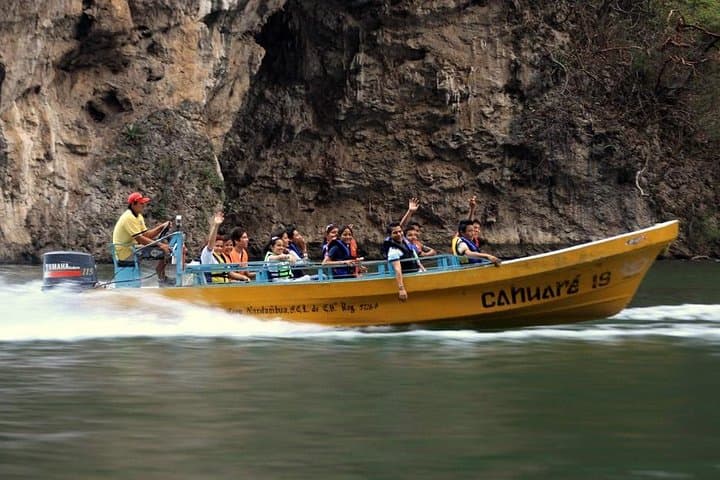
You step onto the varnished wooden boat at Cahuaré as morning light slices between vertical cliffs. The Grijalva River hushes under the hull and cliffs push up on both sides—dark rock streaked with moss and the occasional vertical ribbon of water. Birds wheel above and a guide points out a crocodile basking on a sunlit ledge; the boat eases closer and the canyon answers in echoes.
Verified experiences and guided adventures in the surrounding area.
Operated by Agencia Chiapas Viajes · Chiapa de Corzo, Chiapas
You step onto the varnished wooden boat at Cahuaré as morning light slices between vertical cliffs. The Grijalva River hushes under the hull and cliffs push up on both sides—dark rock streaked with moss and the occasional vertical ribbon of water. Birds wheel above and a guide points out a crocodile basking on a sunlit ledge; the boat eases closer and the canyon answers in echoes.
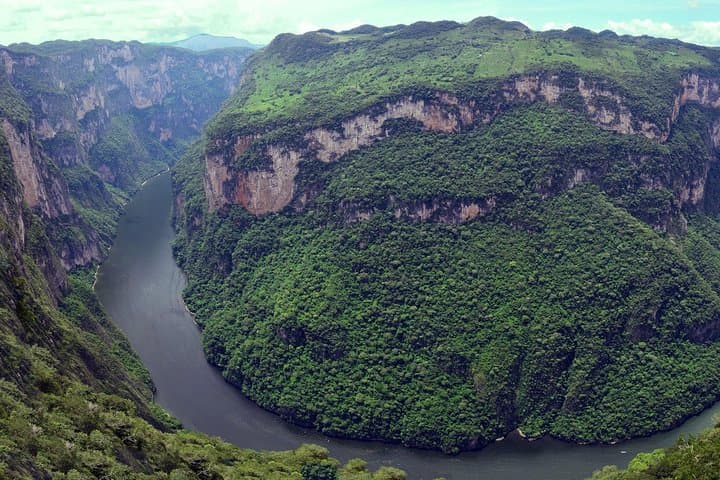
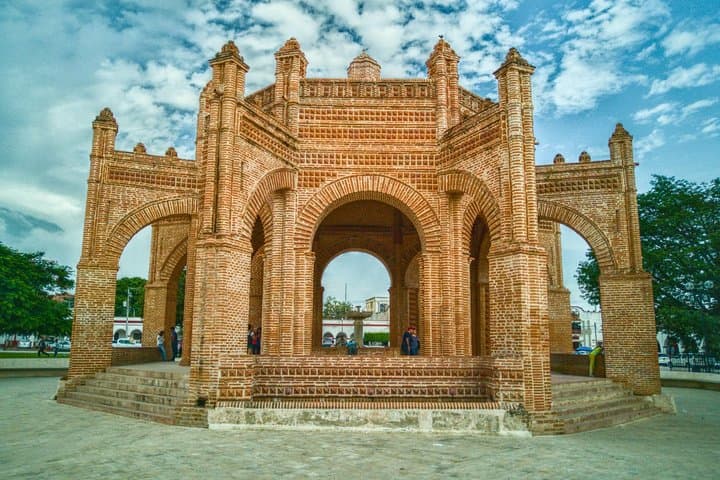
The canyon is the work of water and time: the Grijalva carved deep through limestone and volcanic strata over millions of years to form walls that soar hundreds of meters. Indigenous communities of Chiapas have long stitched human history along the river—Chiapa de Corzo’s Mudéjar fountain and Spanish-era vestiges sit a short drive from the Cahuaré launch. In the rainy season small waterfalls swell; one drips into local lore for its Christmas tree shape, a moss-coated column that fans out like pine when the river runs high.
Expect a two-hour river passage framed by three roadside miradores (lookouts) visited by minibus: wide panoramas, sheer drops, and wind that dares you to stay for the view. The trip is low-impact but practical: life jackets are provided, and shore viewpoints involve stairs and uneven paths. Bring sun protection, a light waterproof layer for spray near waterfalls, and binoculars for birds and reptiles. Photographers will favor mid-morning or late afternoon light.
The tour pairs sensory immediacy with straightforward logistics—an accessible way to read Chiapas’ geology, wildlife, and riverscape in one sustained, river-forged chapter.
moderate.
8 hours.
Light to moderate—mostly seated boat time with short walks and stairs at viewpoints; suitable for most active travelers
The shared boat ride through the canyon runs about two hours; the full excursion including transport and viewpoints lasts roughly eight hours.
It’s most pronounced in the rainy season when water volume highlights the mossy, tree-like formation—during dry months it may be reduced to a trickle.
Yes, life jackets are provided on all trips and should be worn during the river passage.
Transportation options are listed as wheelchair accessible, but access to some miradores involves stairs and uneven terrain—check with the operator for specific needs.
Sumidero Canyon has long been a corridor for human settlement; the Grijalva River carved the gorge and communities like Chiapa de Corzo grew along its banks during pre-Columbian and colonial eras.
Sumidero is a protected national park—stay on marked paths, avoid feeding wildlife, and carry out trash to reduce impacts on sensitive river and cliff habitats.
Agencia Chiapas Viajes operates guided outdoor trips and adventures with an emphasis on safety, stewardship, and memorable experiences.
You step onto the varnished wooden boat at Cahuaré as morning light slices between vertical cliffs. The Grijalva River hushes under the hull and cliffs push up on both sides—dark rock streaked with moss and the occasional vertical ribbon of water. Birds wheel above and a guide points out a crocodile basking on a sunlit ledge; the boat eases closer and the canyon answers in echoes.
You step onto the varnished wooden boat at Cahuaré as morning light slices between vertical cliffs. The Grijalva River hushes under the hull and cliffs push up on both sides—dark rock streaked with moss and the occasional vertical ribbon of water. Birds wheel above and a guide points out a crocodile basking on a sunlit ledge; the boat eases closer and the canyon answers in echoes.
The canyon is the work of water and time: the Grijalva carved deep through limestone and volcanic strata over millions of years to form walls that soar hundreds of meters. Indigenous communities of Chiapas have long stitched human history along the river—Chiapa de Corzo’s Mudéjar fountain and Spanish-era vestiges sit a short drive from the Cahuaré launch. In the rainy season small waterfalls swell; one drips into local lore for its Christmas tree shape, a moss-coated column that fans out like pine when the river runs high.
Expect a two-hour river passage framed by three roadside miradores (lookouts) visited by minibus: wide panoramas, sheer drops, and wind that dares you to stay for the view. The trip is low-impact but practical: life jackets are provided, and shore viewpoints involve stairs and uneven paths. Bring sun protection, a light waterproof layer for spray near waterfalls, and binoculars for birds and reptiles. Photographers will favor mid-morning or late afternoon light.
The tour pairs sensory immediacy with straightforward logistics—an accessible way to read Chiapas’ geology, wildlife, and riverscape in one sustained, river-forged chapter.