THE ADVENTURE COLLECTIVE® · Independent discovery and booking for outdoor travel

Navigate the Grijalva River through soaring limestone cliffs, then stroll the colorful streets of Chiapa de Corzo. This day trip pairs a dramatic motorboat cruise in Sumidero Canyon with a short, flavorful cultural visit to one of Chiapas’ oldest towns.
Navigate the Grijalva River through soaring limestone cliffs, then stroll the colorful streets of Chiapa de Corzo. This day trip pairs a dramatic motorboat cruise in Sumidero Canyon with a short, flavorful cultural visit to one of Chiapas’ oldest towns.
You step off the minibus where the road has already fallen 1,500 meters from the highlands and the canyon opens — a tight corridor of stone and river that funnels light and wind. The Grijalva pushes through, the twin cliffs rising from 100 to nearly 1,000 meters, and a motorboat threads the channel while herons and the occasional crocodile watch from the riverbanks.
Verified experiences and guided adventures in the surrounding area.
Operated by Encuentro T · Chiapa de Corzo, Chiapas
You step off the minibus where the road has already fallen 1,500 meters from the highlands and the canyon opens — a tight corridor of stone and river that funnels light and wind. The Grijalva pushes through, the twin cliffs rising from 100 to nearly 1,000 meters, and a motorboat threads the channel while herons and the occasional crocodile watch from the riverbanks.
Geologically the canyon is a river-cut gorge carved through uplifted volcanic and sedimentary strata; its sheer walls record millions of years of erosion. Culturally the day pivots to Chiapa de Corzo, one of Chiapas’ oldest Spanish settlements, where lacquered crafts, woodcarving and the spicy flavors of pozol and cochito reflect a blending of Indigenous and colonial histories. The town’s Parachico carnival is an important local tradition recognized by UNESCO-linked cultural inventories.
Practically, expect a shared two-hour river cruise, interpretive commentary from guides, and roughly 6–9 hours door-to-door including transfers. The national park enforces closing hours (check pickup times) and lookouts may be closed on Tuesdays. Wear sun protection and bring binoculars for wildlife — spider monkeys, herons and croc species are commonly sighted. Hotel pickup is typical; the operator asks that flights arrive in Tuxtla by early afternoon if you plan same-day transfers. Cash is useful for quick market purchases in Chiapa de Corzo. This trip balances a hands-off, scenic waterway with an on-foot cultural stroll — accessible, vivid, and practical for a day outside the highland towns.
easy.
6–9 hours.
Suitable for general fitness—mostly seated on the boat with light walking in town; no intense exertion required
The shared river cruise portion typically lasts about two hours and includes several wildlife-viewing opportunities and viewpoint stops.
Yes; pickups are offered from Tuxtla and San Cristóbal, though timing differs—confirm your exact pickup and allow extra travel time from San Cristóbal.
Wildlife sightings are common (crocodiles, spider monkeys, herons) but not guaranteed—animals are wild and sightings depend on season and river conditions.
Yes; the cruise is family-friendly and the town walk is short, but inform the operator of mobility needs so they can adjust pickup or itinerary where possible.
Chiapa de Corzo was one of the first Spanish-founded towns in Chiapas and maintains strong Indigenous and colonial craft traditions, visible in its costumes and lacquer work.
Sumidero Canyon is a protected national park; visitors should avoid feeding wildlife, minimize plastic use, and stick to guided routes to reduce erosion and disturbance.
Encuentro T operates guided outdoor trips and adventures with an emphasis on safety, stewardship, and memorable experiences.

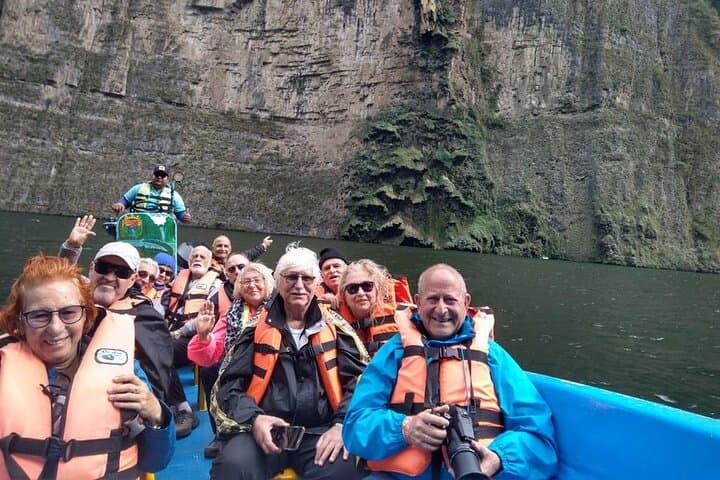


You step off the minibus where the road has already fallen 1,500 meters from the highlands and the canyon opens — a tight corridor of stone and river that funnels light and wind. The Grijalva pushes through, the twin cliffs rising from 100 to nearly 1,000 meters, and a motorboat threads the channel while herons and the occasional crocodile watch from the riverbanks.
You step off the minibus where the road has already fallen 1,500 meters from the highlands and the canyon opens — a tight corridor of stone and river that funnels light and wind. The Grijalva pushes through, the twin cliffs rising from 100 to nearly 1,000 meters, and a motorboat threads the channel while herons and the occasional crocodile watch from the riverbanks.
Geologically the canyon is a river-cut gorge carved through uplifted volcanic and sedimentary strata; its sheer walls record millions of years of erosion. Culturally the day pivots to Chiapa de Corzo, one of Chiapas’ oldest Spanish settlements, where lacquered crafts, woodcarving and the spicy flavors of pozol and cochito reflect a blending of Indigenous and colonial histories. The town’s Parachico carnival is an important local tradition recognized by UNESCO-linked cultural inventories.
Practically, expect a shared two-hour river cruise, interpretive commentary from guides, and roughly 6–9 hours door-to-door including transfers. The national park enforces closing hours (check pickup times) and lookouts may be closed on Tuesdays. Wear sun protection and bring binoculars for wildlife — spider monkeys, herons and croc species are commonly sighted. Hotel pickup is typical; the operator asks that flights arrive in Tuxtla by early afternoon if you plan same-day transfers. Cash is useful for quick market purchases in Chiapa de Corzo. This trip balances a hands-off, scenic waterway with an on-foot cultural stroll — accessible, vivid, and practical for a day outside the highland towns.