THE ADVENTURE COLLECTIVE® · Independent discovery and booking for outdoor travel

Ascend into the high-altitude páramo outside Bogotá for a 3–4 hour guided hike across peat bogs and frailejón fields. This challenging day trip exposes you to unique Andean flora, sharp views, and strict altitude demands—prepare accordingly.
Ascend into the high-altitude páramo outside Bogotá for a 3–4 hour guided hike across peat bogs and frailejón fields. This challenging day trip exposes you to unique Andean flora, sharp views, and strict altitude demands—prepare accordingly.
Wind strips across the plateau and the frailejón plants lean like slow-moving sentries as you climb toward 3,800 meters. Within minutes the city’s noise is a memory; the páramo’s open sky and peat-streaked ground demand attention. You feel the air thin and every step magnifies effort — this is a landscape that tests lungs and steadiness alike.
Verified experiences and guided adventures in the surrounding area.
Operated by Andes EcoTours · Bogotá, Cundinamarca
Wind strips across the plateau and the frailejón plants lean like slow-moving sentries as you climb toward 3,800 meters. Within minutes the city’s noise is a memory; the páramo’s open sky and peat-streaked ground demand attention. You feel the air thin and every step magnifies effort — this is a landscape that tests lungs and steadiness alike.
The Sumapaz páramo is one of the largest high-altitude moorlands in the world, shaped by glacial action and long-term peat accumulation. It supplies critical water to Bogotá and bears cultural ties to the Muisca people who treated these uplands as seasonal grazing and ritual space. Geologically the terrain alternates between wet peat bogs, steep humps of exposed rock, and carved drainage channels; biologically it hosts frailejones, cushion plants, and a handful of specialized birds and mammals found only in the northern Andes.
On this guided, shared trek you’ll cover roughly 400 meters of elevation gain (from ~3,400 to ~3,800 m.a.s.l.) over 3–4 hours of hiking inside a private reserve (the national park proper is not accessed). Expect steep, muddy, and uneven trails; local guides point out fragile bogs and cultural markers while handing out a traditional snack.
Practical guidance: acclimatize in Bogotá a day before, pack breathable insulating layers plus waterproofs, bring high-calorie snacks and at least 2 liters of water, and use trekking poles for stability. Note medical limits: not recommended for pregnant travelers, those with serious cardiovascular or spinal conditions. The day is long overall (8–10 hours including transport), but the hike portion is compact, raw, and unforgettable.
difficult.
8–10 hours total (3–4 hours hiking).
Requires strong cardiovascular fitness and prior high-altitude hiking experience; prepare with aerobic training and stair work.
Hiking in the reserve is about 3–4 hours with roughly 400 m elevation gain; the full outing including transport from Bogotá typically takes 8–10 hours.
No — the route is steep, muddy, and at high altitude; travelers should have good fitness and prior hiking experience at elevation.
Private transportation, a local guide, entrance fee to the private reserve, and a local snack are included; confirm pickup point when booking.
Participants should be between 10 and 72 years old; the trek is not recommended for pregnant travelers or people with serious cardiac or spinal conditions.
The highlands around Sumapaz have long been used by the Muisca for grazing and ceremonial purposes; modern conservation recognizes the páramo’s role in regional water supply.
Páramos are fragile peat ecosystems—stay on established trails, clean boots to avoid moving seeds, and avoid disturbing wet bogs or vegetation.
Andes EcoTours operates guided outdoor trips and adventures with an emphasis on safety, stewardship, and memorable experiences.
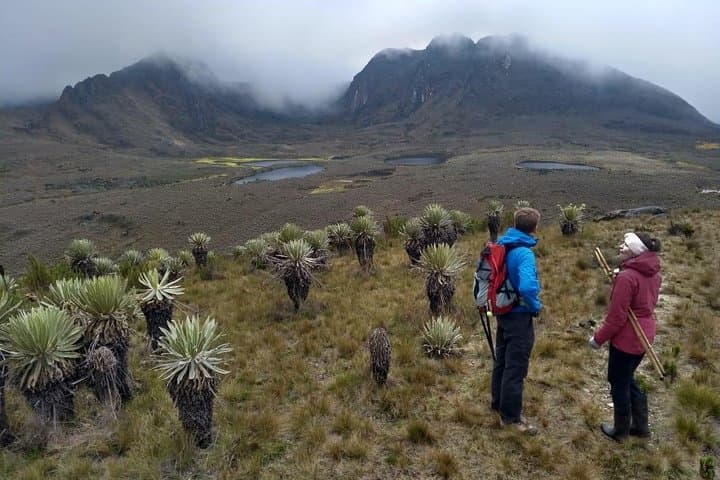
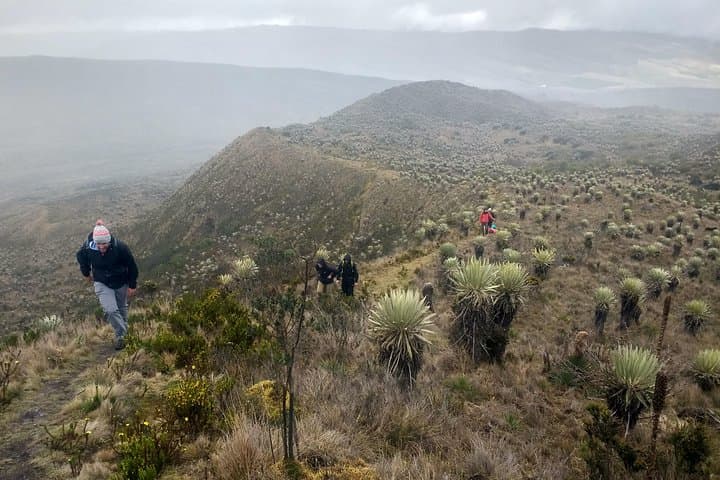
Wind strips across the plateau and the frailejón plants lean like slow-moving sentries as you climb toward 3,800 meters. Within minutes the city’s noise is a memory; the páramo’s open sky and peat-streaked ground demand attention. You feel the air thin and every step magnifies effort — this is a landscape that tests lungs and steadiness alike.
Wind strips across the plateau and the frailejón plants lean like slow-moving sentries as you climb toward 3,800 meters. Within minutes the city’s noise is a memory; the páramo’s open sky and peat-streaked ground demand attention. You feel the air thin and every step magnifies effort — this is a landscape that tests lungs and steadiness alike.
The Sumapaz páramo is one of the largest high-altitude moorlands in the world, shaped by glacial action and long-term peat accumulation. It supplies critical water to Bogotá and bears cultural ties to the Muisca people who treated these uplands as seasonal grazing and ritual space. Geologically the terrain alternates between wet peat bogs, steep humps of exposed rock, and carved drainage channels; biologically it hosts frailejones, cushion plants, and a handful of specialized birds and mammals found only in the northern Andes.
On this guided, shared trek you’ll cover roughly 400 meters of elevation gain (from ~3,400 to ~3,800 m.a.s.l.) over 3–4 hours of hiking inside a private reserve (the national park proper is not accessed). Expect steep, muddy, and uneven trails; local guides point out fragile bogs and cultural markers while handing out a traditional snack.
Practical guidance: acclimatize in Bogotá a day before, pack breathable insulating layers plus waterproofs, bring high-calorie snacks and at least 2 liters of water, and use trekking poles for stability. Note medical limits: not recommended for pregnant travelers, those with serious cardiovascular or spinal conditions. The day is long overall (8–10 hours including transport), but the hike portion is compact, raw, and unforgettable.