THE ADVENTURE COLLECTIVE® · Independent discovery and booking for outdoor travel

Ride the historic Sugarloaf cable car for one of Rio de Janeiro’s most famous panoramas. This accessible, 2-hour experience mixes coastal geology, century-old engineering and sweeping city-to-sea views.
Ride the historic Sugarloaf cable car for one of Rio de Janeiro’s most famous panoramas. This accessible, 2-hour experience mixes coastal geology, century-old engineering and sweeping city-to-sea views.
You step onto the platform at Praia Vermelha as the city unspools below — red-tiled roofs, the sweep of Copacabana and the blue cut of Guanabara Bay. The cable car hums, lifts you over Atlantic Forest clifftops to Morro da Urca, then rises again to the rounded granite of Pão de Açúcar, where the skyline and sea meet.
Verified experiences and guided adventures in the surrounding area.
Operated by Sugar Loaf · Rio de Janeiro, Rio de Janeiro
You step onto the platform at Praia Vermelha as the city unspools below — red-tiled roofs, the sweep of Copacabana and the blue cut of Guanabara Bay. The cable car hums, lifts you over Atlantic Forest clifftops to Morro da Urca, then rises again to the rounded granite of Pão de Açúcar, where the skyline and sea meet.
The Sugarloaf cable car is more than a scenic ride: inaugurated in the early 20th century, it’s among the first cableways in Brazil and remains one of the world’s oldest in operation. The rounded granite towers are part of the coastal Serra do Mar, sculpted by erosion into the steep monoliths that anchor Rio’s dramatic profile. At Morro da Urca the Praça dos Bondes and the Cocuruto exhibit tell the story—bronze sculptures, historic machinery and rotating displays that trace the cable car’s century-long role in city life.
Practical guidance: plan two hours for a relaxed visit; the typical ascent reaches about 396 m at Sugarloaf and includes multiple segments with transfer at Morro da Urca. Tickets are mobile-friendly and valid within seven days of the chosen date; carry photo ID for check-in. The site is largely wheelchair accessible, with ramps and adapted facilities, and restaurants and small shops provide mid-visit options. Weather can force temporary closures—check forecasts and arrive early for late-afternoon light. For photos, position yourself on the seaward side for unobstructed views of Cristo and the bay; for quieter moments, linger at the lower Urca terraces where locals gather. Hydrate, wear sun protection, and expect short, steep paved walks on-site.
easy.
1–2 hours.
Minimal fitness required; short paved walks and some steps at viewpoints.
Yes—mobile or paper tickets are accepted; you must present a valid ID at redemption.
Yes—the park and transportation options include ramps, adapted toilets and lift platforms for reduced mobility access.
Most visitors spend about 1–2 hours including ascent, viewpoints and a quick stop for refreshments; you can linger longer at the terraces.
Service animals are allowed; other pets may not be permitted—check current operator policies before bringing animals.
The Sugarloaf cable car opened in the early 20th century and is one of Brazil’s earliest cableways, with exhibits at Morro da Urca highlighting its century-plus history.
The site sits adjacent to protected Atlantic Forest patches; visitors are asked to stay on designated paths, avoid feeding wildlife and support local conservation initiatives.
Sugar Loaf operates guided outdoor trips and adventures with an emphasis on safety, stewardship, and memorable experiences.


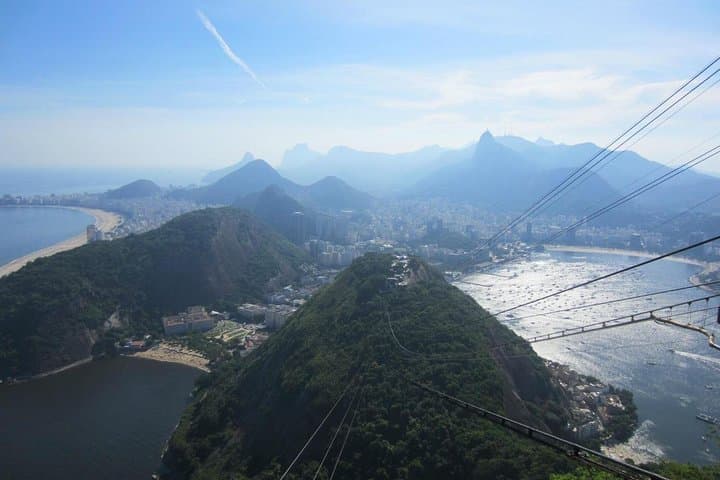

You step onto the platform at Praia Vermelha as the city unspools below — red-tiled roofs, the sweep of Copacabana and the blue cut of Guanabara Bay. The cable car hums, lifts you over Atlantic Forest clifftops to Morro da Urca, then rises again to the rounded granite of Pão de Açúcar, where the skyline and sea meet.
You step onto the platform at Praia Vermelha as the city unspools below — red-tiled roofs, the sweep of Copacabana and the blue cut of Guanabara Bay. The cable car hums, lifts you over Atlantic Forest clifftops to Morro da Urca, then rises again to the rounded granite of Pão de Açúcar, where the skyline and sea meet.
The Sugarloaf cable car is more than a scenic ride: inaugurated in the early 20th century, it’s among the first cableways in Brazil and remains one of the world’s oldest in operation. The rounded granite towers are part of the coastal Serra do Mar, sculpted by erosion into the steep monoliths that anchor Rio’s dramatic profile. At Morro da Urca the Praça dos Bondes and the Cocuruto exhibit tell the story—bronze sculptures, historic machinery and rotating displays that trace the cable car’s century-long role in city life.
Practical guidance: plan two hours for a relaxed visit; the typical ascent reaches about 396 m at Sugarloaf and includes multiple segments with transfer at Morro da Urca. Tickets are mobile-friendly and valid within seven days of the chosen date; carry photo ID for check-in. The site is largely wheelchair accessible, with ramps and adapted facilities, and restaurants and small shops provide mid-visit options. Weather can force temporary closures—check forecasts and arrive early for late-afternoon light. For photos, position yourself on the seaward side for unobstructed views of Cristo and the bay; for quieter moments, linger at the lower Urca terraces where locals gather. Hydrate, wear sun protection, and expect short, steep paved walks on-site.