THE ADVENTURE COLLECTIVE® · Independent discovery and booking for outdoor travel

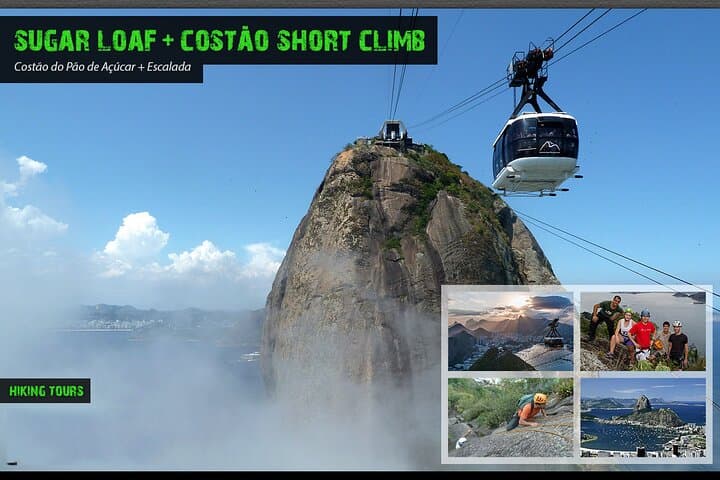
Short, steep and spectacular: the Costão Trail climbs to Sugar Loaf’s summit via a beginner-friendly scramble and delivers sweeping views of Copacabana, Guanabara Bay and Cristo Redentor. Read on for what to expect and how to prepare.
Short, steep and spectacular: the Costão Trail climbs to Sugar Loaf’s summit via a beginner-friendly scramble and delivers sweeping views of Copacabana, Guanabara Bay and Cristo Redentor. Read on for what to expect and how to prepare.
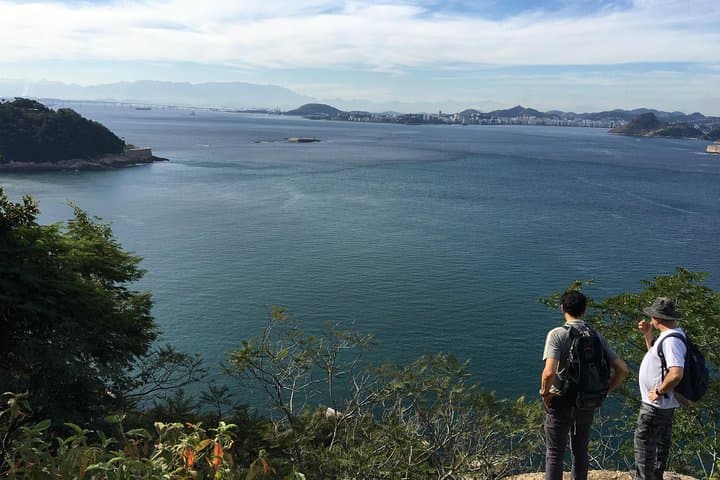
You start before sunrise in Urca, the salt air sharp and the city still yawning behind you. The trail climbs through Atlantic Forest scrub, granite slabs warm underfoot, and a short, exposed scramble that asks you to move deliberately. When you clear the last outcrop the bay opens: Copacabana curving like a painted ribbon, Guanabara’s water bright with small ferries, and Christ the Redeemer looking down from Corcovado.
Verified experiences and guided adventures in the surrounding area.
Operated by RioXtreme · Rio de Janeiro, Rio de Janeiro
You start before sunrise in Urca, the salt air sharp and the city still yawning behind you. The trail climbs through Atlantic Forest scrub, granite slabs warm underfoot, and a short, exposed scramble that asks you to move deliberately. When you clear the last outcrop the bay opens: Copacabana curving like a painted ribbon, Guanabara’s water bright with small ferries, and Christ the Redeemer looking down from Corcovado.
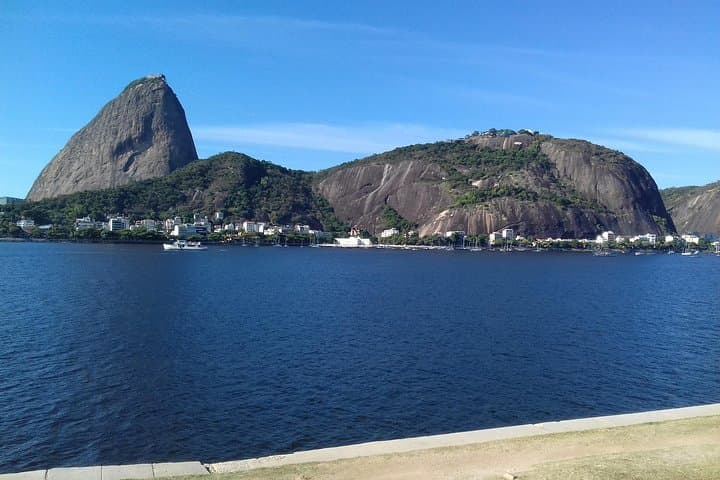
Sugar Loaf (Pão de Açúcar) is a geological island of granite and quartz monzonite pushed up over millions of years and later set into Rio’s iconography. The site has a long human story—Urca grew as a port neighbourhood while the cable car that links the peaks has been carrying visitors since 1912. Local guides often weave geology and urban history into a compact narrative as you climb.
The Costão Trail is short but steep: roughly 4 km (2.5 miles) round trip with about 400 m (1,312 ft) of elevation gain; plan 2–3 hours for the ascent and technical scramble plus about 1–2 hours for descent and cable-car transfer. A 15 m (49 ft) rock-climb section requires basic scrambling and is beginner-friendly with guide-supplied safety gear.
Practical: start early to avoid heat and crowds, bring 1.5 L of water, and expect sun, wind on the ridge, and occasional mosquito patches in shaded sections. Guides include climbing equipment and a cable-car descent to Morro da Urca; after 17:00 the trail exit may require the paid cable car. This is a high-reward, compact mountain experience — intense, accessible, and unmistakably Rio.
challenging.
4 hours.
Requires a high level of fitness—steep sustained climbing and a short exposed scramble; good cardiovascular condition and leg strength recommended.
No prior climbing experience is required—the short 15 m scramble is guided with helmets, harnesses and rope; basic comfort with exposed moves is helpful.
The tour includes a cable-car descent to Morro da Urca as stated, but after 17:00 the trail exit may force use of the paid public cable car—bring cash for extras.
This is a physically demanding outing with steep sections and 400 m of elevation gain; you should be comfortable on sustained uphill hikes and short exposed scrambles.
Operators request traveler weight and may restrict participation for severe back, heart, or mobility problems; check booking questions and disclose any special requirements.
Sugar Loaf’s granite peaks are ancient intrusive rocks; the Urca neighborhood grew as a port quarter and the cable car has linked the peaks since 1912, shaping Rio’s tourist history.
Sugar Loaf is managed as a natural monument—stay on marked trails, pack out trash, and avoid feeding wildlife to protect sensitive Atlantic Forest remnants.
RioXtreme operates guided outdoor trips and adventures with an emphasis on safety, stewardship, and memorable experiences.
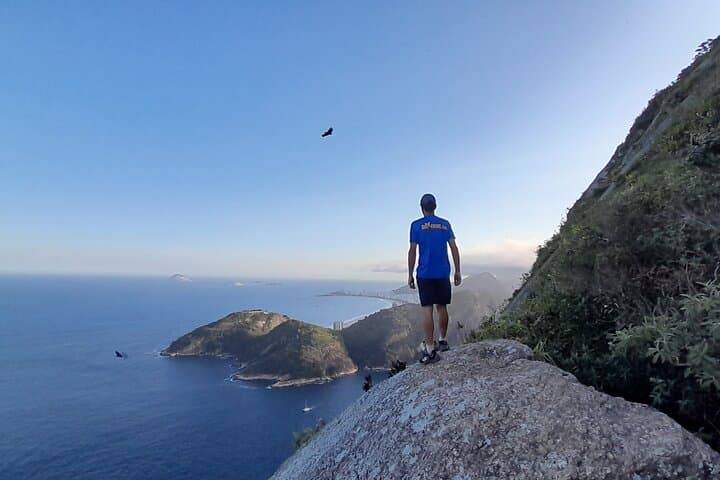
You start before sunrise in Urca, the salt air sharp and the city still yawning behind you. The trail climbs through Atlantic Forest scrub, granite slabs warm underfoot, and a short, exposed scramble that asks you to move deliberately. When you clear the last outcrop the bay opens: Copacabana curving like a painted ribbon, Guanabara’s water bright with small ferries, and Christ the Redeemer looking down from Corcovado.
You start before sunrise in Urca, the salt air sharp and the city still yawning behind you. The trail climbs through Atlantic Forest scrub, granite slabs warm underfoot, and a short, exposed scramble that asks you to move deliberately. When you clear the last outcrop the bay opens: Copacabana curving like a painted ribbon, Guanabara’s water bright with small ferries, and Christ the Redeemer looking down from Corcovado.
Sugar Loaf (Pão de Açúcar) is a geological island of granite and quartz monzonite pushed up over millions of years and later set into Rio’s iconography. The site has a long human story—Urca grew as a port neighbourhood while the cable car that links the peaks has been carrying visitors since 1912. Local guides often weave geology and urban history into a compact narrative as you climb.
The Costão Trail is short but steep: roughly 4 km (2.5 miles) round trip with about 400 m (1,312 ft) of elevation gain; plan 2–3 hours for the ascent and technical scramble plus about 1–2 hours for descent and cable-car transfer. A 15 m (49 ft) rock-climb section requires basic scrambling and is beginner-friendly with guide-supplied safety gear.
Practical: start early to avoid heat and crowds, bring 1.5 L of water, and expect sun, wind on the ridge, and occasional mosquito patches in shaded sections. Guides include climbing equipment and a cable-car descent to Morro da Urca; after 17:00 the trail exit may require the paid cable car. This is a high-reward, compact mountain experience — intense, accessible, and unmistakably Rio.