THE ADVENTURE COLLECTIVE® · Independent discovery and booking for outdoor travel

Ride the historic cable car up Sugar Loaf for 395 m views over Copacabana, Guanabara Bay and Corcovado. This half-day tour pairs panoramic overlooks with a brief city drive and hotel transfers.
Ride the historic cable car up Sugar Loaf for 395 m views over Copacabana, Guanabara Bay and Corcovado. This half-day tour pairs panoramic overlooks with a brief city drive and hotel transfers.
A morning on Sugar Loaf begins with the city unfolding beneath you—Copacabana’s curve, the green spine of Tijuca, and the sweep of Guanabara Bay. The cable car eases up to Morro da Urca at 215 m, then climbs again to Sugar Loaf’s summit at 395 m; wind and sunlight trade places on the skin as the city opens like a map.
Verified experiences and guided adventures in the surrounding area.
Operated by Gray Line Brazil · Rio de Janeiro, Rio de Janeiro
A morning on Sugar Loaf begins with the city unfolding beneath you—Copacabana’s curve, the green spine of Tijuca, and the sweep of Guanabara Bay. The cable car eases up to Morro da Urca at 215 m, then climbs again to Sugar Loaf’s summit at 395 m; wind and sunlight trade places on the skin as the city opens like a map.
Geology here reads like a slow-motion story: sheer granite and quartzite born in deep time, rounded by weather into the vertical faces you see. Portuguese sailors named the peak for its conical shape in the 16th century; the first cable car dates to the early 20th century and helped turn this strategic lookout into a public attraction. Culture arrives in the form of Carioca life—beach rhythms below, samba’s drumbeat in distant neighborhoods, and vendors selling fresh fruit at the base.
Expect short walks between viewpoints, paved overlook plazas, and crowds during peak hours. The best light is early when the bay gleams and the air is cooler; late afternoons bring dramatic shadows over Corcovado and the bridges. Photographers favor the view toward Copacabana and Niterói; birdwatchers will find seabirds wheeling over the water.
Practical note: this is an easy, largely accessible outing but involves stairs and queues at busy times. Bring sun protection, a light layer for wind at the top, and cash if you’re skipping prebooked cable-car tickets. Plan 3–4 hours for hotel transfer, city stops, and time on both legs of the cable car—arrive early to make the most of the panorama.
easy.
3–4 hours.
Suitable for most fitness levels; short walks and stairs but no sustained hiking
You can buy tickets on-site, but pre-purchasing saves time—if your booking excludes the cable car, bring cash to pay the guide and join the group voucher.
Main plazas and many lookout areas are paved; however some vantage points involve steps—check with the operator for specific accessibility requirements.
The itinerary allows roughly 40 minutes at the summit and shorter time at Morro da Urca; total outing including transfers is about 3–4 hours.
Yes—during Carnival (Friday–Tuesday) parts of the city tour may be shortened or omitted due to road closures and heavy traffic; confirm your pickup time on reconfirmation.
Sugar Loaf has been a navigational landmark since the 16th century; the first cable car opened in the early 1900s, transforming a military lookout into a public attraction.
High visitor numbers can stress vegetation and shorebird habitat; stick to paths, avoid littering and support local operators that follow responsible waste and wildlife practices.
Gray Line Brazil operates guided outdoor trips and adventures with an emphasis on safety, stewardship, and memorable experiences.

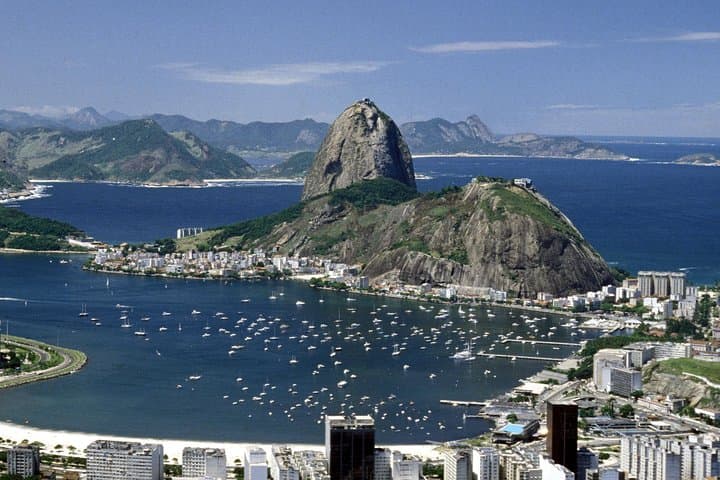


A morning on Sugar Loaf begins with the city unfolding beneath you—Copacabana’s curve, the green spine of Tijuca, and the sweep of Guanabara Bay. The cable car eases up to Morro da Urca at 215 m, then climbs again to Sugar Loaf’s summit at 395 m; wind and sunlight trade places on the skin as the city opens like a map.
A morning on Sugar Loaf begins with the city unfolding beneath you—Copacabana’s curve, the green spine of Tijuca, and the sweep of Guanabara Bay. The cable car eases up to Morro da Urca at 215 m, then climbs again to Sugar Loaf’s summit at 395 m; wind and sunlight trade places on the skin as the city opens like a map.
Geology here reads like a slow-motion story: sheer granite and quartzite born in deep time, rounded by weather into the vertical faces you see. Portuguese sailors named the peak for its conical shape in the 16th century; the first cable car dates to the early 20th century and helped turn this strategic lookout into a public attraction. Culture arrives in the form of Carioca life—beach rhythms below, samba’s drumbeat in distant neighborhoods, and vendors selling fresh fruit at the base.
Expect short walks between viewpoints, paved overlook plazas, and crowds during peak hours. The best light is early when the bay gleams and the air is cooler; late afternoons bring dramatic shadows over Corcovado and the bridges. Photographers favor the view toward Copacabana and Niterói; birdwatchers will find seabirds wheeling over the water.
Practical note: this is an easy, largely accessible outing but involves stairs and queues at busy times. Bring sun protection, a light layer for wind at the top, and cash if you’re skipping prebooked cable-car tickets. Plan 3–4 hours for hotel transfer, city stops, and time on both legs of the cable car—arrive early to make the most of the panorama.