THE ADVENTURE COLLECTIVE® · Independent discovery and booking for outdoor travel

Walk the ruined forum of ancient Sufetula, then taste countryside lamb roasted over coals — a full-day pairing of archaeology and local cuisine. This day tour from Sousse combines Roman temples, a basilica, and a rustic outdoor lunch.
Walk the ruined forum of ancient Sufetula, then taste countryside lamb roasted over coals — a full-day pairing of archaeology and local cuisine. This day tour from Sousse combines Roman temples, a basilica, and a rustic outdoor lunch.
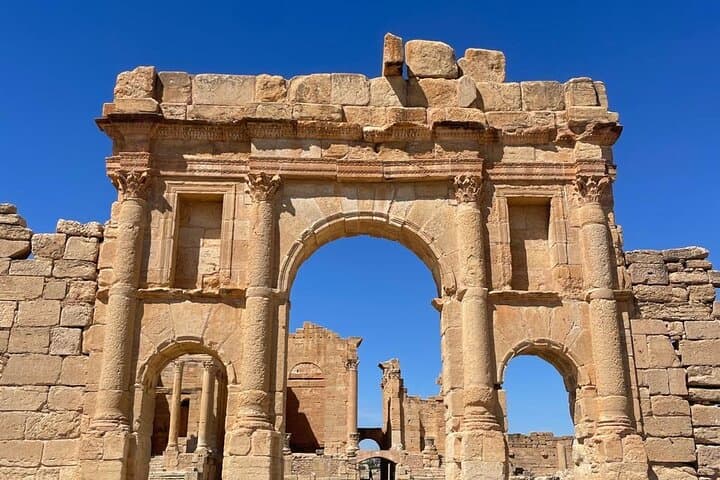
Dusty sunlight lays itself across cracked stones as you step into Sufetula — the Roman city that modern visitors call Sbeitla. Columns rise like deliberate punctuation against a wide Tunisian sky, and the air carries the scent of wood smoke from a nearby barbecue where lamb slow-roasts over an open flame.
Verified experiences and guided adventures in the surrounding area.
Operated by Tunez-Monumental · Sbeitla, Kasserine Governorate
Dusty sunlight lays itself across cracked stones as you step into Sufetula — the Roman city that modern visitors call Sbeitla. Columns rise like deliberate punctuation against a wide Tunisian sky, and the air carries the scent of wood smoke from a nearby barbecue where lamb slow-roasts over an open flame.
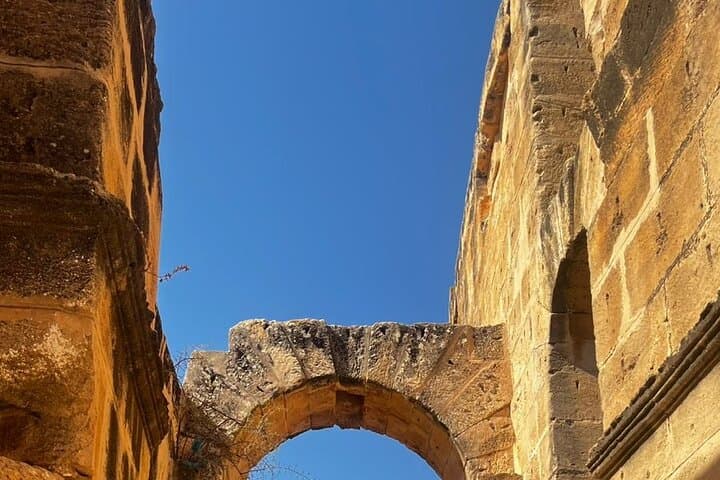
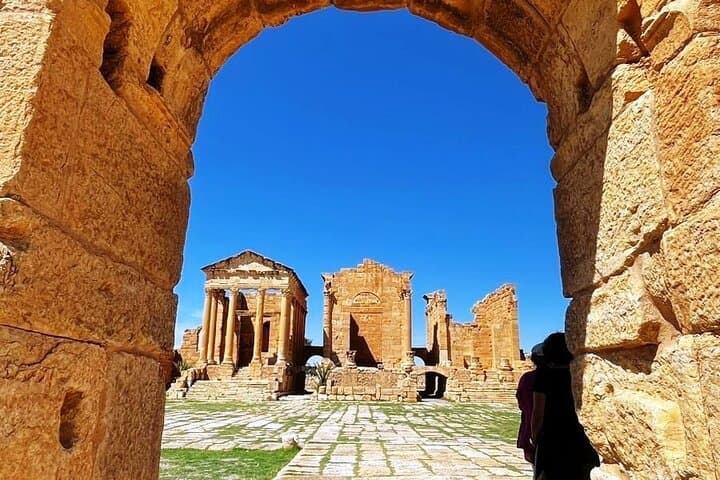
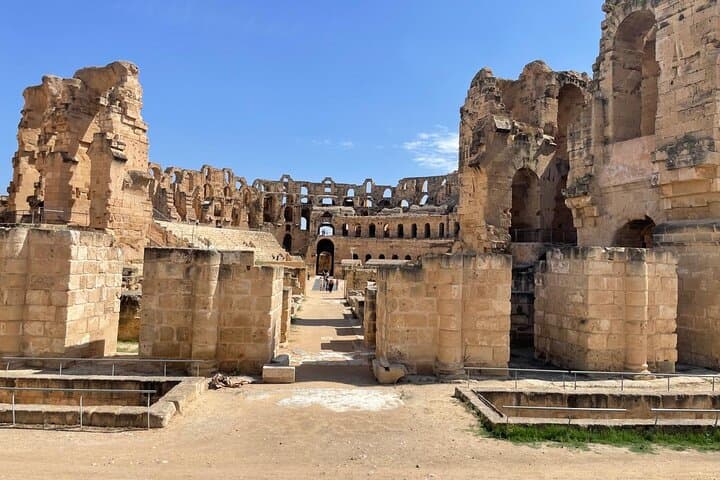
Sbeitla’s three temples to Jupiter, Juno and Minerva frame a broad forum that once hosted merchants, magistrates and local citizens. The basilica’s battered arches point to the region’s later Christian phase, while the surrounding plain tells a quieter geological story: low limestone ridges and red-brown steppe soil folded at the edge of the Tunisian Dorsal of the Atlas Mountains.
Local culture comes through in simple, excellent food — a countryside lunch of lamb grilled on embers, often served amid olive trees and open views, and in small market towns where traditional breads and olives are still made by hand.
Practical guidance: this is a full-day outing (about 10–12 hours) often run from Sousse; expect long stretches of sun and uneven paving at the ruins. Walk slowly through the forum to read inscriptions and let the scale register; bring 2–3 liters of water, sun protection, sturdy shoes, and cash for small purchases. Morning is best for light and fewer visitors; late afternoon delivers warmer tones on the stones but stronger heat. Respect barriers at fragile structures and follow your guide’s route to limit erosion.
For history-minded travelers who favor hands-on, low-impact exploration, Sufetula pairs archaeology with rural flavors in a single, memorable day.
easy.
10–12 hours.
Suitable for most fitness levels; involves moderate walking on uneven surfaces and a long day outdoors.
Yes — the itinerary includes a countryside lamb barbecue lunch as described in the tour inclusions.
The typical stop at the Sbeitla ruins lasts about two hours, with time allocated for guided interpretation and independent exploration.
The archaeological site has uneven surfaces and steps; some areas may be difficult to access for those with mobility limitations—contact the operator about accommodations.
The tour includes lamb barbecue; notify the operator at booking for alternative meal options when possible, but options may be limited in rural settings.
Sufetula was a prosperous Roman municipium notable for its well-preserved temples and basilica; the site records both pagan and early Christian phases.
The site faces wear from foot traffic and weathering; visitors should stick to paths and avoid touching fragile stone to reduce erosion.
Tunez-Monumental operates guided outdoor trips and adventures with an emphasis on safety, stewardship, and memorable experiences.
Dusty sunlight lays itself across cracked stones as you step into Sufetula — the Roman city that modern visitors call Sbeitla. Columns rise like deliberate punctuation against a wide Tunisian sky, and the air carries the scent of wood smoke from a nearby barbecue where lamb slow-roasts over an open flame.
Dusty sunlight lays itself across cracked stones as you step into Sufetula — the Roman city that modern visitors call Sbeitla. Columns rise like deliberate punctuation against a wide Tunisian sky, and the air carries the scent of wood smoke from a nearby barbecue where lamb slow-roasts over an open flame.
Sbeitla’s three temples to Jupiter, Juno and Minerva frame a broad forum that once hosted merchants, magistrates and local citizens. The basilica’s battered arches point to the region’s later Christian phase, while the surrounding plain tells a quieter geological story: low limestone ridges and red-brown steppe soil folded at the edge of the Tunisian Dorsal of the Atlas Mountains.
Local culture comes through in simple, excellent food — a countryside lunch of lamb grilled on embers, often served amid olive trees and open views, and in small market towns where traditional breads and olives are still made by hand.
Practical guidance: this is a full-day outing (about 10–12 hours) often run from Sousse; expect long stretches of sun and uneven paving at the ruins. Walk slowly through the forum to read inscriptions and let the scale register; bring 2–3 liters of water, sun protection, sturdy shoes, and cash for small purchases. Morning is best for light and fewer visitors; late afternoon delivers warmer tones on the stones but stronger heat. Respect barriers at fragile structures and follow your guide’s route to limit erosion.
For history-minded travelers who favor hands-on, low-impact exploration, Sufetula pairs archaeology with rural flavors in a single, memorable day.