THE ADVENTURE COLLECTIVE® · Independent discovery and booking for outdoor travel

Experience Stuðlagil’s towering basalt columns and the Jökulsá river’s unforgettable color on a private five-hour tour from East Iceland. Short walks, dramatic geology, and a stop at Rjúkandi waterfall make this an efficient, photogenic outing for moderately fit travelers.
Experience Stuðlagil’s towering basalt columns and the Jökulsá river’s unforgettable color on a private five-hour tour from East Iceland. Short walks, dramatic geology, and a stop at Rjúkandi waterfall make this an efficient, photogenic outing for moderately fit travelers.
The road bends through green pastures and low mountains, and suddenly the Jökulsá river slips into a deep ribbon of blue — that first glimpse of Stuðlagil catches the breath. Guides park on the quiet lane; a short, easy path drops to a ledge where basalt columns rise like a ruined amphitheater and the river dares you to step closer for a better frame.
Verified experiences and guided adventures in the surrounding area.
Operated by Tanni Travel · Egilsstaðir, East Iceland
The road bends through green pastures and low mountains, and suddenly the Jökulsá river slips into a deep ribbon of blue — that first glimpse of Stuðlagil catches the breath. Guides park on the quiet lane; a short, easy path drops to a ledge where basalt columns rise like a ruined amphitheater and the river dares you to step closer for a better frame.
Geology here is literal storytelling: vertical hexagonal basalt columns formed by slow-cooling lava after eruptions thousands of years ago. The Jökuldalur valley has long been a travel corridor between Iceland’s east fjords and the interior, and the canyon’s recent prominence owes as much to changing river levels as to photographers spreading the word.
Cultural traces are sparse but present — sheep-fenced fields, small farms, and the practical infrastructure of hydro projects upriver that alter flow and color seasonally, turning the water from striking turquoise in early summer to a steel gray during reservoir releases.
Expect 2–3 hours at Stuðlagil on a typical private five-hour tour that also stops at Rjúkandi waterfall. Terrain is mostly short, well-graded trails and ledges; footing can be wet and uneven. Bring waterproof boots, windproof layers, and a camera with extra batteries. Time visits for morning or late afternoon light and check upstream reservoir notices — water clarity shifts with releases.
This tour balances dramatic geology with simple logistics: private transport, an English-speaking guide, and accessible short walks make it a compact, high-reward outing for anyone with moderate fitness and a taste for bold river landscapes.
moderate.
5 hours.
Good for travelers with moderate fitness — short walking sections, some uneven ground and low gradients.
The walk from the parking area to viewpoint and along the gorge is easy and usually totals about 30–45 minutes round-trip, but tours commonly spend 2–3 hours enjoying multiple viewpoints.
Yes — the trails are short and not steep, but watch for wet, uneven surfaces; those with mobility issues should notify the operator in advance.
Early summer, after glacial melt but before reservoir releases, typically yields the clearest turquoise; late summer releases can make the river appear gray.
No formal entrance fees for Stuðlagil, but local parking and access are managed — follow guide instructions and respect private land boundaries.
The Jökuldalur corridor has long connected eastern settlements; the basalt columns are remnants of volcanic activity from Iceland’s geologically active past.
Hydropower development upstream has altered flow regimes; stick to marked paths, pack out waste, and avoid disturbing fragile riverbanks to limit impact.
Tanni Travel operates guided outdoor trips and adventures with an emphasis on safety, stewardship, and memorable experiences.
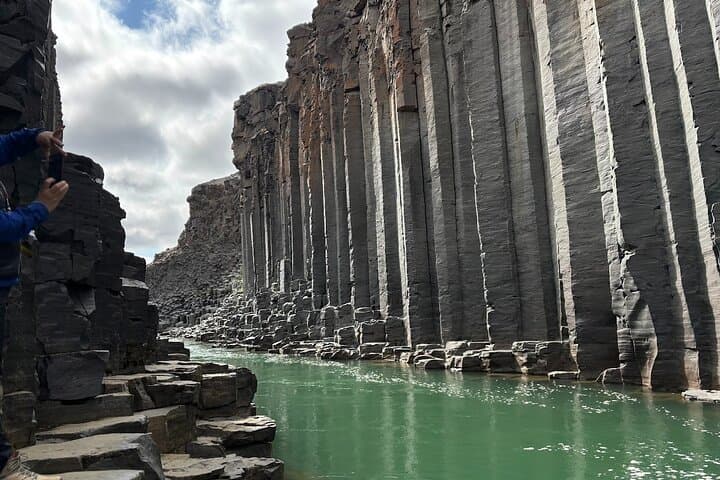
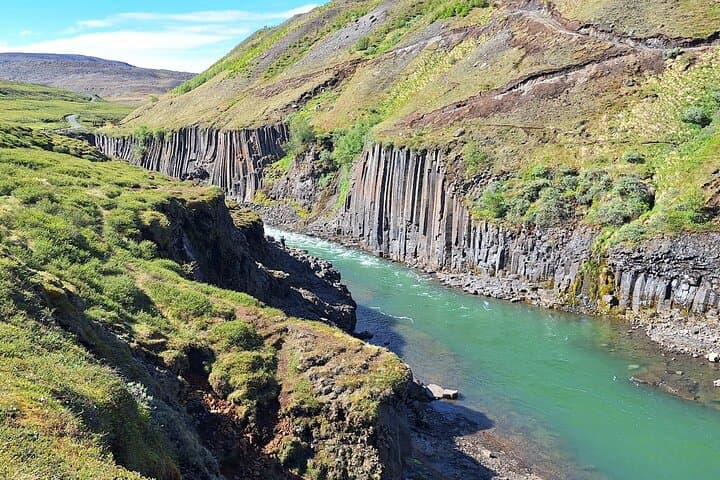
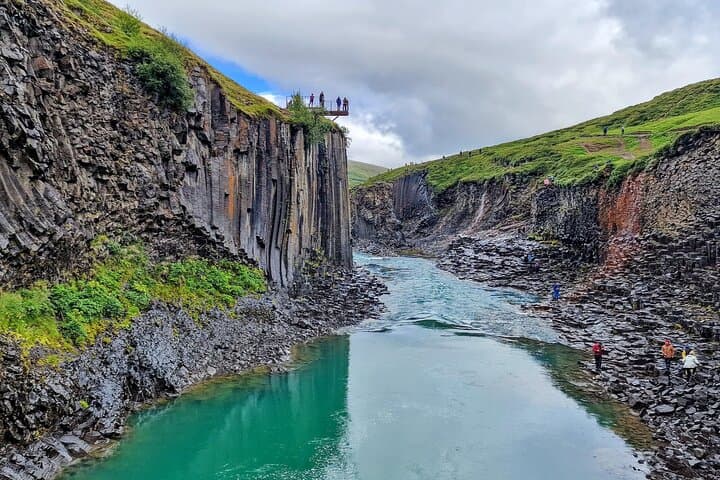
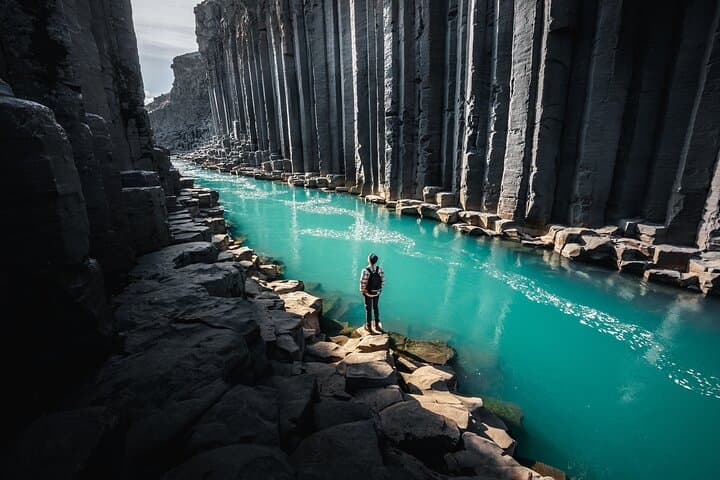
The road bends through green pastures and low mountains, and suddenly the Jökulsá river slips into a deep ribbon of blue — that first glimpse of Stuðlagil catches the breath. Guides park on the quiet lane; a short, easy path drops to a ledge where basalt columns rise like a ruined amphitheater and the river dares you to step closer for a better frame.
The road bends through green pastures and low mountains, and suddenly the Jökulsá river slips into a deep ribbon of blue — that first glimpse of Stuðlagil catches the breath. Guides park on the quiet lane; a short, easy path drops to a ledge where basalt columns rise like a ruined amphitheater and the river dares you to step closer for a better frame.
Geology here is literal storytelling: vertical hexagonal basalt columns formed by slow-cooling lava after eruptions thousands of years ago. The Jökuldalur valley has long been a travel corridor between Iceland’s east fjords and the interior, and the canyon’s recent prominence owes as much to changing river levels as to photographers spreading the word.
Cultural traces are sparse but present — sheep-fenced fields, small farms, and the practical infrastructure of hydro projects upriver that alter flow and color seasonally, turning the water from striking turquoise in early summer to a steel gray during reservoir releases.
Expect 2–3 hours at Stuðlagil on a typical private five-hour tour that also stops at Rjúkandi waterfall. Terrain is mostly short, well-graded trails and ledges; footing can be wet and uneven. Bring waterproof boots, windproof layers, and a camera with extra batteries. Time visits for morning or late afternoon light and check upstream reservoir notices — water clarity shifts with releases.
This tour balances dramatic geology with simple logistics: private transport, an English-speaking guide, and accessible short walks make it a compact, high-reward outing for anyone with moderate fitness and a taste for bold river landscapes.