THE ADVENTURE COLLECTIVE® · Independent discovery and booking for outdoor travel

A compact 5-hour shore excursion from Seyðisfjörður takes you to Stuðlagil’s towering basalt columns and the secluded spray of Gufufoss. Expect short uneven walks, striking turquoise river views, and about three hours of scenic driving through East Iceland.
A compact 5-hour shore excursion from Seyðisfjörður takes you to Stuðlagil’s towering basalt columns and the secluded spray of Gufufoss. Expect short uneven walks, striking turquoise river views, and about three hours of scenic driving through East Iceland.
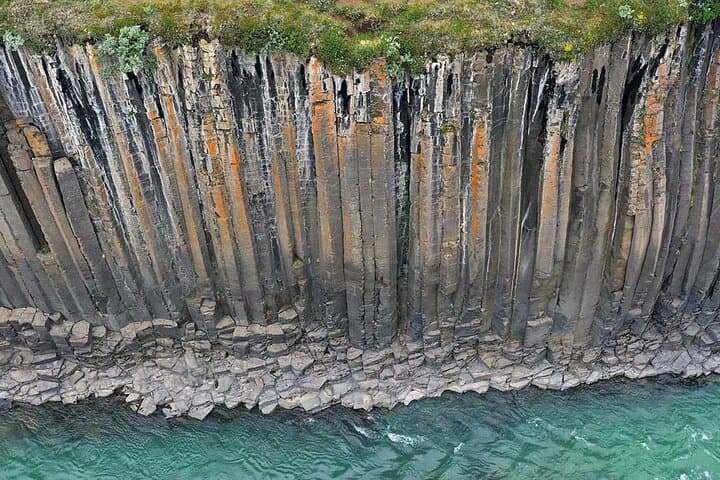
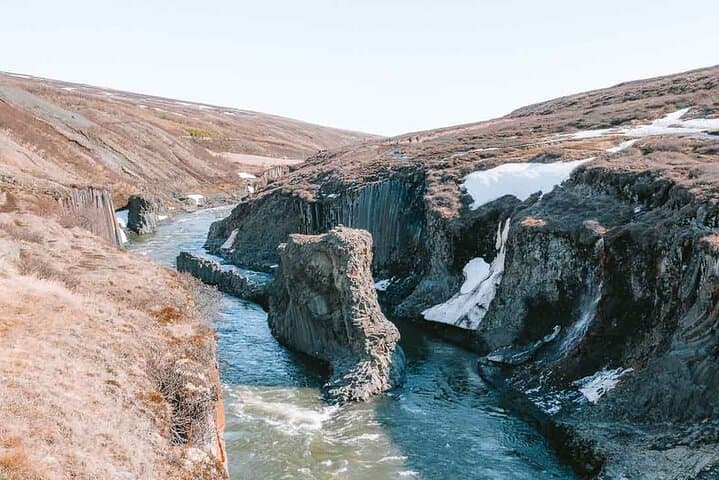
You step off the quay in Seyðisfjörður and the bus pulls away toward high, open valleys — sheep-dotted pastures give way to a river gorge carved into basalt. In an hour the road drops toward Stuðlagil: a canyon of vertical basalt columns that rise as high as 30 m above a shockingly turquoise glacial river. The water seems to push forward with purpose, threading between stone pillars like a moving avenue.
Verified experiences and guided adventures in the surrounding area.
Operated by BusTravel Iceland · Seyðisfjörður, East Iceland
You step off the quay in Seyðisfjörður and the bus pulls away toward high, open valleys — sheep-dotted pastures give way to a river gorge carved into basalt. In an hour the road drops toward Stuðlagil: a canyon of vertical basalt columns that rise as high as 30 m above a shockingly turquoise glacial river. The water seems to push forward with purpose, threading between stone pillars like a moving avenue.
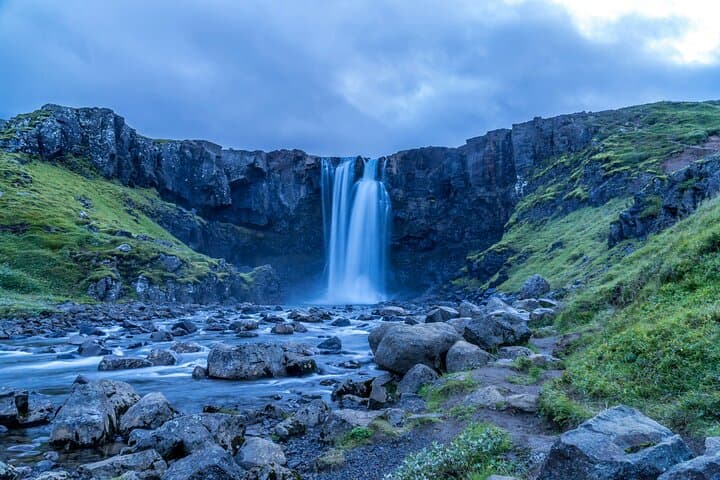
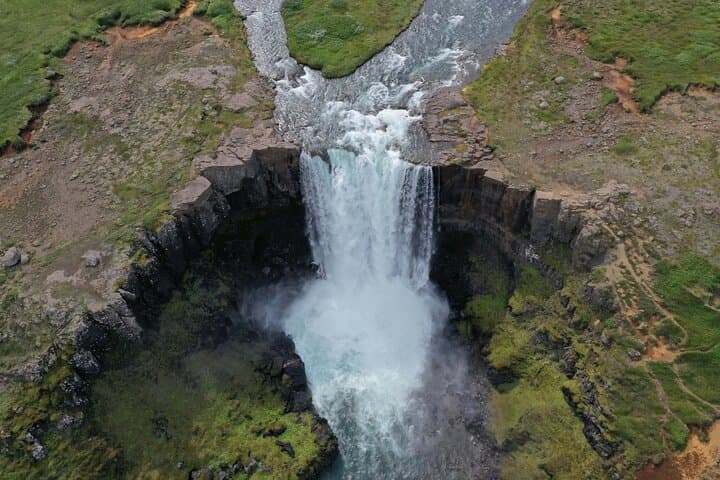
Geologically, Stuðlagil is recent fame: a dam project lowered the river about 10 m roughly a decade and a half ago, revealing columnar basalt structures formed by slow cooling lava. Nearby Gufufoss — a quieter 27 m fall whose spray earned it a name that means “steam” — sits in a sheltered valley on the outskirts of Seyðisfjörður and offers a calmer contrast to the canyon’s drama. Local guides often point out how glacial rhythms and volcanic flows shaped the Eastfjords’ stark textures and fishing-culture settlements.
Practical: the excursion is about 5 hours total, with roughly 3 hours driving included and set time on-site (≈60 minutes at Stuðlagil, ≈45 at Gufufoss). Trails are short but uneven — expect gravel, riverbanks and some rock-hopping. Dress in waterproof layers, sturdy shoes, and bring a daypack, water and camera. Plan for changing weather and limited facilities at both stops; tours sync with cruise schedules, so punctuality matters. This is a shore-friendly, low-technical outing that delivers Iceland’s elemental contrasts in a compact window.
easy.
5 hours (includes ~3 hours driving).
Suitable for most fitness levels; requires short walks on uneven ground and some stepping over rocks.
Walks at each stop are short — typically under 1 km round trip — but paths are uneven; allow about an hour at Stuðlagil and 45 minutes at Gufufoss.
The tour is advertised as suitable for all fitness levels, but there are unpaved sections and steps; those with limited mobility should check with the operator about access and assistance.
The river’s striking color is most vivid when glacial melt and light conditions align, typically in warmer months, but it remains notably blue throughout much of the year.
Facilities are minimal at both locations; restrooms and shops are available in Seyðisfjörður but not at the canyon or the waterfall itself.
The canyon’s exposed columns became widely visible after a nearby hydropower project lowered the river about 10 m, revealing older basalt formations once hidden underwater.
These fragile riverbanks and cliffs are sensitive to trampling; stay on marked paths, pack out waste, and respect private farmland adjacent to viewing areas.
BusTravel Iceland operates guided outdoor trips and adventures with an emphasis on safety, stewardship, and memorable experiences.
You step off the quay in Seyðisfjörður and the bus pulls away toward high, open valleys — sheep-dotted pastures give way to a river gorge carved into basalt. In an hour the road drops toward Stuðlagil: a canyon of vertical basalt columns that rise as high as 30 m above a shockingly turquoise glacial river. The water seems to push forward with purpose, threading between stone pillars like a moving avenue.
You step off the quay in Seyðisfjörður and the bus pulls away toward high, open valleys — sheep-dotted pastures give way to a river gorge carved into basalt. In an hour the road drops toward Stuðlagil: a canyon of vertical basalt columns that rise as high as 30 m above a shockingly turquoise glacial river. The water seems to push forward with purpose, threading between stone pillars like a moving avenue.
Geologically, Stuðlagil is recent fame: a dam project lowered the river about 10 m roughly a decade and a half ago, revealing columnar basalt structures formed by slow cooling lava. Nearby Gufufoss — a quieter 27 m fall whose spray earned it a name that means “steam” — sits in a sheltered valley on the outskirts of Seyðisfjörður and offers a calmer contrast to the canyon’s drama. Local guides often point out how glacial rhythms and volcanic flows shaped the Eastfjords’ stark textures and fishing-culture settlements.
Practical: the excursion is about 5 hours total, with roughly 3 hours driving included and set time on-site (≈60 minutes at Stuðlagil, ≈45 at Gufufoss). Trails are short but uneven — expect gravel, riverbanks and some rock-hopping. Dress in waterproof layers, sturdy shoes, and bring a daypack, water and camera. Plan for changing weather and limited facilities at both stops; tours sync with cruise schedules, so punctuality matters. This is a shore-friendly, low-technical outing that delivers Iceland’s elemental contrasts in a compact window.