THE ADVENTURE COLLECTIVE® · Independent discovery and booking for outdoor travel

Climb Stromboli’s permitted trail at dusk to watch fiery eruptions light the sea from the Sciara del Fuoco. This guided 5‑hour trek pairs volcanic geology with sunset views—arrive prepared for scree, dark descents, and spectacular night displays.
Climb Stromboli’s permitted trail at dusk to watch fiery eruptions light the sea from the Sciara del Fuoco. This guided 5‑hour trek pairs volcanic geology with sunset views—arrive prepared for scree, dark descents, and spectacular night displays.
Dusk arrives on Stromboli like a slow exhale: the village bell fades, the sea flattens into a dark sheet, and the black scar of the Sciara del Fuoco gapes toward the Mediterranean. You meet the guide in Piazza San Vincenzo, set off over crushed volcanic rock through low Mediterranean scrub, and climb the nature trail to the permitted 400‑meter viewpoint as the horizon begins to glow.
Verified experiences and guided adventures in the surrounding area.
Operated by Ashàra Etna & Stromboli Guides · Stromboli, Sicily
Dusk arrives on Stromboli like a slow exhale: the village bell fades, the sea flattens into a dark sheet, and the black scar of the Sciara del Fuoco gapes toward the Mediterranean. You meet the guide in Piazza San Vincenzo, set off over crushed volcanic rock through low Mediterranean scrub, and climb the nature trail to the permitted 400‑meter viewpoint as the horizon begins to glow.
Geology here is raw—Stromboli is an open vent volcano whose frequent small explosions have carved the Sciara, a steep slide of scoria and lava that channels eruptions into the sea. The island’s human story is compact: fishermen, shepherds, and volcanologists have shared these paths for centuries, and the old cemetery above the village keeps a quiet record of storms, eruptions, and lives lived close to fire.
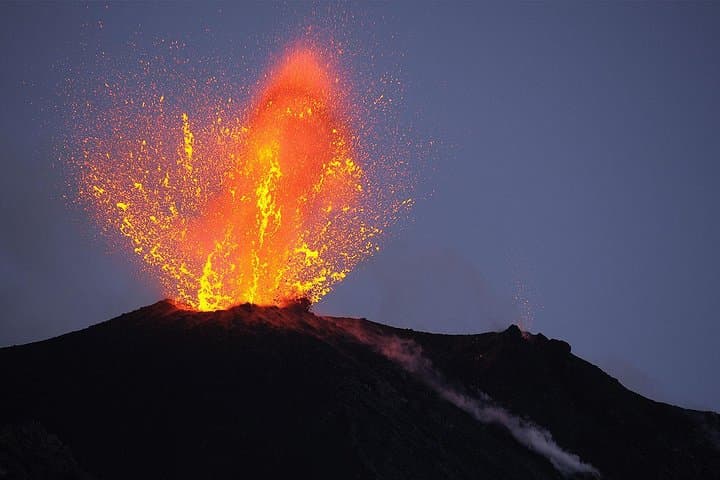
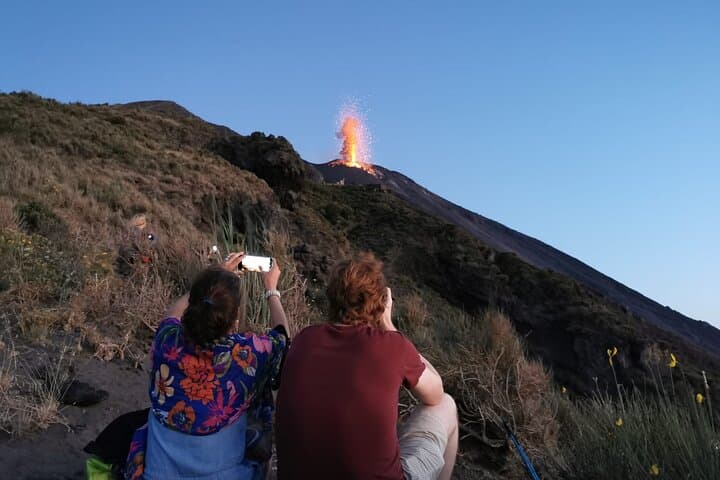
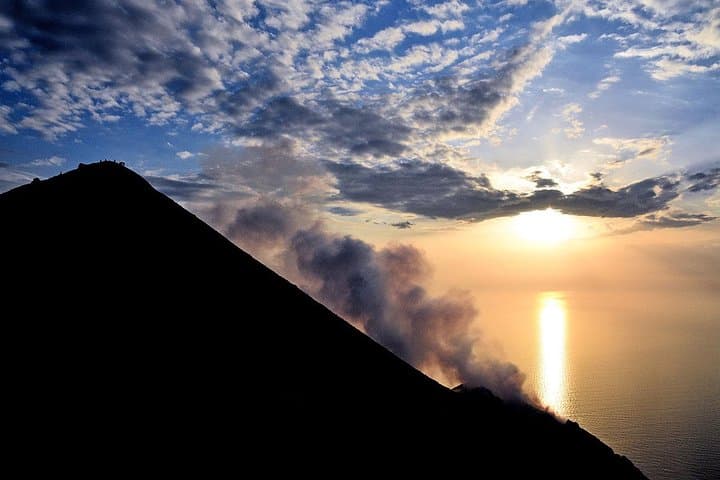
On arrival at the panoramic edge, sunset paints the Aeolian chain red and nightly strombolian bursts punctuate the sky. Strombolicchio, a basalt spine offshore, watches like an old guard.
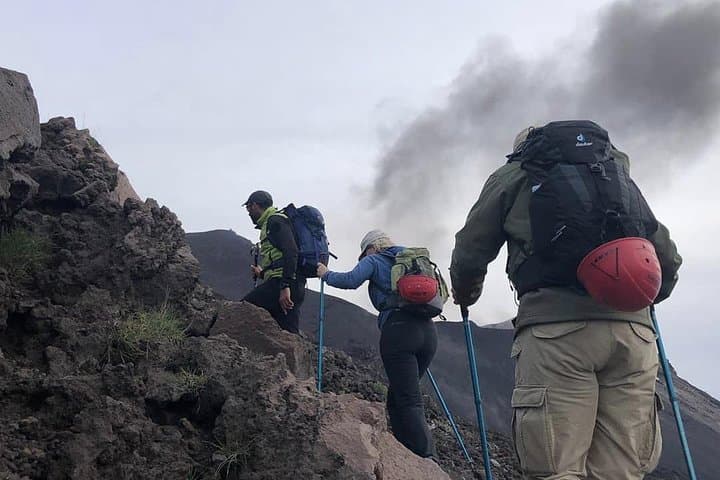
Practical guidance: the walk is moderate, about 5 hours round trip, with uneven volcanic scree and steep sections; a volcanology guide leads to the legal 400 m limit. Helmets and headlamps are provided, but bring sturdy boots, layers, 1–2 liters of water, and a charged headlamp for the descent. Avoid loose clothing that can snag on scrub; expect returning in the dark with torchlight. This trek is not recommended for pregnant guests or those with serious back or heart conditions. Book for clear evenings—visibility makes eruptions and sunset worth the climb.
moderate.
5 hours.
Suitable for walkers with regular aerobic fitness who can handle short steep sections and loose volcanic scree
Expect a moderate 5‑hour outing with steady uphill on volcanic scree to 400 m and a steep, torch‑lit descent; moderate fitness is required.
Yes—guides position the group at the legally permitted, safe vantage point; helmets are provided and guides monitor activity and conditions.
A charged headlamp, sturdy shoes, a warm layer, and enough water—operator supplies a helmet and often a headlamp but personal gear is recommended.
The trek is not recommended for pregnant travelers or people with spinal/serious cardiovascular issues; age suitability depends on fitness—check with the operator for minors.
Stromboli’s eruptions have been documented since antiquity; the Sciara del Fuoco formed from repeated flank eruptions and collapses that channel material into the sea.
Trails cross fragile Mediterranean scrub—stay on marked paths, pack out waste, and respect access limits to protect vegetation and prevent hazard exposure.
Ashàra Etna & Stromboli Guides operates guided outdoor trips and adventures with an emphasis on safety, stewardship, and memorable experiences.
Dusk arrives on Stromboli like a slow exhale: the village bell fades, the sea flattens into a dark sheet, and the black scar of the Sciara del Fuoco gapes toward the Mediterranean. You meet the guide in Piazza San Vincenzo, set off over crushed volcanic rock through low Mediterranean scrub, and climb the nature trail to the permitted 400‑meter viewpoint as the horizon begins to glow.
Dusk arrives on Stromboli like a slow exhale: the village bell fades, the sea flattens into a dark sheet, and the black scar of the Sciara del Fuoco gapes toward the Mediterranean. You meet the guide in Piazza San Vincenzo, set off over crushed volcanic rock through low Mediterranean scrub, and climb the nature trail to the permitted 400‑meter viewpoint as the horizon begins to glow.
Geology here is raw—Stromboli is an open vent volcano whose frequent small explosions have carved the Sciara, a steep slide of scoria and lava that channels eruptions into the sea. The island’s human story is compact: fishermen, shepherds, and volcanologists have shared these paths for centuries, and the old cemetery above the village keeps a quiet record of storms, eruptions, and lives lived close to fire.
On arrival at the panoramic edge, sunset paints the Aeolian chain red and nightly strombolian bursts punctuate the sky. Strombolicchio, a basalt spine offshore, watches like an old guard.
Practical guidance: the walk is moderate, about 5 hours round trip, with uneven volcanic scree and steep sections; a volcanology guide leads to the legal 400 m limit. Helmets and headlamps are provided, but bring sturdy boots, layers, 1–2 liters of water, and a charged headlamp for the descent. Avoid loose clothing that can snag on scrub; expect returning in the dark with torchlight. This trek is not recommended for pregnant guests or those with serious back or heart conditions. Book for clear evenings—visibility makes eruptions and sunset worth the climb.