THE ADVENTURE COLLECTIVE® · Independent discovery and booking for outdoor travel

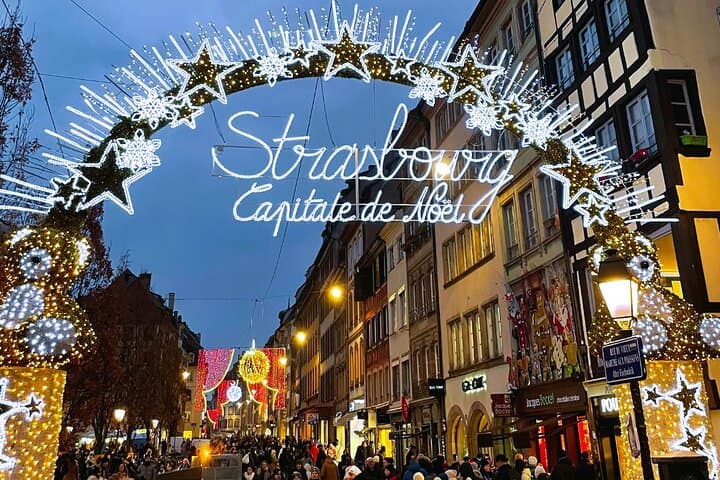
Walk from the Vauban dam through Strasbourg’s lights and timbered streets, sampling a free mulled wine while exploring markets that trace back to the 16th century. A two-hour, easy-paced tour that mixes local history with seasonal flavors.
Walk from the Vauban dam through Strasbourg’s lights and timbered streets, sampling a free mulled wine while exploring markets that trace back to the 16th century. A two-hour, easy-paced tour that mixes local history with seasonal flavors.
The tour begins on the Vauban dam: you climb concrete steps, the Ill river pulling at the city below, and the rooftops of Petite France open like a folded map. Lanterns leak warm light into the evening cold and the aroma of spices and roasted chestnuts follows each narrow street.
Verified experiences and guided adventures in the surrounding area.
Operated by Discover Strasbourg · Strasbourg, Grand Est
The tour begins on the Vauban dam: you climb concrete steps, the Ill river pulling at the city below, and the rooftops of Petite France open like a folded map. Lanterns leak warm light into the evening cold and the aroma of spices and roasted chestnuts follows each narrow street.
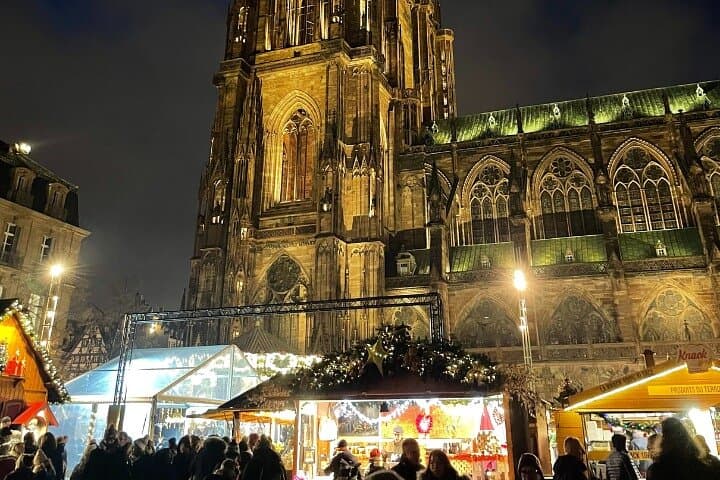
Strasbourg’s Christmas market tradition dates back centuries — the Christkindelsmärik appears in records from 1570 — and the route threads through medieval squares, timber-framed façades and the great silhouette of the cathedral. Geologically the city sits on the Alsace plain where the Rhine’s slow deposits shaped broad floodplains; here canals become streets and water dares you to look closer.
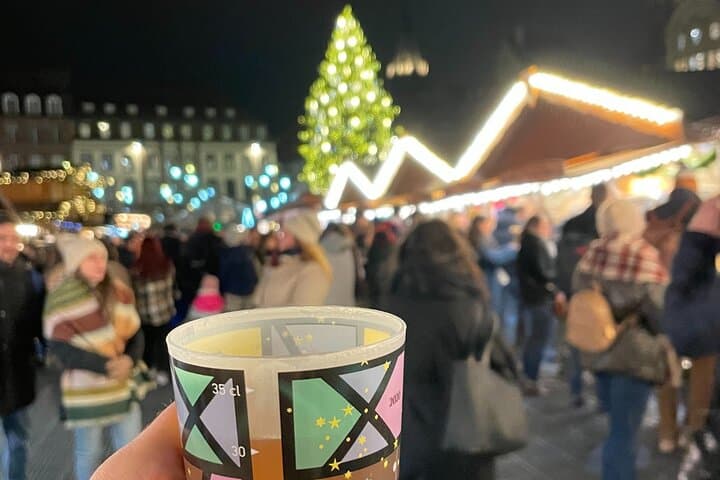
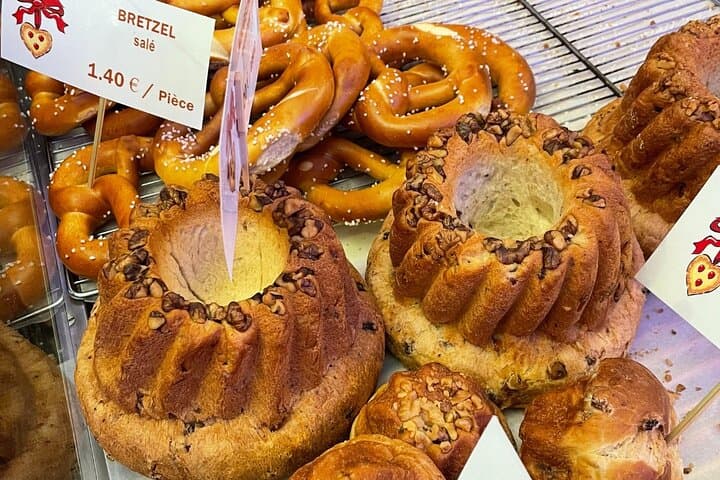
You’ll pass several markets and learn short histories of the districts, the design of the chalets, and local Alsatian customs: the use of stollen and bredele at family tables, and the way mulled wine (or hot juice for children) warms evening markets. The largest market stops include a tasting and a visit to the city’s most famous square with its illuminated tree.
Practical guidance: the walk is flat, about two hours on mostly cobblestone streets — wear grippy shoes and layers for cold nights. Public transport reaches the Vauban dam area; meet on the square to the left of the dam. Bring small cash for crafts, a reusable cup if you prefer, and allow extra time for photos at the cathedral. Tours are small-group and adaptable, useful when you want history with your holiday atmosphere.
easy.
2 hours.
Suitable for all fitness levels; involves standing and walking on cobbles for up to two hours.
Yes — the tour includes one complimentary mulled wine or hot juice per booking during the stop at the largest market.
Meet on the square to the left of the Vauban dam (between the dam and the Hôtel du Département); the guide will be waiting there.
The route is generally stroller-accessible on flat sections, but cobblestones and some narrow passages can be challenging — contact the provider if you need full wheelchair access details.
Language options may vary by date; check the booking page for the guide’s language or request confirmation at booking time.
Strasbourg’s Christmas market tradition (Christkindelsmärik) is recorded as early as 1570, reflecting a long urban practice of seasonal fairs in Alsace.
Local markets are increasingly adopting reusable cups and reduced-plastic policies; visitors are encouraged to follow recycling rules and limit single-use packaging.
Discover Strasbourg operates guided outdoor trips and adventures with an emphasis on safety, stewardship, and memorable experiences.
The tour begins on the Vauban dam: you climb concrete steps, the Ill river pulling at the city below, and the rooftops of Petite France open like a folded map. Lanterns leak warm light into the evening cold and the aroma of spices and roasted chestnuts follows each narrow street.
The tour begins on the Vauban dam: you climb concrete steps, the Ill river pulling at the city below, and the rooftops of Petite France open like a folded map. Lanterns leak warm light into the evening cold and the aroma of spices and roasted chestnuts follows each narrow street.
Strasbourg’s Christmas market tradition dates back centuries — the Christkindelsmärik appears in records from 1570 — and the route threads through medieval squares, timber-framed façades and the great silhouette of the cathedral. Geologically the city sits on the Alsace plain where the Rhine’s slow deposits shaped broad floodplains; here canals become streets and water dares you to look closer.
You’ll pass several markets and learn short histories of the districts, the design of the chalets, and local Alsatian customs: the use of stollen and bredele at family tables, and the way mulled wine (or hot juice for children) warms evening markets. The largest market stops include a tasting and a visit to the city’s most famous square with its illuminated tree.
Practical guidance: the walk is flat, about two hours on mostly cobblestone streets — wear grippy shoes and layers for cold nights. Public transport reaches the Vauban dam area; meet on the square to the left of the dam. Bring small cash for crafts, a reusable cup if you prefer, and allow extra time for photos at the cathedral. Tours are small-group and adaptable, useful when you want history with your holiday atmosphere.