THE ADVENTURE COLLECTIVE® · Independent discovery and booking for outdoor travel

Explore the Burren’s limestone pavement, Neolithic traces and local lore on a private two-hour guided walk. Learn geology and human history while navigating clints and grikes with a local guide.
Explore the Burren’s limestone pavement, Neolithic traces and local lore on a private two-hour guided walk. Learn geology and human history while navigating clints and grikes with a local guide.
A wind from the Atlantic slices across limestone slabs as walkers step off a narrow lane into a landscape that feels older than maps. The Burren's grey pavement stretches and folds; grass finds thin seams and wildflowers hug crevices. On this private two-hour walk visitors lie on the Leaba Clochmor, trace the Famine Road and peer into the old homestead where ‘Hermit Mick’ once lived—each stone offering a line of human history.
Verified experiences and guided adventures in the surrounding area.
Operated by Ireland Wild Escapes · Ballyvaughan, County Clare
A wind from the Atlantic slices across limestone slabs as walkers step off a narrow lane into a landscape that feels older than maps. The Burren's grey pavement stretches and folds; grass finds thin seams and wildflowers hug crevices. On this private two-hour walk visitors lie on the Leaba Clochmor, trace the Famine Road and peer into the old homestead where ‘Hermit Mick’ once lived—each stone offering a line of human history.
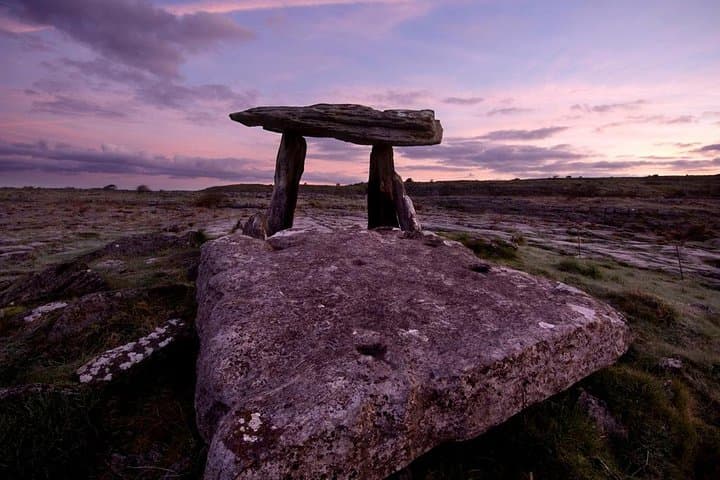
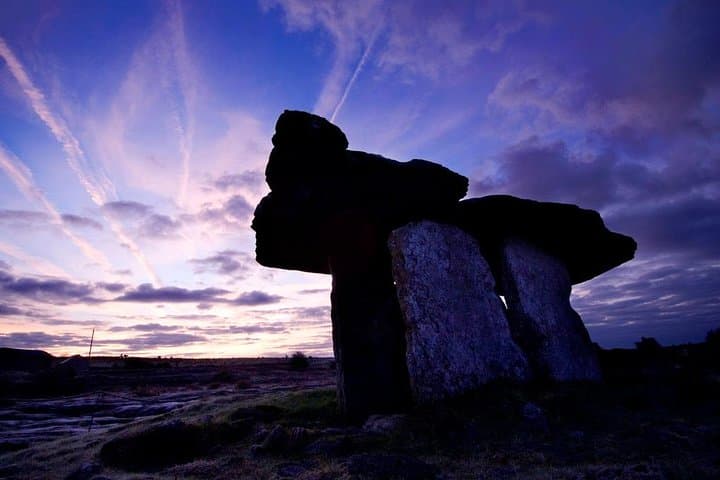
Geology here is blunt and visible: exposed Carboniferous limestone scoured by glaciers, with clints and grikes that channel sound and water. Human history sits on top—a patchwork of Neolithic tombs, field walls, and 19th-century famine tracks that record survival and migration. Culturally the Burren has long attracted poets, naturalists and farmers; the region’s grazing practices helped shape the rare limestone flora visitors come to see.
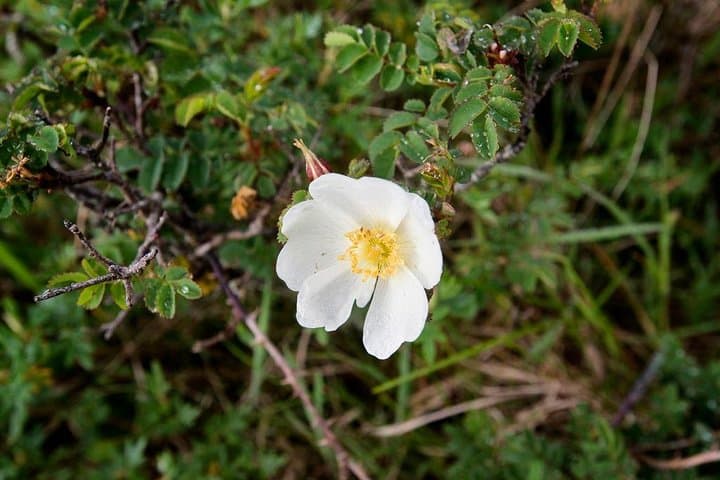
Expect open exposure, low scrub, and uneven rock underfoot—this is a walking tour that emphasizes stories as much as scenery. The guide interprets archaeology and local lore while pointing out orchids, lichens and the ways of traditional grazing.
Practical guidance: wear sturdy boots with good grip, layer for wind and rain, and bring water and a snack. Timing matters—mornings and late afternoons bring softer light and quieter paths. The route is short but requires steady footing; participants should be able to walk on rocky surfaces for up to two hours. Respect fragile karst features: stay on the guide’s route, avoid trampling vegetation, and pack out everything you bring in. The walk is intimate, interpretive, and rooted in place—ideal for anyone wanting a compact, readable encounter with one of Ireland’s most distinctive landscapes.
easy.
2 hours.
Suitable for most fitness levels but requires balance and sure-footedness on rocky terrain
Yes—children who can walk for two hours on uneven ground and navigate short rocky sections can join; let the operator know ages when booking.
The operator may cancel or reschedule if conditions are unsafe; they advise bringing rainproof gear and will confirm based on local forecasts.
No—facilities are typically in nearby towns; bring water and plan for no services during the walk.
No—the uneven limestone pavement and narrow paths make this walk unsuitable for wheelchairs or most mobility aids.
The Burren holds layers from Neolithic tombs to 19th-century famine roads; small field systems and homesteads reflect centuries of pastoral farming.
The limestone pavement and rare flora are fragile—stick to guided routes, avoid picking plants, and follow Leave No Trace practices to protect habitats.
Ireland Wild Escapes operates guided outdoor trips and adventures with an emphasis on safety, stewardship, and memorable experiences.
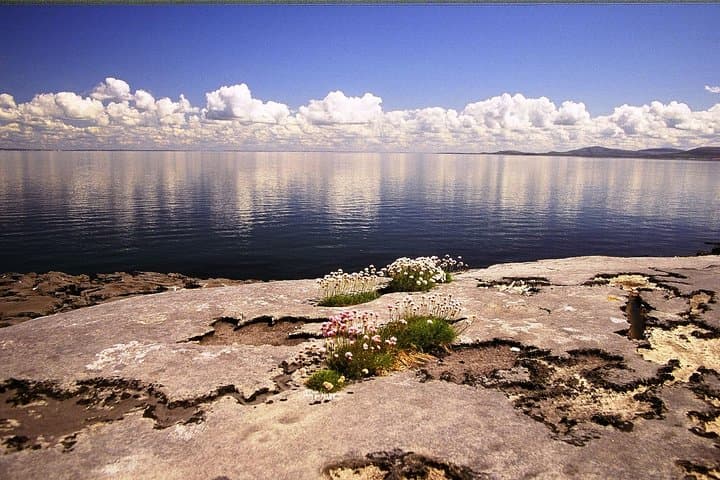
A wind from the Atlantic slices across limestone slabs as walkers step off a narrow lane into a landscape that feels older than maps. The Burren's grey pavement stretches and folds; grass finds thin seams and wildflowers hug crevices. On this private two-hour walk visitors lie on the Leaba Clochmor, trace the Famine Road and peer into the old homestead where ‘Hermit Mick’ once lived—each stone offering a line of human history.
A wind from the Atlantic slices across limestone slabs as walkers step off a narrow lane into a landscape that feels older than maps. The Burren's grey pavement stretches and folds; grass finds thin seams and wildflowers hug crevices. On this private two-hour walk visitors lie on the Leaba Clochmor, trace the Famine Road and peer into the old homestead where ‘Hermit Mick’ once lived—each stone offering a line of human history.
Geology here is blunt and visible: exposed Carboniferous limestone scoured by glaciers, with clints and grikes that channel sound and water. Human history sits on top—a patchwork of Neolithic tombs, field walls, and 19th-century famine tracks that record survival and migration. Culturally the Burren has long attracted poets, naturalists and farmers; the region’s grazing practices helped shape the rare limestone flora visitors come to see.
Expect open exposure, low scrub, and uneven rock underfoot—this is a walking tour that emphasizes stories as much as scenery. The guide interprets archaeology and local lore while pointing out orchids, lichens and the ways of traditional grazing.
Practical guidance: wear sturdy boots with good grip, layer for wind and rain, and bring water and a snack. Timing matters—mornings and late afternoons bring softer light and quieter paths. The route is short but requires steady footing; participants should be able to walk on rocky surfaces for up to two hours. Respect fragile karst features: stay on the guide’s route, avoid trampling vegetation, and pack out everything you bring in. The walk is intimate, interpretive, and rooted in place—ideal for anyone wanting a compact, readable encounter with one of Ireland’s most distinctive landscapes.