THE ADVENTURE COLLECTIVE® · Independent discovery and booking for outdoor travel

Join a guided coach tour from London to witness the summer solstice at Stonehenge—choose sunrise or sunset access inside the stone circle. Expect a long day, open plain conditions, and a blend of ceremonial atmosphere and living history.
Join a guided coach tour from London to witness the summer solstice at Stonehenge—choose sunrise or sunset access inside the stone circle. Expect a long day, open plain conditions, and a blend of ceremonial atmosphere and living history.
You arrive on the chalk plain before dawn or as the horizon burns low—grasses whisper, the air is sharp, and the stones stand like old storytellers watching the sun’s agreed ritual. On June 20–21 the crowd tightens into a human ring; druids, families, photographers and curious travelers gather as the light threads between lintels and the sky performs its slow bow.
Verified experiences and guided adventures in the surrounding area.
Operated by Premium Tours · Salisbury, Wiltshire
You arrive on the chalk plain before dawn or as the horizon burns low—grasses whisper, the air is sharp, and the stones stand like old storytellers watching the sun’s agreed ritual. On June 20–21 the crowd tightens into a human ring; druids, families, photographers and curious travelers gather as the light threads between lintels and the sky performs its slow bow.
Stonehenge is a monument of Neolithic engineering and Bronze Age reuse: sarsen uprights quarried from nearby ridges and bluestones carried from Wales shape an astronomical marker aligned to solstice sunrises and sunsets. The surrounding landscape—barrows, long mounds and the nearby Avebury ring—reveals a living cultural landscape used for burials and gatherings for millennia.
Culturally the solstice at Stonehenge has evolved into part ceremony, part festival; access inside the circle is unique and tightly managed during this date. Geologically the site sits on Upper Chalk, which creates the broad, exposed plain and the thin, wind-prone soils.
Practical guidance: expect an 8–12 hour day from London with coach travel, limited facilities on the plain, and long periods on your feet. Dress in layered, windproof clothing and bring sturdy footwear for uneven grass and occasional mud. Hydrate and bring snacks; dinner is included for sunset-option guests at a local pub before Avebury. Be prepared for crowds, brief security checks, and that joining at Stonehenge itself is not permitted. Arrive rested and with realistic expectations—the experience is as much about participation and atmosphere as it is about the stones themselves.
moderate.
8–12 hours.
Moderate to high endurance — able to stand for long periods and walk on uneven ground; suitable for fit travelers without serious mobility issues.
Yes — this tour provides managed access inside the stone circle specifically for the solstice event; access is not guaranteed outside of special events.
Expect a full-day excursion of about 8–12 hours including round-trip coach transport; driving time from central London is roughly 2–2.5 hours each way depending on traffic.
Dinner at a local pub is included with the sunset (June 20) option; the venue may vary and is listed in tour details.
No — the operator does not allow joining the tour at Stonehenge; bookings must start from the designated London departure point.
Stonehenge dates to roughly 3000–2000 BCE; later Bronze Age activity modified alignments and added burials, creating a complex ritual landscape.
Visitor numbers and events are managed to protect fragile turf and archaeological features; stick to paths, avoid littering, and respect steward guidance to minimize impact.
Premium Tours operates guided outdoor trips and adventures with an emphasis on safety, stewardship, and memorable experiences.
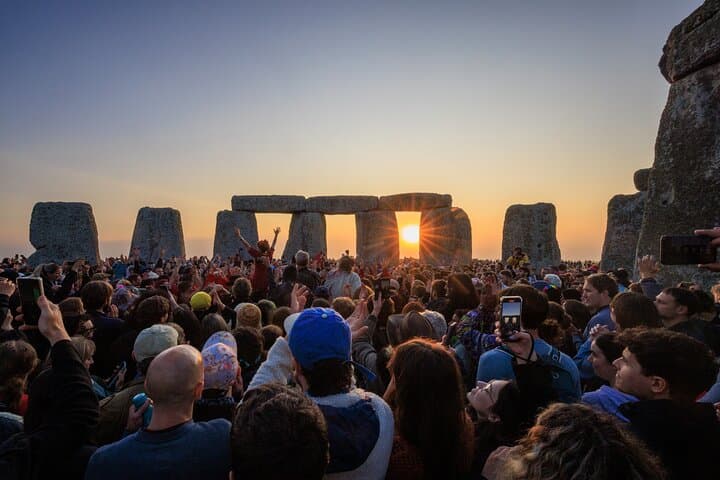

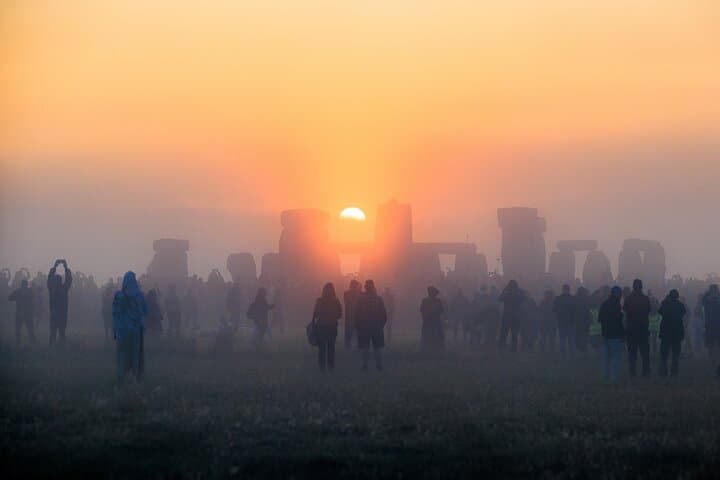
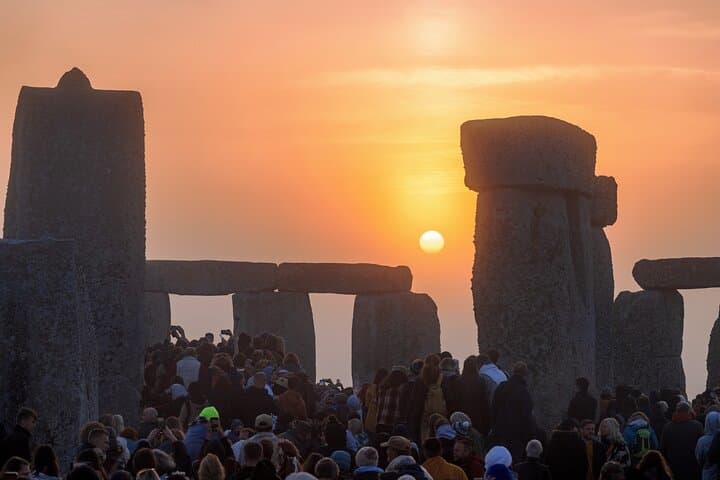
You arrive on the chalk plain before dawn or as the horizon burns low—grasses whisper, the air is sharp, and the stones stand like old storytellers watching the sun’s agreed ritual. On June 20–21 the crowd tightens into a human ring; druids, families, photographers and curious travelers gather as the light threads between lintels and the sky performs its slow bow.
You arrive on the chalk plain before dawn or as the horizon burns low—grasses whisper, the air is sharp, and the stones stand like old storytellers watching the sun’s agreed ritual. On June 20–21 the crowd tightens into a human ring; druids, families, photographers and curious travelers gather as the light threads between lintels and the sky performs its slow bow.
Stonehenge is a monument of Neolithic engineering and Bronze Age reuse: sarsen uprights quarried from nearby ridges and bluestones carried from Wales shape an astronomical marker aligned to solstice sunrises and sunsets. The surrounding landscape—barrows, long mounds and the nearby Avebury ring—reveals a living cultural landscape used for burials and gatherings for millennia.
Culturally the solstice at Stonehenge has evolved into part ceremony, part festival; access inside the circle is unique and tightly managed during this date. Geologically the site sits on Upper Chalk, which creates the broad, exposed plain and the thin, wind-prone soils.
Practical guidance: expect an 8–12 hour day from London with coach travel, limited facilities on the plain, and long periods on your feet. Dress in layered, windproof clothing and bring sturdy footwear for uneven grass and occasional mud. Hydrate and bring snacks; dinner is included for sunset-option guests at a local pub before Avebury. Be prepared for crowds, brief security checks, and that joining at Stonehenge itself is not permitted. Arrive rested and with realistic expectations—the experience is as much about participation and atmosphere as it is about the stones themselves.