THE ADVENTURE COLLECTIVE® · Independent discovery and booking for outdoor travel

Escape London for a full-day journey across Salisbury Plain to Stonehenge and Salisbury Cathedral. Combine prehistoric stone circles with Gothic architecture and one of the original Magna Carta copies on a private guided day trip.
Escape London for a full-day journey across Salisbury Plain to Stonehenge and Salisbury Cathedral. Combine prehistoric stone circles with Gothic architecture and one of the original Magna Carta copies on a private guided day trip.
You arrive early on the broad sweep of Salisbury Plain and the wind meets you first, pushing across low grass toward the ring of stones. The visitor centre sits back from the monument, its exhibits anchoring a trip that moves from tactile archaeology to the hush of standing before stones that have watched five millennia of sky.
Verified experiences and guided adventures in the surrounding area.
Operated by Global Guide Services · Salisbury, Wiltshire
You arrive early on the broad sweep of Salisbury Plain and the wind meets you first, pushing across low grass toward the ring of stones. The visitor centre sits back from the monument, its exhibits anchoring a trip that moves from tactile archaeology to the hush of standing before stones that have watched five millennia of sky.
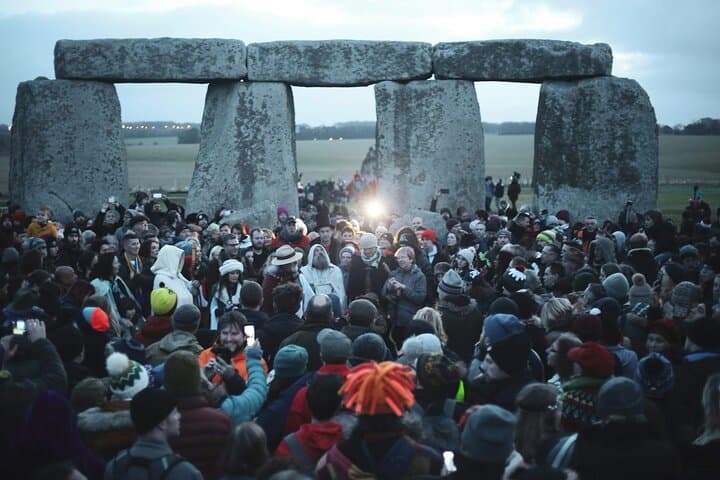
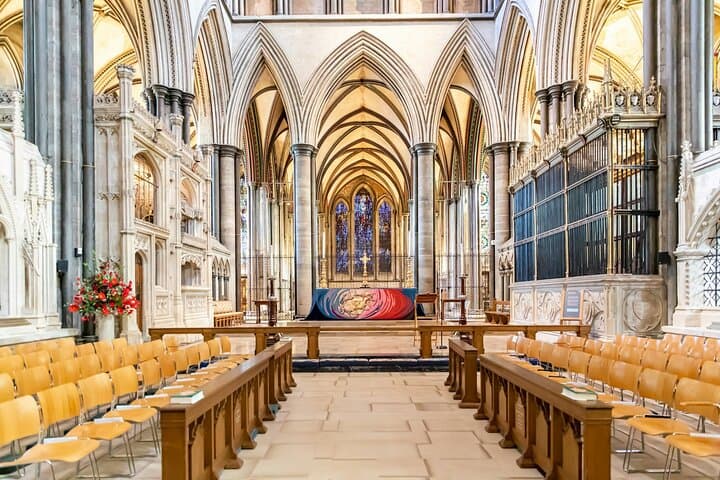
Stonehenge occupies a singular place in Britain’s past: sarsens and bluestones transported and re-erected in phases from around 3000–2000 BCE. The plain itself is chalk and flinty soil shaped by glacial and human hands; its openness means weather drives the mood—sunlight sharpens lines, wind lends urgency. Later, in the cathedral close at Salisbury, 13th-century Gothic stone rises into the tallest spire in the UK, and inside a Chapter House preserves one of the original Magna Carta copies, linking ritual landscape to medieval law.
Culturally the day pairs prehistoric ritual with medieval civic power; both sites reward patient observation more than speed. Expect a 30-minute scenic walk or a short shuttle to the stone circle, flat grassy paths that can be muddy after rain, and gentle walking in the cathedral and grounds.
Practical guidance: plan roughly nine hours door-to-door from central London, allow about two hours at each stop, and bring layered waterproofs, sturdy shoes, water, and a daylight camera. Timing matters: mornings are quieter on the plain, afternoons busier at the cathedral cafe. Keep to marked paths at Stonehenge, respect on-site signage, and allow time to read displays that put the stones and the Magna Carta into context—this is a day where landscape and history pace you, if you let them.
easy.
9 hours.
Suitable for travelers in basic physical condition; involves short, flat walks and standing during exhibits.
Admission is not included in the tour price; tickets are typically purchased at the Stonehenge Visitor Centre and Cathedral entry may request a donation—check the tour inclusions before booking.
Expect about two hours each way depending on traffic; the full experience including site time is roughly a nine-hour day trip.
Yes; the visitor centre and cathedral are stroller-accessible, though the walk to Stonehenge can be long for young children and may require a shuttle option provided on site.
The operator may cancel for severe weather; otherwise bring waterproofs and allow extra time—some open-air parts are best experienced in clear conditions.
Stonehenge dates from roughly 3000–2000 BCE and Salisbury Cathedral was largely built in the 1220s; the cathedral houses one of four surviving 1215 Magna Carta copies.
Both sites manage visitor impact with defined paths and preservation policies; stay on marked routes and follow guidance to protect fragile archaeology and historic fabric.
Global Guide Services operates guided outdoor trips and adventures with an emphasis on safety, stewardship, and memorable experiences.


You arrive early on the broad sweep of Salisbury Plain and the wind meets you first, pushing across low grass toward the ring of stones. The visitor centre sits back from the monument, its exhibits anchoring a trip that moves from tactile archaeology to the hush of standing before stones that have watched five millennia of sky.
You arrive early on the broad sweep of Salisbury Plain and the wind meets you first, pushing across low grass toward the ring of stones. The visitor centre sits back from the monument, its exhibits anchoring a trip that moves from tactile archaeology to the hush of standing before stones that have watched five millennia of sky.
Stonehenge occupies a singular place in Britain’s past: sarsens and bluestones transported and re-erected in phases from around 3000–2000 BCE. The plain itself is chalk and flinty soil shaped by glacial and human hands; its openness means weather drives the mood—sunlight sharpens lines, wind lends urgency. Later, in the cathedral close at Salisbury, 13th-century Gothic stone rises into the tallest spire in the UK, and inside a Chapter House preserves one of the original Magna Carta copies, linking ritual landscape to medieval law.
Culturally the day pairs prehistoric ritual with medieval civic power; both sites reward patient observation more than speed. Expect a 30-minute scenic walk or a short shuttle to the stone circle, flat grassy paths that can be muddy after rain, and gentle walking in the cathedral and grounds.
Practical guidance: plan roughly nine hours door-to-door from central London, allow about two hours at each stop, and bring layered waterproofs, sturdy shoes, water, and a daylight camera. Timing matters: mornings are quieter on the plain, afternoons busier at the cathedral cafe. Keep to marked paths at Stonehenge, respect on-site signage, and allow time to read displays that put the stones and the Magna Carta into context—this is a day where landscape and history pace you, if you let them.