THE ADVENTURE COLLECTIVE® · Independent discovery and booking for outdoor travel

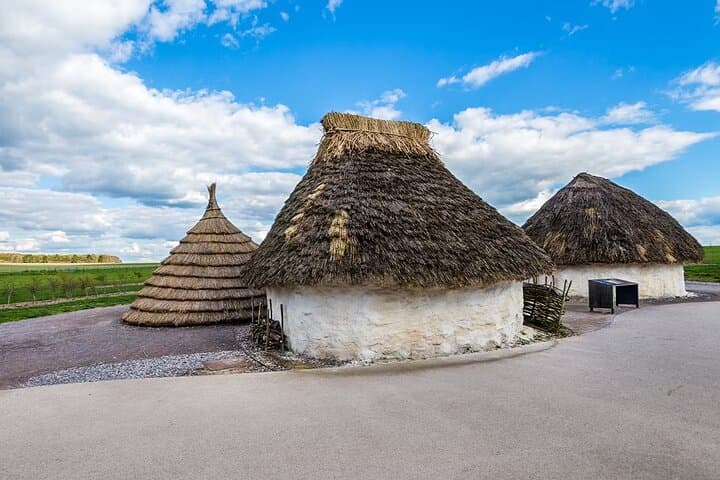
Explore Stonehenge at your pace with flexible admission to the stone circle and Visitor Centre. Learn about the Neolithic builders, see reconstructed houses and 250+ artifacts, and plan your visit with practical tips for timing, transport, and what to expect on site.
Explore Stonehenge at your pace with flexible admission to the stone circle and Visitor Centre. Learn about the Neolithic builders, see reconstructed houses and 250+ artifacts, and plan your visit with practical tips for timing, transport, and what to expect on site.
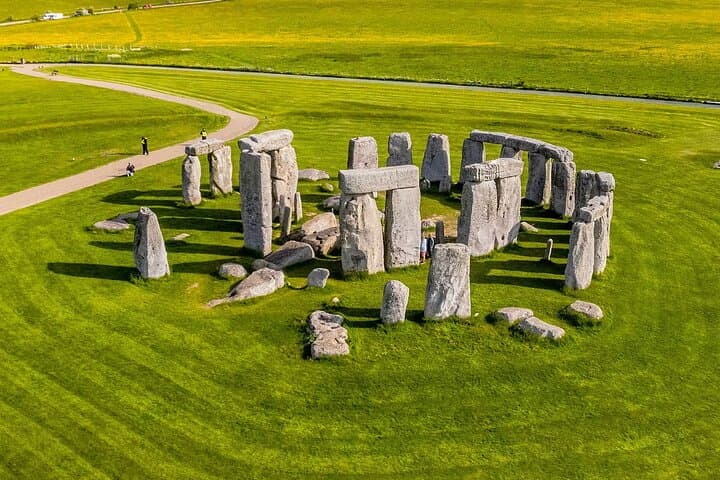
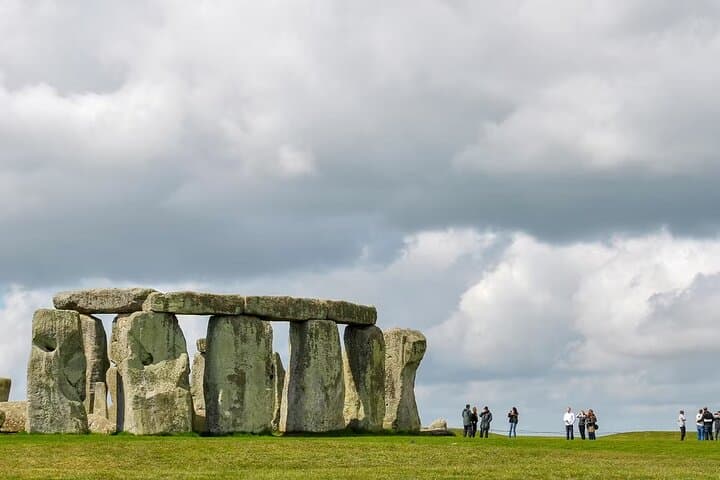
Step out of the car park and the chalk plain opens like an old map; wind pushes across short grass, and the stones sit on the horizon, immovable and blunt against the sky. Approaching the marked path, you can feel the scale of time here—the ring of sarsens a human-sized punctuation on a landscape shaped by millennia.
Verified experiences and guided adventures in the surrounding area.
Operated by My Travelons Ltd · Amesbury, Wiltshire
Step out of the car park and the chalk plain opens like an old map; wind pushes across short grass, and the stones sit on the horizon, immovable and blunt against the sky. Approaching the marked path, you can feel the scale of time here—the ring of sarsens a human-sized punctuation on a landscape shaped by millennia.
Stonehenge began as a Neolithic ceremonial complex around 5,000 years ago and later absorbed Bronze Age additions. The Visitor Centre unpacks that timeline: reconstructed Neolithic houses, more than 250 artifacts, and displays that trace quarrying, transport, and the astronomical alignments that make the site famous for solstice observation. Geologically, the stones themselves tell two stories—local sarsen sandstone and the distant bluestones brought from the Preseli Hills in Wales.
Culturally, Stonehenge has been a focus of folklore, antiquarian study and modern celebration; English Heritage manages access to protect fragile archaeology. Expect concise interpretive signage and a multilingual audio guide that moves visitors between context and detail.
Practical guidance: book a timed ticket and arrive early for softer light and fewer people; allow 1–3 hours to see the Visitor Centre exhibits and walk the perimeter of the monument. Paths are mostly flat but can be muddy after rain, so waterproof footwear helps. Photography from the designated path is straightforward, but entry into the stone circle is limited—check seasonal special access if that’s a priority. Public transport and coach upgrades from London reduce parking hassle; plan for variable weather and a short, powerful encounter with one of Britain’s oldest engineered landscapes.
easy.
1–3 hours.
Suitable for most fitness levels; requires short, mostly flat walking.
Most visitors spend 1–3 hours including the Visitor Centre exhibits and the walk around the stone circle; guided half-day upgrades are available.
General admission walks the perimeter; access inside the stone circle is only permitted during special events or with specific access tours—check English Heritage schedules.
The Visitor Centre and some paths are accessible; however, the terrain near the monument can be uneven—contact English Heritage for mobility access options and assistance.
Multilingual audio guides are provided as part of admission, covering the monument, Neolithic houses and the Visitor Centre exhibits.
Stonehenge is a 5,000-year-old complex with later Bronze Age modifications; its bluestones were transported from the Preseli Hills, and alignments mark solstice events.
English Heritage manages visitor access to protect fragile archaeology and habitats—stay on paths, follow signage, and avoid touching stones to minimize impact.
My Travelons Ltd operates guided outdoor trips and adventures with an emphasis on safety, stewardship, and memorable experiences.
Step out of the car park and the chalk plain opens like an old map; wind pushes across short grass, and the stones sit on the horizon, immovable and blunt against the sky. Approaching the marked path, you can feel the scale of time here—the ring of sarsens a human-sized punctuation on a landscape shaped by millennia.
Step out of the car park and the chalk plain opens like an old map; wind pushes across short grass, and the stones sit on the horizon, immovable and blunt against the sky. Approaching the marked path, you can feel the scale of time here—the ring of sarsens a human-sized punctuation on a landscape shaped by millennia.
Stonehenge began as a Neolithic ceremonial complex around 5,000 years ago and later absorbed Bronze Age additions. The Visitor Centre unpacks that timeline: reconstructed Neolithic houses, more than 250 artifacts, and displays that trace quarrying, transport, and the astronomical alignments that make the site famous for solstice observation. Geologically, the stones themselves tell two stories—local sarsen sandstone and the distant bluestones brought from the Preseli Hills in Wales.
Culturally, Stonehenge has been a focus of folklore, antiquarian study and modern celebration; English Heritage manages access to protect fragile archaeology. Expect concise interpretive signage and a multilingual audio guide that moves visitors between context and detail.
Practical guidance: book a timed ticket and arrive early for softer light and fewer people; allow 1–3 hours to see the Visitor Centre exhibits and walk the perimeter of the monument. Paths are mostly flat but can be muddy after rain, so waterproof footwear helps. Photography from the designated path is straightforward, but entry into the stone circle is limited—check seasonal special access if that’s a priority. Public transport and coach upgrades from London reduce parking hassle; plan for variable weather and a short, powerful encounter with one of Britain’s oldest engineered landscapes.