THE ADVENTURE COLLECTIVE® · Independent discovery and booking for outdoor travel

Scan open plains for Great Bustards and Spanish Imperial Eagles on a guided 4–5 hour birding tour through La Mancha Toledana. Small groups, expert guides, and roadside viewpoints make this an accessible way to experience steppe birds and local culture.
Scan open plains for Great Bustards and Spanish Imperial Eagles on a guided 4–5 hour birding tour through La Mancha Toledana. Small groups, expert guides, and roadside viewpoints make this an accessible way to experience steppe birds and local culture.
A wind-raw plain opens ahead, low scrub and pale earth stretching to a ribbon of pines on the horizon. Binoculars to the eye, you track the slow silhouette of a Great Bustard crossing the flat in a leisurely arc; the guide raises a spotting scope and the world sharpens into pattern and color.
Verified experiences and guided adventures in the surrounding area.
Operated by BIRDING LA MANCHA, S.L. · Consuegra, Castilla-La-Mancha
A wind-raw plain opens ahead, low scrub and pale earth stretching to a ribbon of pines on the horizon. Binoculars to the eye, you track the slow silhouette of a Great Bustard crossing the flat in a leisurely arc; the guide raises a spotting scope and the world sharpens into pattern and color.
La Mancha Toledana sits on the high Meseta of central Spain — a broad plateau shaped by Miocene sediments and millennia of dry farming. The region’s human story runs from prehistoric burial mounds to Roman roads and the folded agrarian customs of La Mancha’s villages; those cultural layers sit beside huge steppe habitats that support rare birds adapted to open ground.
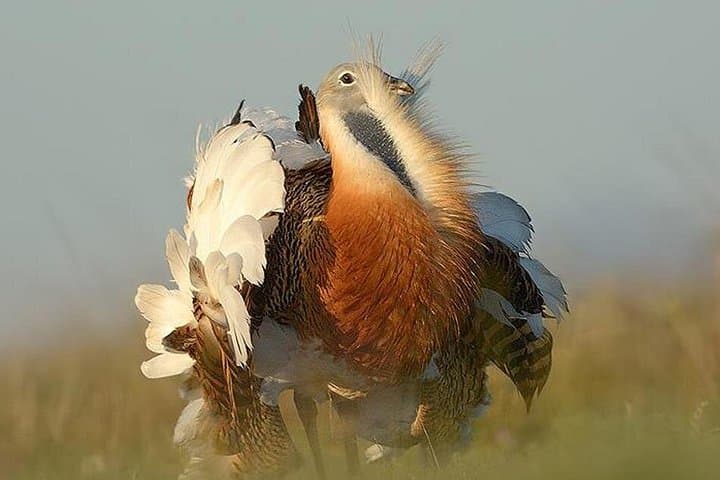
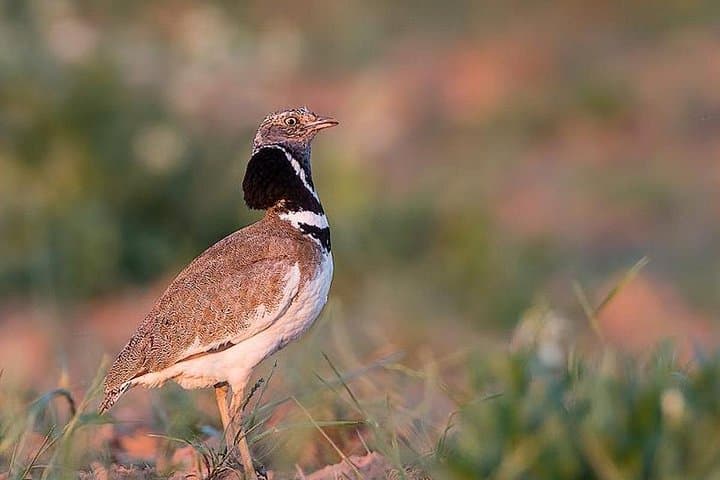
Expect plains species: Great Bustard and Little Bustard strutting across fallow cereal fields, Spanish Imperial Eagle quartering thermal lifts near escarpments, and harriers skimming irrigation ditches. Guides combine natural history with local insight — pointing out ruined watchtowers, shepherding traditions, and seasonal farming rhythms that influence bird movements.
Practical guidance: tours run 4–5 hours and typically cover several roadside viewpoints with minimal walking; bring a good pair of binoculars and a jacket for variable winds. Morning and late-afternoon sessions are best for active birds and softer light. Hydrate, wear sturdy shoes for uneven farm tracks, and be prepared for dusty, exposed conditions.
This is an accessible, small-group birding outing that pairs close observation with cultural context — ideal for anyone wanting efficient, guided access to one of Spain’s most important steppe bird landscapes.
easy.
4–5 hours.
Suitable for most fitness levels; involves short walks from vehicles to vantage points and some standing.
Tours last about 4–5 hours and involve short, easy walks from vehicles to roadside viewpoints; the guide will set pace and accessibility options.
Common targets include Great Bustard, Little Bustard, Spanish Imperial Eagle and harriers, though sightings depend on season and local conditions.
Yes—this tour is advertised as accessible and suitable for all fitness levels; roadside stops minimize long hikes, but check with the operator for specific mobility needs.
Bring warm layers, a windproof jacket, and insulated gloves—mornings on the plateau can be brisk even in spring and fall.
La Mancha Toledana’s open plains have been shaped by centuries of cereal agriculture and pastoralism; scattered archaeological sites and local food traditions reflect this long rural history.
Steppe habitats in central Spain are sensitive to agricultural intensification and infrastructure; low-impact viewing from roads and support for local guides helps minimize disturbance.
BIRDING LA MANCHA, S.L. operates guided outdoor trips and adventures with an emphasis on safety, stewardship, and memorable experiences.


A wind-raw plain opens ahead, low scrub and pale earth stretching to a ribbon of pines on the horizon. Binoculars to the eye, you track the slow silhouette of a Great Bustard crossing the flat in a leisurely arc; the guide raises a spotting scope and the world sharpens into pattern and color.
A wind-raw plain opens ahead, low scrub and pale earth stretching to a ribbon of pines on the horizon. Binoculars to the eye, you track the slow silhouette of a Great Bustard crossing the flat in a leisurely arc; the guide raises a spotting scope and the world sharpens into pattern and color.
La Mancha Toledana sits on the high Meseta of central Spain — a broad plateau shaped by Miocene sediments and millennia of dry farming. The region’s human story runs from prehistoric burial mounds to Roman roads and the folded agrarian customs of La Mancha’s villages; those cultural layers sit beside huge steppe habitats that support rare birds adapted to open ground.
Expect plains species: Great Bustard and Little Bustard strutting across fallow cereal fields, Spanish Imperial Eagle quartering thermal lifts near escarpments, and harriers skimming irrigation ditches. Guides combine natural history with local insight — pointing out ruined watchtowers, shepherding traditions, and seasonal farming rhythms that influence bird movements.
Practical guidance: tours run 4–5 hours and typically cover several roadside viewpoints with minimal walking; bring a good pair of binoculars and a jacket for variable winds. Morning and late-afternoon sessions are best for active birds and softer light. Hydrate, wear sturdy shoes for uneven farm tracks, and be prepared for dusty, exposed conditions.
This is an accessible, small-group birding outing that pairs close observation with cultural context — ideal for anyone wanting efficient, guided access to one of Spain’s most important steppe bird landscapes.