THE ADVENTURE COLLECTIVE® · Independent discovery and booking for outdoor travel

Wander two hours through Chefchaouen’s iconic blue medina with a private guide—visit the Kasbah, Place Uta el-Hammam, the narrow lanes and the Ras El Maa spring while learning local history and practical tips for exploring.
Wander two hours through Chefchaouen’s iconic blue medina with a private guide—visit the Kasbah, Place Uta el-Hammam, the narrow lanes and the Ras El Maa spring while learning local history and practical tips for exploring.
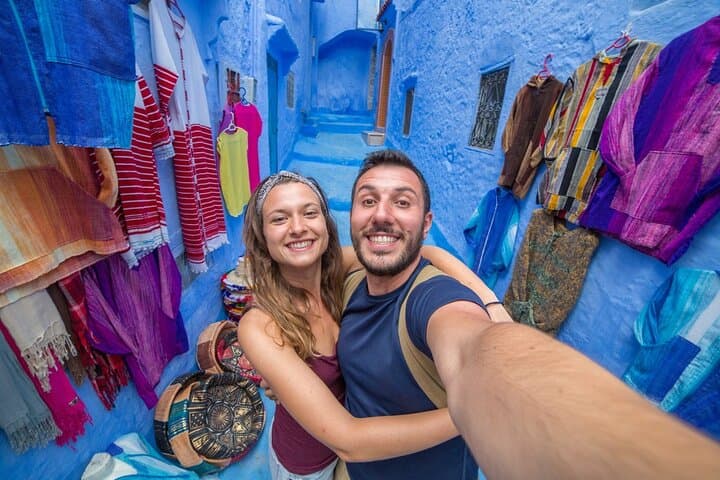
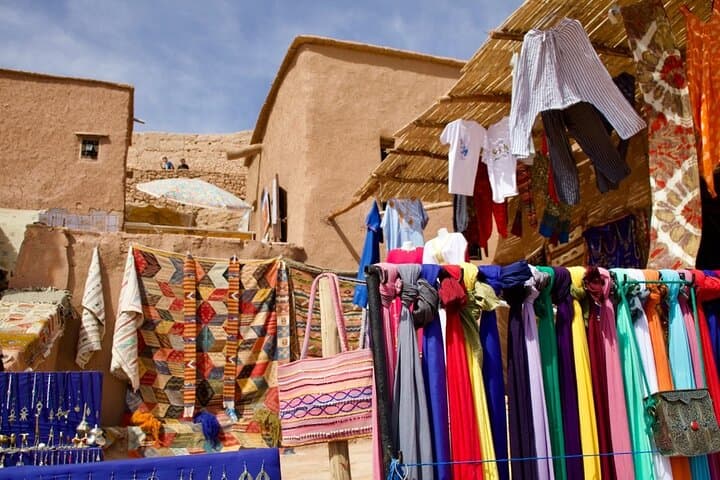
Morning light slices down the alleyways of Chefchaouen and the blue walls seem to breathe—cool paint catching the first rays while vendors arrange woven rugs and fresh mint. On a private two-hour walk you move at an unhurried pace, guided by a local who knows which doors open to rooftop views and where the city’s color deepens to indigo.
Verified experiences and guided adventures in the surrounding area.
Operated by Opatrip.com Morocco · Chefchaouen, Tanger-Tetouan-Al Hoceima
Morning light slices down the alleyways of Chefchaouen and the blue walls seem to breathe—cool paint catching the first rays while vendors arrange woven rugs and fresh mint. On a private two-hour walk you move at an unhurried pace, guided by a local who knows which doors open to rooftop views and where the city’s color deepens to indigo.
The walk touches the city’s core: the 15th-century Kasbah built by Moulay Ali ibn Rashid, the lively Place Uta el-Hammam, the medina lanes patterned by Andalusian refugees, and the nearby Ras El Maa spring where water insists you pause. Geologically the Rif Mountains rise from folded sedimentary rock; slopes around Chefchaouen are terraced and green, feeding springs that sustained the town’s growth. Cultural traces are visible in azulejo tiles, Spanish loanwords, and the medina’s relaxed rhythms.
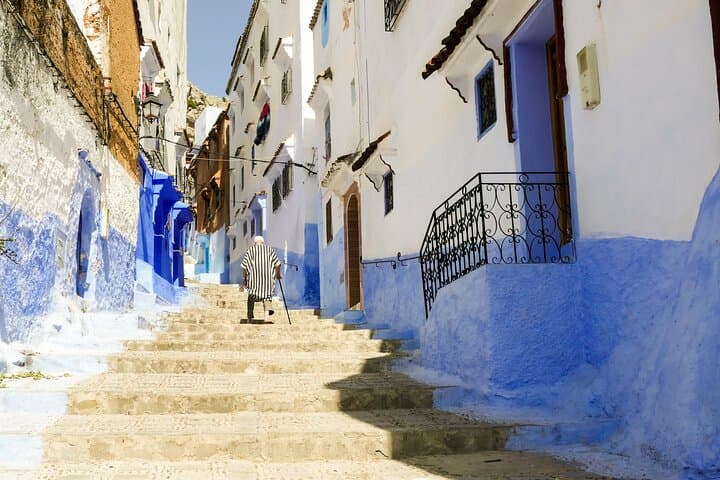
Practically, this is an easy, urban hike over uneven stone and occasional steps—two hours that reward slow movement and good camera framing. Early morning or late afternoon avoids heat and the busiest café hours; bring water, wear supportive shoes, and carry cash for small purchases and tips. Respect painted surfaces, ask before photographing people, and use a local guide to unlock off-main-path viewpoints like the Spanish Mosque ridge.
For travelers seeking approachable exploration, the private format lets you tailor stops—linger at a rooftop for tea, or follow a path to the cascade—while learning about local history and conservation. The city’s blue will challenge your expectations: it’s both backdrop and living part of community life.
easy.
2 hours.
Suitable for most fitness levels; involves walking on uneven stone and short flights of steps.
Most departures start in or near Place Uta el-Hammam in the medina; your confirmation will include exact meeting details and your guide’s contact.
The tour is listed as stroller-accessible in parts, but expect steps and narrow alleys—compact strollers work best and caregivers should be prepared to carry them short distances.
Local guides often speak Arabic, Spanish, and French; many also speak English—check with the operator if you require a specific language.
This private walking experience typically focuses on exteriors and viewpoints; Kasbah access may be available but verify if internal admission is included or paid locally.
Founded in 1471 by Moulay Ali ibn Rashid and later shaped by Andalusian refugees, Chefchaouen blends North African and Spanish influences reflected in its architecture and language.
Water is precious in the Rif—minimize single-use plastics, avoid touching or repainting historic walls, and support local guides and artisans to keep tourism sustainable.
Opatrip.com Morocco operates guided outdoor trips and adventures with an emphasis on safety, stewardship, and memorable experiences.
Morning light slices down the alleyways of Chefchaouen and the blue walls seem to breathe—cool paint catching the first rays while vendors arrange woven rugs and fresh mint. On a private two-hour walk you move at an unhurried pace, guided by a local who knows which doors open to rooftop views and where the city’s color deepens to indigo.
Morning light slices down the alleyways of Chefchaouen and the blue walls seem to breathe—cool paint catching the first rays while vendors arrange woven rugs and fresh mint. On a private two-hour walk you move at an unhurried pace, guided by a local who knows which doors open to rooftop views and where the city’s color deepens to indigo.
The walk touches the city’s core: the 15th-century Kasbah built by Moulay Ali ibn Rashid, the lively Place Uta el-Hammam, the medina lanes patterned by Andalusian refugees, and the nearby Ras El Maa spring where water insists you pause. Geologically the Rif Mountains rise from folded sedimentary rock; slopes around Chefchaouen are terraced and green, feeding springs that sustained the town’s growth. Cultural traces are visible in azulejo tiles, Spanish loanwords, and the medina’s relaxed rhythms.
Practically, this is an easy, urban hike over uneven stone and occasional steps—two hours that reward slow movement and good camera framing. Early morning or late afternoon avoids heat and the busiest café hours; bring water, wear supportive shoes, and carry cash for small purchases and tips. Respect painted surfaces, ask before photographing people, and use a local guide to unlock off-main-path viewpoints like the Spanish Mosque ridge.
For travelers seeking approachable exploration, the private format lets you tailor stops—linger at a rooftop for tea, or follow a path to the cascade—while learning about local history and conservation. The city’s blue will challenge your expectations: it’s both backdrop and living part of community life.