THE ADVENTURE COLLECTIVE® · Independent discovery and booking for outdoor travel

Wear authentic samurai armor, practice samurai-style calligraphy, and sip ceremonial matcha inside a hall surrounded by real suits of armor. Finish with a celebratory walk to Sanjo Riverside and professional photos for a vivid, compact Kyoto experience.
Wear authentic samurai armor, practice samurai-style calligraphy, and sip ceremonial matcha inside a hall surrounded by real suits of armor. Finish with a celebratory walk to Sanjo Riverside and professional photos for a vivid, compact Kyoto experience.
You step into a high-ceilinged hall where lacquered cuirasses and iron kabuto peer down like old commanders; the air smells faintly of tatami and powdered tea. Staff in crisp kimono guide you through calligraphy and armor fitting, then lead a short, celebratory march toward the Sanjo Riverside where the Kamo River dares you to claim the moment.
Verified experiences and guided adventures in the surrounding area.
Operated by KYOTO SAMURAI WALK · Kyoto, Kyoto Prefecture
You step into a high-ceilinged hall where lacquered cuirasses and iron kabuto peer down like old commanders; the air smells faintly of tatami and powdered tea. Staff in crisp kimono guide you through calligraphy and armor fitting, then lead a short, celebratory march toward the Sanjo Riverside where the Kamo River dares you to claim the moment.
This experience ties modern presentation to centuries of material culture: the suits on display span Sengoku battlefield pragmatism to Edo-period ceremonial refinement. Matcha served here—branded “Katana”—is prepared in the Buke-cha (samurai tea) style, a ritual historically linked to warrior households. Nakagyo-ku sits on Kyoto’s flat alluvial plain, and the nearby Kamo River has long been both route and stage for civic life; a quick walk places you beside willow-lined banks and low stone bridges used by generations of Kyoto residents.
Practically, the program is compact—about 90 minutes—and designed for photographic impact. Staff handle fittings and portraits; you’ll learn to write a phrase on a gun-sen (war fan) and take it home. Expect close quarters while dressing, some weight from armor components, and steady footing for posed photos on riverside steps.
Plan to arrive with minimal baggage, wear easy-to-move layers, and charge your camera—morning light along the Sanjo stretch makes for the best photos. If you have spinal, cardiovascular, or pregnancy concerns, discuss limitations before booking. For travelers who want a short, visceral encounter with samurai material culture in central Kyoto, this delivers a memorable, well-staged half-day moment.
easy.
90 minutes.
No special fitness required, but be able to stand and move in fitted armor for short periods.
Yes—participants may take home items like the decorated gun-sen (war fan) and tabi socks provided during the session.
Yes—English-speaking staff are part of the program and guide fittings, calligraphy, and the matcha presentation.
The operator maintains multiple armor sets for children, women, and larger guests; notify special requirements at booking for the best fit.
Full refunds are available if you cancel at least 24 hours before the scheduled start time; same-day cancellations are not refundable.
Many of the armors on display come from Sengoku and Edo period styles; Kyoto’s role as a political and cultural center made it a focal point for samurai households and ceremonial practice.
This venue preserves metal and textile artifacts by limiting handling to trained staff—respect their directions, avoid touching displayed pieces, and follow local waste and recycling norms.
KYOTO SAMURAI WALK operates guided outdoor trips and adventures with an emphasis on safety, stewardship, and memorable experiences.
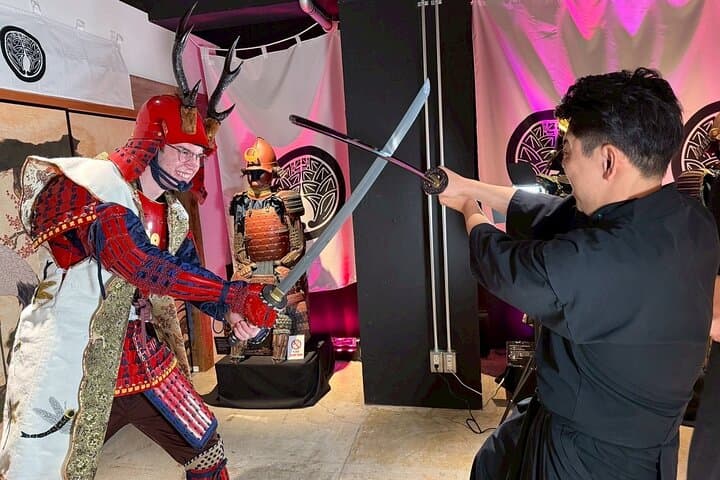
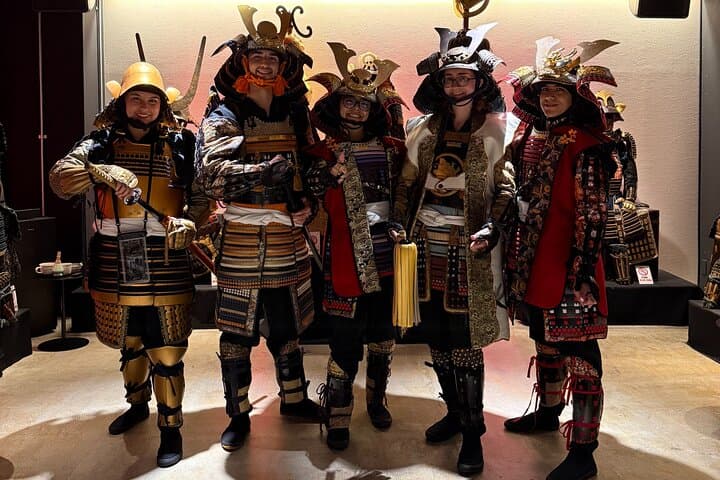
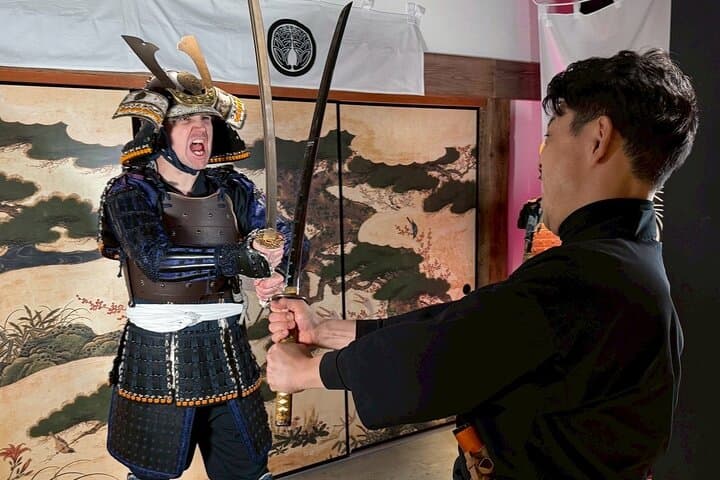
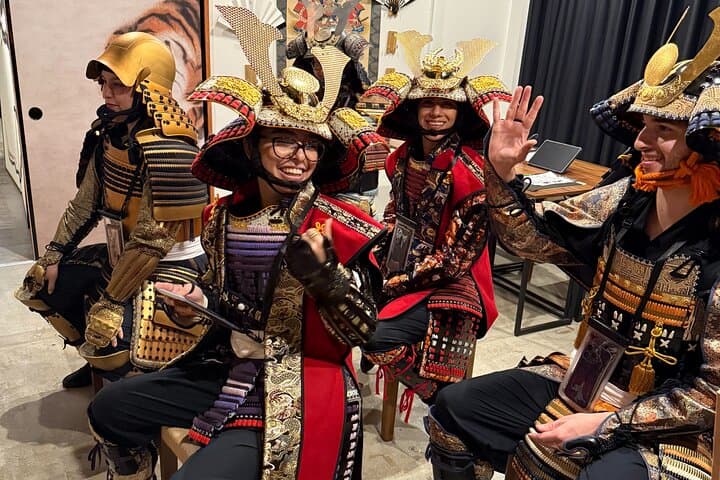
You step into a high-ceilinged hall where lacquered cuirasses and iron kabuto peer down like old commanders; the air smells faintly of tatami and powdered tea. Staff in crisp kimono guide you through calligraphy and armor fitting, then lead a short, celebratory march toward the Sanjo Riverside where the Kamo River dares you to claim the moment.
You step into a high-ceilinged hall where lacquered cuirasses and iron kabuto peer down like old commanders; the air smells faintly of tatami and powdered tea. Staff in crisp kimono guide you through calligraphy and armor fitting, then lead a short, celebratory march toward the Sanjo Riverside where the Kamo River dares you to claim the moment.
This experience ties modern presentation to centuries of material culture: the suits on display span Sengoku battlefield pragmatism to Edo-period ceremonial refinement. Matcha served here—branded “Katana”—is prepared in the Buke-cha (samurai tea) style, a ritual historically linked to warrior households. Nakagyo-ku sits on Kyoto’s flat alluvial plain, and the nearby Kamo River has long been both route and stage for civic life; a quick walk places you beside willow-lined banks and low stone bridges used by generations of Kyoto residents.
Practically, the program is compact—about 90 minutes—and designed for photographic impact. Staff handle fittings and portraits; you’ll learn to write a phrase on a gun-sen (war fan) and take it home. Expect close quarters while dressing, some weight from armor components, and steady footing for posed photos on riverside steps.
Plan to arrive with minimal baggage, wear easy-to-move layers, and charge your camera—morning light along the Sanjo stretch makes for the best photos. If you have spinal, cardiovascular, or pregnancy concerns, discuss limitations before booking. For travelers who want a short, visceral encounter with samurai material culture in central Kyoto, this delivers a memorable, well-staged half-day moment.