THE ADVENTURE COLLECTIVE® · Independent discovery and booking for outdoor travel

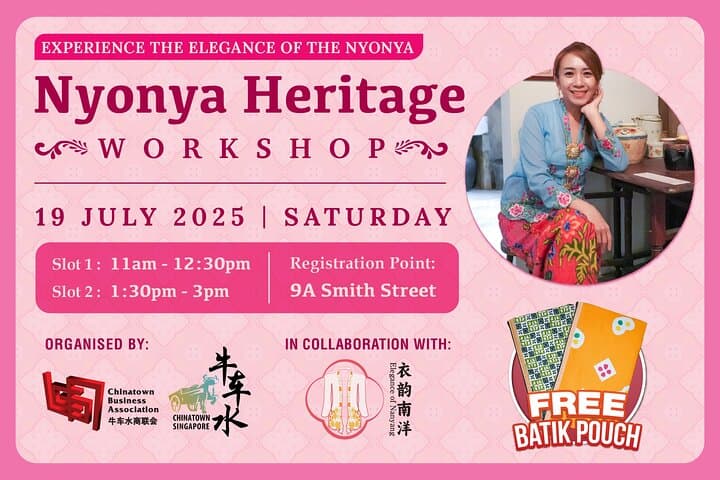
Don a traditional kebaya, learn Nyonya hair styling, and stroll Smith Street in heritage costume. This 90‑minute hands-on workshop offers historical context, photography opportunities, and a handmade batik pouch to take home.
Don a traditional kebaya, learn Nyonya hair styling, and stroll Smith Street in heritage costume. This 90‑minute hands-on workshop offers historical context, photography opportunities, and a handmade batik pouch to take home.
You step off Smith Street into a lane of faded shopfronts and the scent of spice stalls, and a wardrobe of crisply embroidered kebaya waits for you. For ninety minutes you are guided through the gestures and details that define Nyonya style—how a brocade blouse sits, how hairpins hold a traditional coiffure, and where batik patterns carry family stories.
Verified experiences and guided adventures in the surrounding area.
Operated by Chinatown Street Market · Singapore, Singapore
You step off Smith Street into a lane of faded shopfronts and the scent of spice stalls, and a wardrobe of crisply embroidered kebaya waits for you. For ninety minutes you are guided through the gestures and details that define Nyonya style—how a brocade blouse sits, how hairpins hold a traditional coiffure, and where batik patterns carry family stories.
Peranakan culture grew where Malay and Chinese maritime networks met: a hybrid material culture that shaped dress, cuisine, and domestic arts across the Straits Settlements. In Singapore’s Chinatown the workshop sits amid late-19th-century shophouses and neon-lit hawker tables, making the costume and photographs feel like an active page in living history.
The session mixes demonstration with hands-on practice: hosts explain kebaya construction and social meaning, assist with dressing, teach a basic traditional hair style, and lead a short photo stroll around heritage corners of Smith Street. Every participant receives a handmade Nyonya-style batik pouch to take home.
Practicalities: the experience lasts about 90 minutes, runs with small shared groups, and provides full costume sets for the shoot. Expect warm, humid conditions—air-conditioned breaks are usually available. Public transport (Chinatown MRT) is the simplest arrival option, and comfortable shoes work best for the photo walk.
Why go: it’s an accessible, tactile way to learn Peranakan customs, get strong heritage photos, and support local makers. For families and curious travelers alike, the workshop pairs cultural context with a practical, memorable activity.
easy.
1–2 hours.
Suitable for most fitness levels; mostly standing and short walking on flat urban pavement
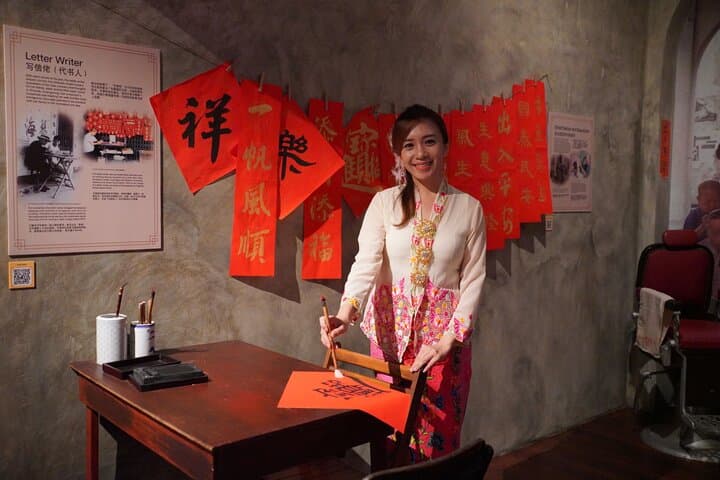
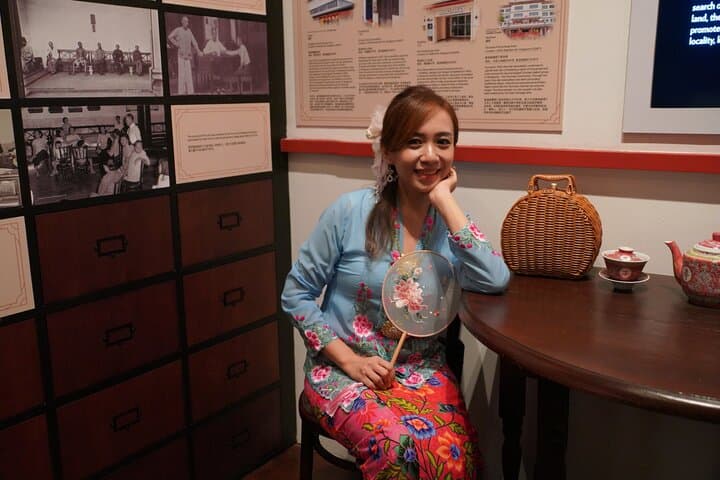
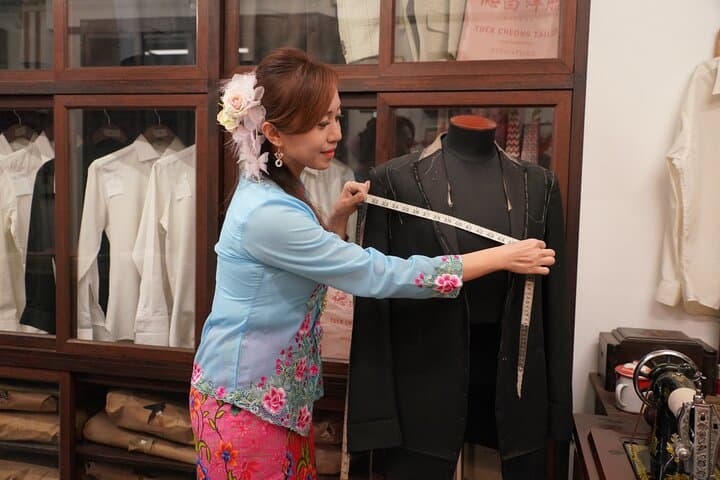
A full Nyonya costume set (blouse, skirt, head accessory) is provided for each participant as part of the experience.
Yes—it's family-friendly and mostly low-impact; please disclose mobility needs when booking so hosts can assist.
Yes—participants are encouraged to take their own photos during the guided photo walk and dress-up session.
Yes—Chinatown MRT and several bus routes stop within a short walk of Smith Street, making it easy to reach without driving.
Peranakan (Straits Chinese) culture formed from centuries of intermarriage and trade in the Malay Archipelago, blending Chinese, Malay and colonial influences evident in dress and domestic crafts.
Respect garments and cloth—handle batik and embroidered pieces gently, support workshops that work with local artisans, and minimize single-use plastics while visiting the district.
Chinatown Street Market operates guided outdoor trips and adventures with an emphasis on safety, stewardship, and memorable experiences.
You step off Smith Street into a lane of faded shopfronts and the scent of spice stalls, and a wardrobe of crisply embroidered kebaya waits for you. For ninety minutes you are guided through the gestures and details that define Nyonya style—how a brocade blouse sits, how hairpins hold a traditional coiffure, and where batik patterns carry family stories.
You step off Smith Street into a lane of faded shopfronts and the scent of spice stalls, and a wardrobe of crisply embroidered kebaya waits for you. For ninety minutes you are guided through the gestures and details that define Nyonya style—how a brocade blouse sits, how hairpins hold a traditional coiffure, and where batik patterns carry family stories.
Peranakan culture grew where Malay and Chinese maritime networks met: a hybrid material culture that shaped dress, cuisine, and domestic arts across the Straits Settlements. In Singapore’s Chinatown the workshop sits amid late-19th-century shophouses and neon-lit hawker tables, making the costume and photographs feel like an active page in living history.
The session mixes demonstration with hands-on practice: hosts explain kebaya construction and social meaning, assist with dressing, teach a basic traditional hair style, and lead a short photo stroll around heritage corners of Smith Street. Every participant receives a handmade Nyonya-style batik pouch to take home.
Practicalities: the experience lasts about 90 minutes, runs with small shared groups, and provides full costume sets for the shoot. Expect warm, humid conditions—air-conditioned breaks are usually available. Public transport (Chinatown MRT) is the simplest arrival option, and comfortable shoes work best for the photo walk.
Why go: it’s an accessible, tactile way to learn Peranakan customs, get strong heritage photos, and support local makers. For families and curious travelers alike, the workshop pairs cultural context with a practical, memorable activity.