THE ADVENTURE COLLECTIVE® · Independent discovery and booking for outdoor travel

Walk historic Dorp Street and oak avenues with a local guide and learn why Simon van der Stel camped by the Eerste River. This 90-minute tour highlights Cape Dutch architecture, town lore and practical tips for pairing your walk with wine tasting.
Walk historic Dorp Street and oak avenues with a local guide and learn why Simon van der Stel camped by the Eerste River. This 90-minute tour highlights Cape Dutch architecture, town lore and practical tips for pairing your walk with wine tasting.
You step under a canopy of mature oaks; sunlight sifts through broad leaves and the Mill Stream gurgles beside the path, pushing a cool note into the air. The street surfaces change from cobbled wagon ways to wide, tree-bordered boulevards as you pass white-gabled houses with rounded gables and brass door knockers. This is a town shaped by water, wine and Dutch settlers — and the walk makes those forces visible.
Verified experiences and guided adventures in the surrounding area.
Operated by A Loud Idea (Pty) Ltd · Stellenbosch, Western Cape
You step under a canopy of mature oaks; sunlight sifts through broad leaves and the Mill Stream gurgles beside the path, pushing a cool note into the air. The street surfaces change from cobbled wagon ways to wide, tree-bordered boulevards as you pass white-gabled houses with rounded gables and brass door knockers. This is a town shaped by water, wine and Dutch settlers — and the walk makes those forces visible.
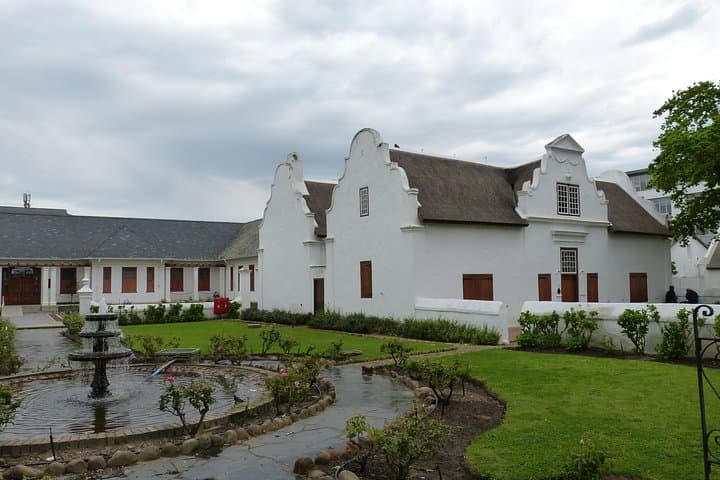
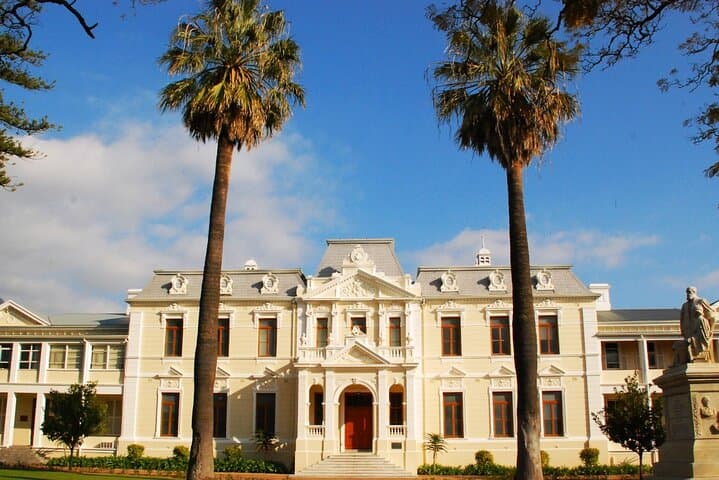
Stellenbosch began as a 17th-century supply hub where Simon van der Stel camped on the Eerste River; that river still defines the town’s low-lying plain. Geologically, the surrounding slopes are a mix of granite and Table Mountain sandstone that help vineyards drain and give local wines their character. Architecturally, the Cape Dutch facades and oak alleys date to three centuries of settlers and craftsmen; later Victorian details and university-era buildings layer onto that story.
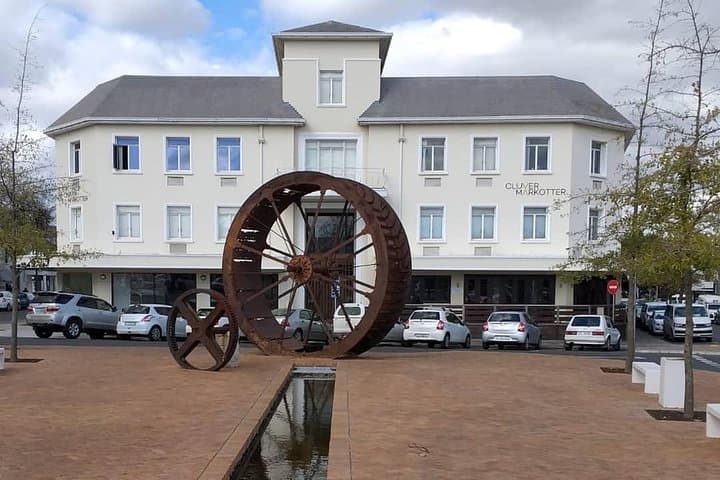
Along the route you'll hear local anecdotes about Dorp Street — once the “wagon way to Cape Town” — and see sites like the Village Museum and art galleries that signal Stellenbosch's cultural pivot from frontier outpost to academic town and wine destination.
Practicalities: the standard guided loop lasts about 90 minutes, covers mostly paved surfaces with short inclines, and moves at an easy urban pace. Wear supportive shoes and bring sun protection and a reusable water bottle. Mornings are cooler and quieter; an afternoon slot pairs neatly with a nearby tasting room. The tour is wheelchair- and stroller-accessible in core sections; check with the operator about detours for fully accessible routing.
moderate.
1–1.5 hours.
Suitable for someone with moderate fitness—able to walk steadily for 90 minutes with brief stops
The meeting point is in central Stellenbosch near the start of Dorp Street; exact details are provided on booking confirmation.
Core sections are accessible and the operator lists wheelchair access, but contact them in advance to confirm any route adjustments you may need.
Shared tours are limited to about 12 travelers for a more intimate experience and better commentary.
Yes—strollers are permitted. Consider that the pace is continuous for 90 minutes and there are some cobbles to navigate.
Named after Simon van der Stel, Stellenbosch grew from a riverside encampment into a colonial town known for Cape Dutch architecture and later a university hub.
The town sits in a Cape Floristic Region with sensitive fynbos nearby—stick to paths and avoid trampling vegetation; water conservation is emphasized during dry months.
A Loud Idea (Pty) Ltd operates guided outdoor trips and adventures with an emphasis on safety, stewardship, and memorable experiences.
You step under a canopy of mature oaks; sunlight sifts through broad leaves and the Mill Stream gurgles beside the path, pushing a cool note into the air. The street surfaces change from cobbled wagon ways to wide, tree-bordered boulevards as you pass white-gabled houses with rounded gables and brass door knockers. This is a town shaped by water, wine and Dutch settlers — and the walk makes those forces visible.
You step under a canopy of mature oaks; sunlight sifts through broad leaves and the Mill Stream gurgles beside the path, pushing a cool note into the air. The street surfaces change from cobbled wagon ways to wide, tree-bordered boulevards as you pass white-gabled houses with rounded gables and brass door knockers. This is a town shaped by water, wine and Dutch settlers — and the walk makes those forces visible.
Stellenbosch began as a 17th-century supply hub where Simon van der Stel camped on the Eerste River; that river still defines the town’s low-lying plain. Geologically, the surrounding slopes are a mix of granite and Table Mountain sandstone that help vineyards drain and give local wines their character. Architecturally, the Cape Dutch facades and oak alleys date to three centuries of settlers and craftsmen; later Victorian details and university-era buildings layer onto that story.
Along the route you'll hear local anecdotes about Dorp Street — once the “wagon way to Cape Town” — and see sites like the Village Museum and art galleries that signal Stellenbosch's cultural pivot from frontier outpost to academic town and wine destination.
Practicalities: the standard guided loop lasts about 90 minutes, covers mostly paved surfaces with short inclines, and moves at an easy urban pace. Wear supportive shoes and bring sun protection and a reusable water bottle. Mornings are cooler and quieter; an afternoon slot pairs neatly with a nearby tasting room. The tour is wheelchair- and stroller-accessible in core sections; check with the operator about detours for fully accessible routing.