THE ADVENTURE COLLECTIVE® · Independent discovery and booking for outdoor travel

Steam curls off the boardwalks and mud pools gurgle as you walk toward Kakahi Falls, the largest hot waterfall in the Southern Hemisphere. This cruise-friendly day trip pairs a self-guided geothermal loop with Rotorua’s signature mud and sulphur spa for an experience that’s equal parts science, culture, and pure relaxation.
Steam curls off the boardwalks and mud pools gurgle as you walk toward Kakahi Falls, the largest hot waterfall in the Southern Hemisphere. This cruise-friendly day trip pairs a self-guided geothermal loop with Rotorua’s signature mud and sulphur spa for an experience that’s equal parts science, culture, and pure relaxation.
The road leaves the surf of Mount Maunganui and climbs inland, past kiwifruit orchards and the Kaituna River pushing toward the Bay. As the bus crests a rise near Tikitere, the landscape changes tempo: the earth sighs, vents exhale white plumes, and the air takes on that unmistakable tang of sulphur. Hell’s Gate doesn’t whisper you in—it announces itself, a living geology lesson set to a steady percussion of bubbling mud and hissing steam.
Verified experiences and guided adventures in the surrounding area.
Operated by Things to do in Tauranga · Rotorua, Bay of Plenty
The road leaves the surf of Mount Maunganui and climbs inland, past kiwifruit orchards and the Kaituna River pushing toward the Bay. As the bus crests a rise near Tikitere, the landscape changes tempo: the earth sighs, vents exhale white plumes, and the air takes on that unmistakable tang of sulphur. Hell’s Gate doesn’t whisper you in—it announces itself, a living geology lesson set to a steady percussion of bubbling mud and hissing steam.
This is Rotorua’s most dramatic geothermal reserve, known to Māori as Tikitere. For generations, local Ngāti Rangiteaorere used these mineral waters to soothe bodies after conflict and travel. Irish playwright George Bernard Shaw later stood on these same paths and, struck by the otherworldly scene, labeled it “Hell’s Gate.” The name stuck, but the narrative still belongs to the land—and to Māori custom—woven into carvings and stories that frame the experience.
A self-guided one- to two-kilometer circuit leads across boardwalks and firm gravel. The route is mostly flat with minimal elevation change, but it keeps your senses alert. Pools gurgle, silica terraces crunch underfoot, and the Southern Hemisphere’s largest hot waterfall, Kakahi Falls, thunders as if encouraging you onward. Interpretive signs decode the chemistry and culture: why the mud is grey here, how bacteria paint the rocks, and how traditional healing practices evolved alongside these features.
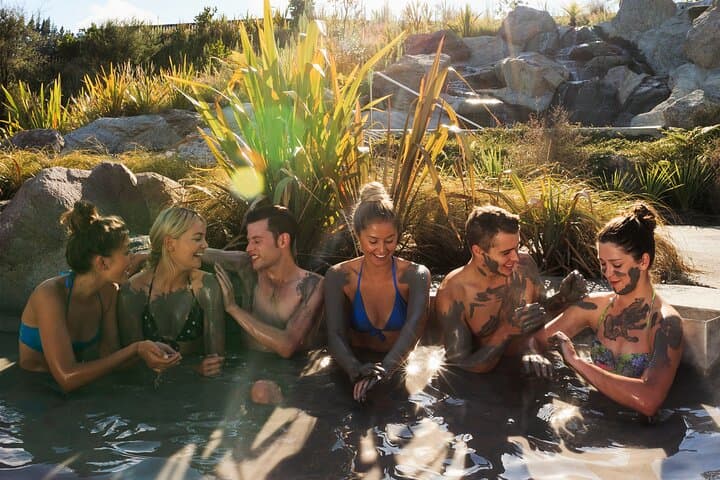
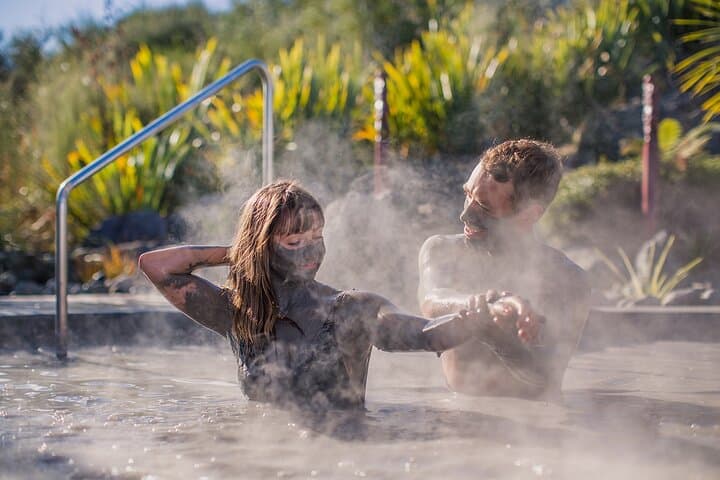
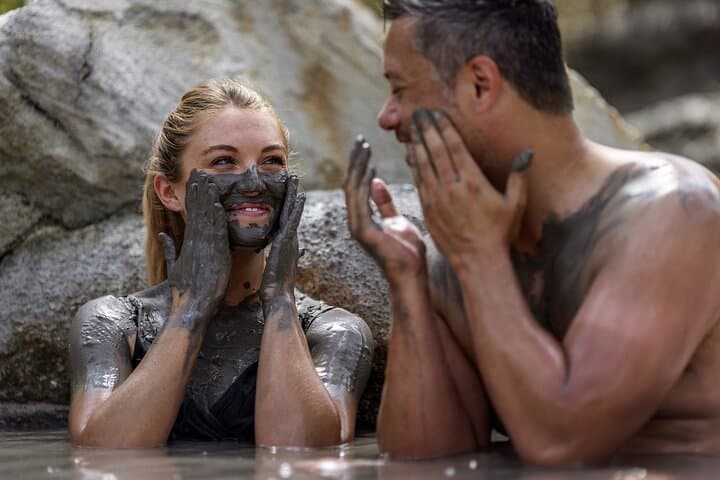
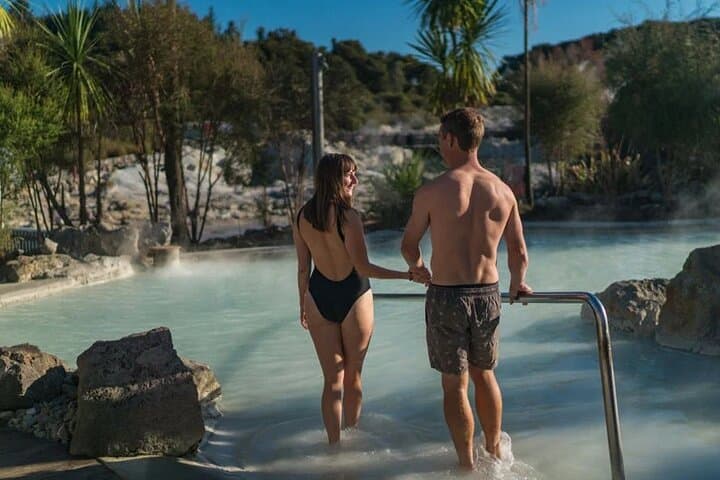
The spa is the exhale after the walk. You sink into velvet mud that dares you to let go while sulphur pools nudge circulation and loosen travel-tired muscles. Expect temperatures in the high 30s Celsius; a cool plunge waits nearby if you need it. Facilities include showers, lockers, and a mud foot pool; towels are available for hire, though bringing your own speeds things up. Wear an older swimsuit—the sulphur will linger like a postcard from the earth.
This cruise-aligned day trip makes logistics easy: pickup is steps from the Port of Tauranga gates, timing flexes to ship schedules, and drive time runs roughly 75–90 minutes each way via SH2 and SH33. On bluebird days, ocean views bookend the steam; on cooler mornings, the vapour grows theatrical, wrapping the boardwalks and giving every photograph a sense of movement.
Practicalities: the path can be damp and slightly slick; closed-toe shoes or sturdy sandals grip best. Hydrate before and after the spa, and avoid jewelry in the pools (sulphur can tarnish metals). Those who are pregnant or have heart concerns should skip the mud baths and consult staff about alternatives. Leave with clean pores, warm muscles, and a clearer picture of how Aotearoa’s restless geology shapes life here—always breathing, always building, always inviting you to look closer.
easy.
5–6 hours (incl. transport); 2.5–3 hours on-site.
Suitable for most travelers comfortable walking 1–2 km on flat boardwalks in steamy conditions and soaking in hot pools.
Plan 45–75 minutes for the self-guided loop on mostly flat boardwalks and gravel, depending on how often you stop for photos and interpretive signs.
Many visitors with normal skin enjoy them, but if you have sensitivities or open cuts, skip the mud and opt for sulphur pools or consult staff first.
It’s best to remove all jewelry; sulphur can tarnish metals and leave residue. Lockers are available for safe storage.
Lockers are available on-site, and towels can be hired for a small fee. Bringing your own speeds up the post-soak change.
Children are welcome at the park; mud bath participation typically requires ages 6+ with adult supervision. Check current policies before arrival.
Yes, sulphur scent can linger. Rinse thoroughly and wash after; using an older suit avoids worry.
Known to Māori as Tikitere, these waters have long been used for healing; George Bernard Shaw later dubbed it “Hell’s Gate” after witnessing its dramatic landscape in the early 1900s.
Stay on marked boardwalks to protect fragile silica terraces and microbial mats, and avoid soap or shampoo in geothermal areas to keep waters pristine.
Things to do in Tauranga operates guided outdoor trips and adventures with an emphasis on safety, stewardship, and memorable experiences.
The road leaves the surf of Mount Maunganui and climbs inland, past kiwifruit orchards and the Kaituna River pushing toward the Bay. As the bus crests a rise near Tikitere, the landscape changes tempo: the earth sighs, vents exhale white plumes, and the air takes on that unmistakable tang of sulphur. Hell’s Gate doesn’t whisper you in—it announces itself, a living geology lesson set to a steady percussion of bubbling mud and hissing steam.
The road leaves the surf of Mount Maunganui and climbs inland, past kiwifruit orchards and the Kaituna River pushing toward the Bay. As the bus crests a rise near Tikitere, the landscape changes tempo: the earth sighs, vents exhale white plumes, and the air takes on that unmistakable tang of sulphur. Hell’s Gate doesn’t whisper you in—it announces itself, a living geology lesson set to a steady percussion of bubbling mud and hissing steam.
This is Rotorua’s most dramatic geothermal reserve, known to Māori as Tikitere. For generations, local Ngāti Rangiteaorere used these mineral waters to soothe bodies after conflict and travel. Irish playwright George Bernard Shaw later stood on these same paths and, struck by the otherworldly scene, labeled it “Hell’s Gate.” The name stuck, but the narrative still belongs to the land—and to Māori custom—woven into carvings and stories that frame the experience.
A self-guided one- to two-kilometer circuit leads across boardwalks and firm gravel. The route is mostly flat with minimal elevation change, but it keeps your senses alert. Pools gurgle, silica terraces crunch underfoot, and the Southern Hemisphere’s largest hot waterfall, Kakahi Falls, thunders as if encouraging you onward. Interpretive signs decode the chemistry and culture: why the mud is grey here, how bacteria paint the rocks, and how traditional healing practices evolved alongside these features.
The spa is the exhale after the walk. You sink into velvet mud that dares you to let go while sulphur pools nudge circulation and loosen travel-tired muscles. Expect temperatures in the high 30s Celsius; a cool plunge waits nearby if you need it. Facilities include showers, lockers, and a mud foot pool; towels are available for hire, though bringing your own speeds things up. Wear an older swimsuit—the sulphur will linger like a postcard from the earth.
This cruise-aligned day trip makes logistics easy: pickup is steps from the Port of Tauranga gates, timing flexes to ship schedules, and drive time runs roughly 75–90 minutes each way via SH2 and SH33. On bluebird days, ocean views bookend the steam; on cooler mornings, the vapour grows theatrical, wrapping the boardwalks and giving every photograph a sense of movement.
Practicalities: the path can be damp and slightly slick; closed-toe shoes or sturdy sandals grip best. Hydrate before and after the spa, and avoid jewelry in the pools (sulphur can tarnish metals). Those who are pregnant or have heart concerns should skip the mud baths and consult staff about alternatives. Leave with clean pores, warm muscles, and a clearer picture of how Aotearoa’s restless geology shapes life here—always breathing, always building, always inviting you to look closer.