THE ADVENTURE COLLECTIVE® · Independent discovery and booking for outdoor travel

A steep, iconic climb above Howe Sound: the Stawamus Chief hike tests legs with stairs and granite slabs, rewarding you with sweeping coastal panoramas. This guided route pairs local knowledge with flexible pacing for a challenging half‑day adventure.
A steep, iconic climb above Howe Sound: the Stawamus Chief hike tests legs with stairs and granite slabs, rewarding you with sweeping coastal panoramas. This guided route pairs local knowledge with flexible pacing for a challenging half‑day adventure.
You start under towering coastal cedars, the trail damp with moss and the distant rush of a waterfall urging you on. The path quickly tightens into a steep wooden staircase and then into granite slabs that rise like a man-made amphitheater, each ledge revealing Howe Sound opening below — islands, boats, and the Coast Range folding into the west.
Verified experiences and guided adventures in the surrounding area.
Operated by Rise Mountain Adventures · Squamish, British Columbia
You start under towering coastal cedars, the trail damp with moss and the distant rush of a waterfall urging you on. The path quickly tightens into a steep wooden staircase and then into granite slabs that rise like a man-made amphitheater, each ledge revealing Howe Sound opening below — islands, boats, and the Coast Range folding into the west.
The Chief is a granitic pluton shaped by glaciers and time; Indigenous Sḵwx̱wú7mesh (Squamish) people have long known these peaks as a place of significance and travel. Early climbers mapped bolt lines on the cliffs and hikers carved routes up the slabs, turning the massif into a playground for scrambling and viewpoint-seeking that still attracts locals and visitors alike.
Expect rainforest understory, a mid-trail waterfall with a narrow viewing stair, and a final push across smooth, glacier-scoured granite. Guides often point out lichens, coastal birds, and the way glaciers polished the slabs into broad walkways. The summit offers picnic-ready viewpoints that make the effort worthwhile.
Practically: wear stiff-soled boots, carry 1–2 liters of water, and plan for slippery rock when wet. Start early to beat crowds and afternoon weather changes common on the Sea-to-Sky corridor. If you have limited mobility or significant heart issues, choose a lower section or a guided, paced group — the route can be relentless on the legs. Leave no trace and respect route closures during nesting or wet seasons; that keeps the Chief wild for the next ascent.
challenging.
1.5–4.5 hours.
Good cardiovascular fitness and strong leg endurance recommended; frequent stair climbing and scrambling sections require ankle stability.
Depending on pace and which peak you target, expect 1.5–4.5 hours round‑trip; guided groups typically budget ~3–4 hours.
Beginners can join guided, paced groups, but be prepared for steep, sustained climbs and some scrambling on exposed slabs.
There is no special permit for the Chief itself, but parking at the trailhead can be limited — arrive early or use public transit/park nearby in Squamish.
Dogs on leash are allowed on access paths, but expect rough terrain and crowded viewpoints; service animals are permitted per operator notes.
The massif is part of traditional Sḵwx̱wú7mesh territory and its granite was shaped by plutonic intrusion and later glacial sculpting; climbers and guides developed established routes over the 20th century.
Stay on designated trail, pack out waste, and respect seasonal closures to protect nesting birds and reduce erosion on fragile alpine vegetation.
Rise Mountain Adventures operates guided outdoor trips and adventures with an emphasis on safety, stewardship, and memorable experiences.
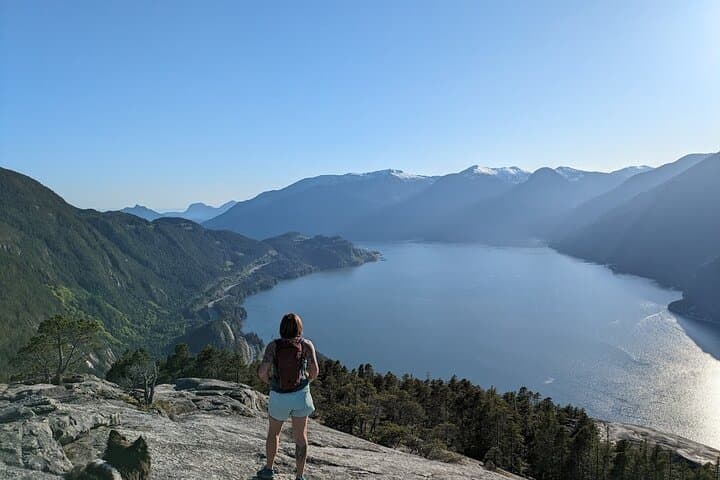
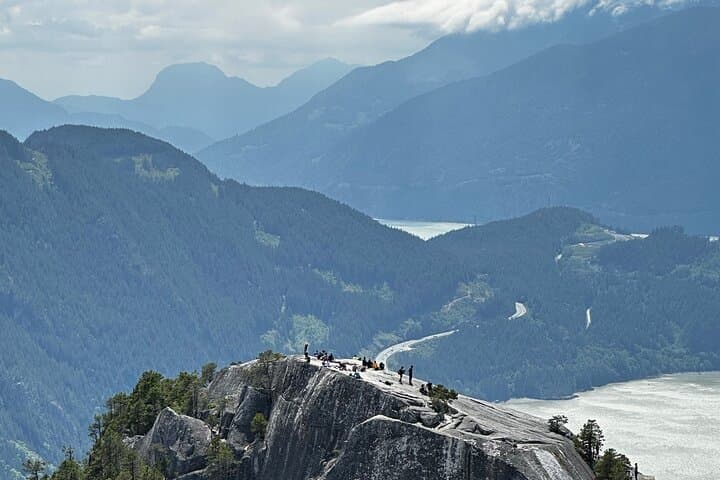
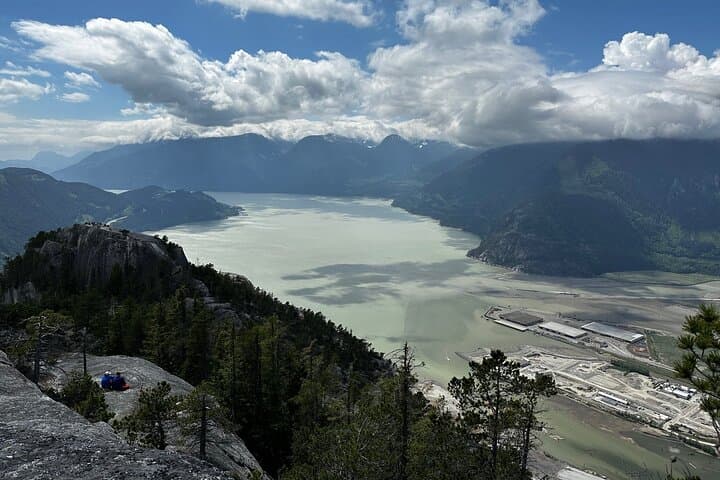
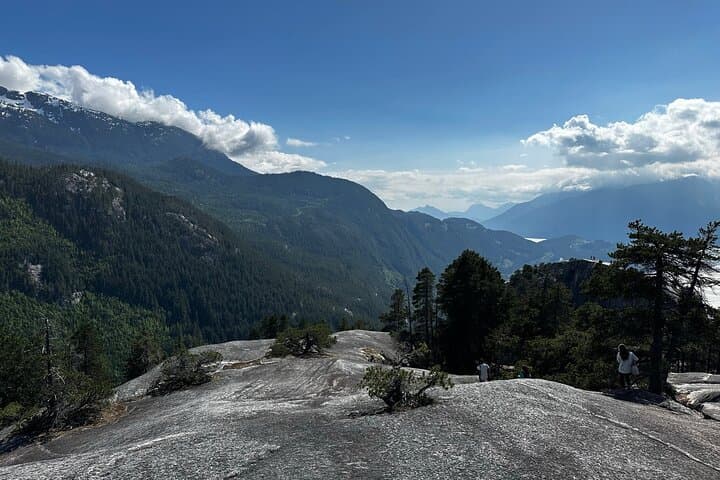
You start under towering coastal cedars, the trail damp with moss and the distant rush of a waterfall urging you on. The path quickly tightens into a steep wooden staircase and then into granite slabs that rise like a man-made amphitheater, each ledge revealing Howe Sound opening below — islands, boats, and the Coast Range folding into the west.
You start under towering coastal cedars, the trail damp with moss and the distant rush of a waterfall urging you on. The path quickly tightens into a steep wooden staircase and then into granite slabs that rise like a man-made amphitheater, each ledge revealing Howe Sound opening below — islands, boats, and the Coast Range folding into the west.
The Chief is a granitic pluton shaped by glaciers and time; Indigenous Sḵwx̱wú7mesh (Squamish) people have long known these peaks as a place of significance and travel. Early climbers mapped bolt lines on the cliffs and hikers carved routes up the slabs, turning the massif into a playground for scrambling and viewpoint-seeking that still attracts locals and visitors alike.
Expect rainforest understory, a mid-trail waterfall with a narrow viewing stair, and a final push across smooth, glacier-scoured granite. Guides often point out lichens, coastal birds, and the way glaciers polished the slabs into broad walkways. The summit offers picnic-ready viewpoints that make the effort worthwhile.
Practically: wear stiff-soled boots, carry 1–2 liters of water, and plan for slippery rock when wet. Start early to beat crowds and afternoon weather changes common on the Sea-to-Sky corridor. If you have limited mobility or significant heart issues, choose a lower section or a guided, paced group — the route can be relentless on the legs. Leave no trace and respect route closures during nesting or wet seasons; that keeps the Chief wild for the next ascent.