THE ADVENTURE COLLECTIVE® · Independent discovery and booking for outdoor travel

Board a ferry at Battery Park and step into three hours that stitch together engineering, immigration, and public memory. This exclusive guided tour gives focused time on Liberty Island and Ellis Island, with contextual storytelling that brings the harbor’s human history into sharp relief.
Board a ferry at Battery Park and step into three hours that stitch together engineering, immigration, and public memory. This exclusive guided tour gives focused time on Liberty Island and Ellis Island, with contextual storytelling that brings the harbor’s human history into sharp relief.
The ferry slips away from Battery Park with a soft, city-scented gust; the skyline sighs as Manhattan peels back and the harbor opens. Salt and engine oil mingle while Lady Liberty waits on her island like a patient host, torch lifted against the Atlantic wind. The guide’s voice lowers and the story begins — not just of a statue, but of millions of crossings, examinations, and new beginnings.
Verified experiences and guided adventures in the surrounding area.
Operated by Babylon Tours New York City · New York, NY
The ferry slips away from Battery Park with a soft, city-scented gust; the skyline sighs as Manhattan peels back and the harbor opens. Salt and engine oil mingle while Lady Liberty waits on her island like a patient host, torch lifted against the Atlantic wind. The guide’s voice lowers and the story begins — not just of a statue, but of millions of crossings, examinations, and new beginnings.
This three-hour experience threads together two of New York’s most consequential sites. At Battery Park the group gathers by the Luis Sanguino bronze 'The Immigrants,' a modern marker in a place where Castle Clinton once processed arrivals before Ellis Island opened. The ferry crosses New York Harbor — a glacially carved inlet shaped over millennia — depositing visitors on Liberty Island where Bartholdi’s copper figure stands upon Fort Wood’s star-shaped base, with Gustave Eiffel’s engineering tucked into the pedestal.
From historical context to human detail, the tour moves with purpose. Guides outline the Franco-American collaboration that produced the statue in 1886, then shift the focus to Ellis Island, where lines, medical inspections, and the hope for a new life played out from 1892 to 1954. Inside the restored Registry Room, wooden benches and skylights frame the spaces where clerks recorded names; outside, the Wall of Honor lets modern visitors search for family names among the hundreds of thousands memorialized there.
The islands also remind visitors of practical realities: security screenings similar to airports, ferry timetables, and weather that can turn the harbor from glassy calm to a sharp chop. Accessibility is straightforward — ramps and accessible ferries are provided — but those aiming for the pedestal or crown should reserve in advance and note extra security and stair access.
For travelers who want depth beyond the plaques, guides point to the quarantine hospital ruins and lesser-seen sidelights about immigrant housing and health inspections. Photographers find drama in the contrast between statue copper and steel skyline; historians hear the hum of policy and people. The tour balances ritual and readability: enough time on each island to absorb the exhibits and still get you back to Manhattan without a rush.
Practical tips: arrive early to pass security, bring a government ID if you plan to access restricted areas, dress in layers for harbor wind, and leave bulky bags behind — lockers are limited. This is a tour built for curious, mobile travelers who want a compact, contextual window into America’s immigration story — clean, direct, and historically charged without the museum-time overwhelm.
easy.
3 hours.
Suitable for most fitness levels; requires moderate walking and some standing during ferry rides and museum visits.
Yes — this tour includes round-trip ferry transport and admission to both Liberty and Ellis Islands as part of the guided experience.
Yes — ferries and major island pathways are wheelchair accessible, and guides note accessible routes; contact the operator for specific needs.
Crown and pedestal access require advance reservations and additional security; request this when booking and bring a government ID.
Yes — ferries and both islands have restroom facilities, though lines can be long during peak times.
Non-alcoholic snacks and water are allowed, but consumption may be limited in museum areas; no alcohol is permitted on national monuments.
The Wall of Honor has an index and staff can assist; the American Family Immigration History Center also maintains searchable records online for deeper research.
The Statue of Liberty was a 19th-century gift from France, completed in 1886 with engineering help from Gustave Eiffel; Ellis Island operated as the nation’s main immigration inspection station from 1892 to 1954.
Both islands are managed to balance high visitor use with preservation; follow posted paths, avoid touching exhibits, and use refillable bottles to reduce single-use plastic.
Babylon Tours New York City operates guided outdoor trips and adventures with an emphasis on safety, stewardship, and memorable experiences.


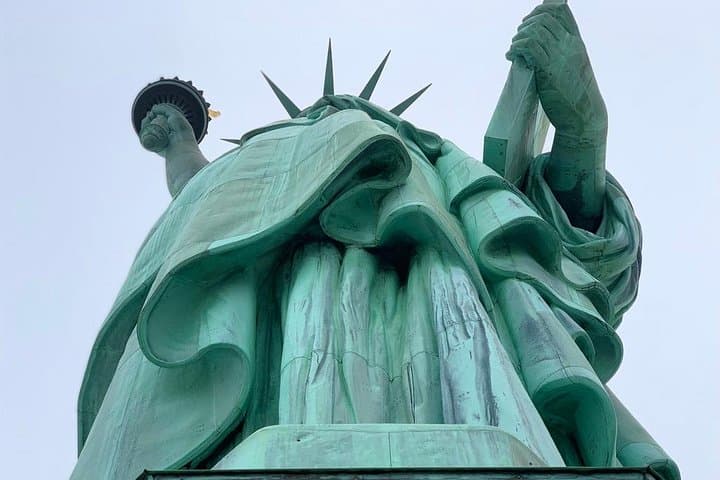
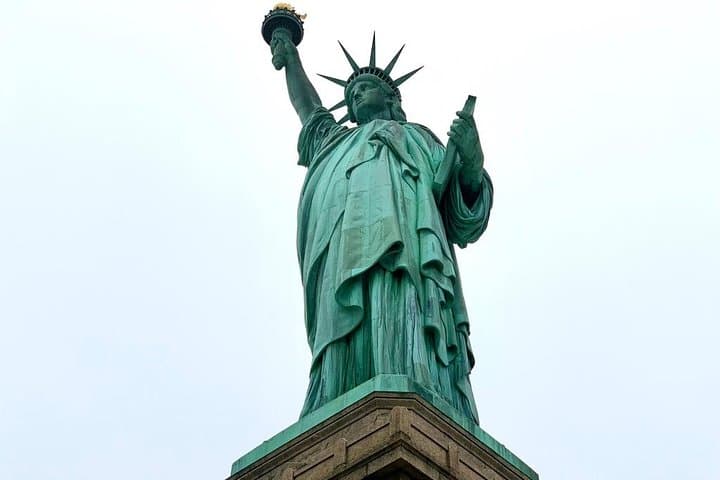
The ferry slips away from Battery Park with a soft, city-scented gust; the skyline sighs as Manhattan peels back and the harbor opens. Salt and engine oil mingle while Lady Liberty waits on her island like a patient host, torch lifted against the Atlantic wind. The guide’s voice lowers and the story begins — not just of a statue, but of millions of crossings, examinations, and new beginnings.
The ferry slips away from Battery Park with a soft, city-scented gust; the skyline sighs as Manhattan peels back and the harbor opens. Salt and engine oil mingle while Lady Liberty waits on her island like a patient host, torch lifted against the Atlantic wind. The guide’s voice lowers and the story begins — not just of a statue, but of millions of crossings, examinations, and new beginnings.
This three-hour experience threads together two of New York’s most consequential sites. At Battery Park the group gathers by the Luis Sanguino bronze 'The Immigrants,' a modern marker in a place where Castle Clinton once processed arrivals before Ellis Island opened. The ferry crosses New York Harbor — a glacially carved inlet shaped over millennia — depositing visitors on Liberty Island where Bartholdi’s copper figure stands upon Fort Wood’s star-shaped base, with Gustave Eiffel’s engineering tucked into the pedestal.
From historical context to human detail, the tour moves with purpose. Guides outline the Franco-American collaboration that produced the statue in 1886, then shift the focus to Ellis Island, where lines, medical inspections, and the hope for a new life played out from 1892 to 1954. Inside the restored Registry Room, wooden benches and skylights frame the spaces where clerks recorded names; outside, the Wall of Honor lets modern visitors search for family names among the hundreds of thousands memorialized there.
The islands also remind visitors of practical realities: security screenings similar to airports, ferry timetables, and weather that can turn the harbor from glassy calm to a sharp chop. Accessibility is straightforward — ramps and accessible ferries are provided — but those aiming for the pedestal or crown should reserve in advance and note extra security and stair access.
For travelers who want depth beyond the plaques, guides point to the quarantine hospital ruins and lesser-seen sidelights about immigrant housing and health inspections. Photographers find drama in the contrast between statue copper and steel skyline; historians hear the hum of policy and people. The tour balances ritual and readability: enough time on each island to absorb the exhibits and still get you back to Manhattan without a rush.
Practical tips: arrive early to pass security, bring a government ID if you plan to access restricted areas, dress in layers for harbor wind, and leave bulky bags behind — lockers are limited. This is a tour built for curious, mobile travelers who want a compact, contextual window into America’s immigration story — clean, direct, and historically charged without the museum-time overwhelm.