THE ADVENTURE COLLECTIVE® · Independent discovery and booking for outdoor travel

Trade skyscrapers for starfields on an evening in the Dubai Desert Conservation Reserve: a curated mix of cultural performance, camel rides, sandboarding and a four-course Emirati dinner under the stars. This five-hour heritage experience balances comfort with authentic desert rhythms.
Trade skyscrapers for starfields on an evening in the Dubai Desert Conservation Reserve: a curated mix of cultural performance, camel rides, sandboarding and a four-course Emirati dinner under the stars. This five-hour heritage experience balances comfort with authentic desert rhythms.
The scene opens as the city lights fade and a vintage Land Rover hums onto a ribbon of guided track, the dunes ahead darkening like pages turning. Sand shifts beneath the tires, and the nearest ridge rises and falls with a slow, deliberate rhythm; the desert seems to breathe, inviting you to slow down.
Verified experiences and guided adventures in the surrounding area.
Operated by 57 Safari · Dubai, Dubai
The scene opens as the city lights fade and a vintage Land Rover hums onto a ribbon of guided track, the dunes ahead darkening like pages turning. Sand shifts beneath the tires, and the nearest ridge rises and falls with a slow, deliberate rhythm; the desert seems to breathe, inviting you to slow down.
This evening experience sits inside the Dubai Desert Conservation Reserve, an area set aside in the late 20th century to protect native flora and fauna and to preserve Bedouin cultural practices. The terrain is primarily wind-sculpted sand—rolling dunes that typically range 10–40 meters high—carved from Holocene-era sediments and pushed by persistent northeasterly winds.
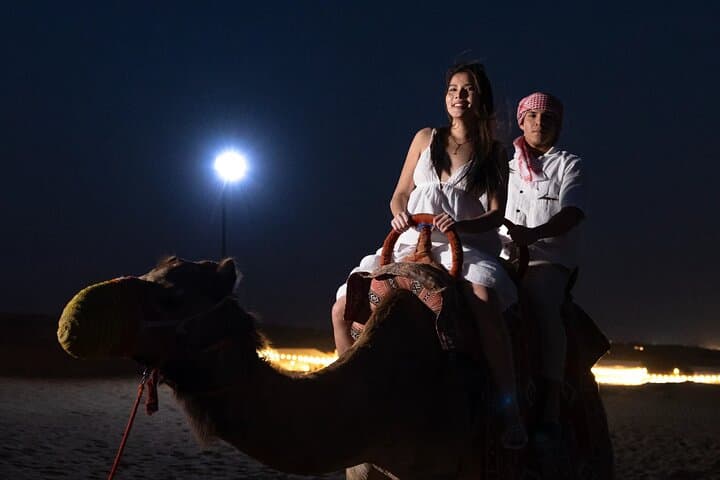
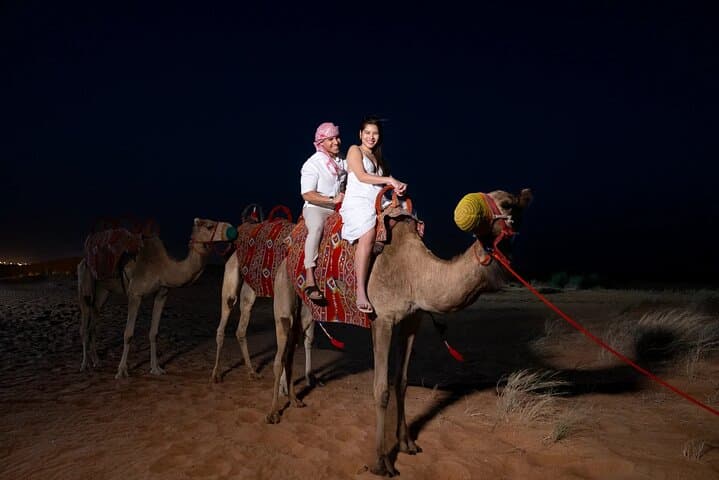
Culturally, the evening stitches together traditional Emirati hospitality and contemporary comfort: Arabic coffee and dates, henna painting, falconry demonstrations and live music. Camels move with patient authority, and sandboarding offers a short, adrenaline-studded descent down a sun-warmed slope. The camp’s majlis-style seating and four-course dinner present local flavors with modern plating.
Practical guidance: the experience runs about five hours and is suitable for most fitness levels; terrain is soft sand with short walks between tents and activity areas. Wear breathable layers—nights cool quickly outside summer—and closed-toe shoes for moving over dunes. Bring at least 1–2 liters of water, sunglasses, and a charged phone or camera with extra battery; light can be fleeting after sunset. Respect local customs: modest attire is appreciated in public areas, and ask before photographing performers or guests.
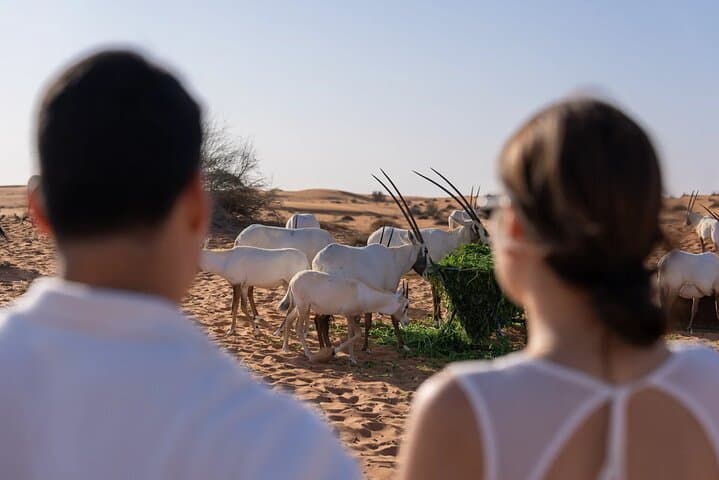
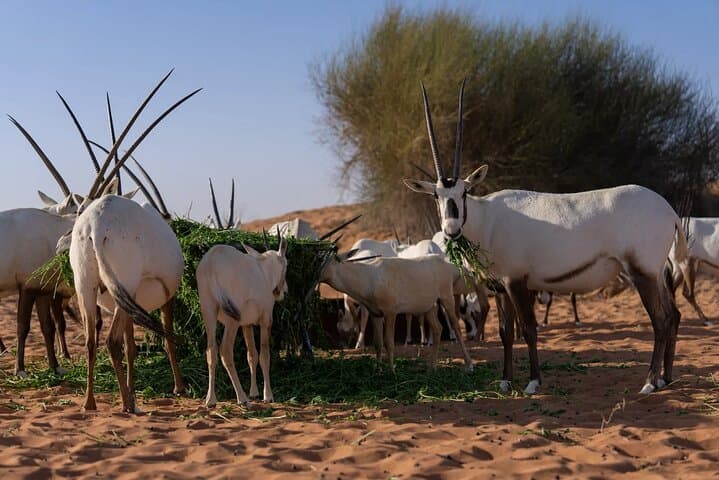
The reserve’s managed access reduces impact and protects wildlife like the Arabian oryx; your visit supports conservation through entrance and guided-route fees. Expect intimate cultural moments, tactile desert landscapes, and a practical, well-paced evening under the stars.
easy.
5 hours.
Suitable for most fitness levels; short walks on soft sand and gentle camel rides—no steep climbs required.
Yes — the camp and transfer routes offer wheelchair accessibility, but confirm specific needs at booking so staff can prepare accessible seating and transfers.
Yes — infants and small children can join and strollers are accommodated; check age restrictions for sandboarding and camel rides when booking.
No — instructors provide brief guidance and most runs are on gentle slopes suitable for beginners.
A four-course dinner is included; inform the operator of dietary restrictions at booking so they can accommodate alternatives.
The Dubai Desert Conservation Reserve was established to protect native species and Bedouin cultural practices; desert camps reference traditional majlis seating and hospitality rituals.
Access is limited to guided routes to minimize impact; evening programs fund local conservation and encourage responsible tourism.
57 Safari operates guided outdoor trips and adventures with an emphasis on safety, stewardship, and memorable experiences.
The scene opens as the city lights fade and a vintage Land Rover hums onto a ribbon of guided track, the dunes ahead darkening like pages turning. Sand shifts beneath the tires, and the nearest ridge rises and falls with a slow, deliberate rhythm; the desert seems to breathe, inviting you to slow down.
The scene opens as the city lights fade and a vintage Land Rover hums onto a ribbon of guided track, the dunes ahead darkening like pages turning. Sand shifts beneath the tires, and the nearest ridge rises and falls with a slow, deliberate rhythm; the desert seems to breathe, inviting you to slow down.
This evening experience sits inside the Dubai Desert Conservation Reserve, an area set aside in the late 20th century to protect native flora and fauna and to preserve Bedouin cultural practices. The terrain is primarily wind-sculpted sand—rolling dunes that typically range 10–40 meters high—carved from Holocene-era sediments and pushed by persistent northeasterly winds.
Culturally, the evening stitches together traditional Emirati hospitality and contemporary comfort: Arabic coffee and dates, henna painting, falconry demonstrations and live music. Camels move with patient authority, and sandboarding offers a short, adrenaline-studded descent down a sun-warmed slope. The camp’s majlis-style seating and four-course dinner present local flavors with modern plating.
Practical guidance: the experience runs about five hours and is suitable for most fitness levels; terrain is soft sand with short walks between tents and activity areas. Wear breathable layers—nights cool quickly outside summer—and closed-toe shoes for moving over dunes. Bring at least 1–2 liters of water, sunglasses, and a charged phone or camera with extra battery; light can be fleeting after sunset. Respect local customs: modest attire is appreciated in public areas, and ask before photographing performers or guests.
The reserve’s managed access reduces impact and protects wildlife like the Arabian oryx; your visit supports conservation through entrance and guided-route fees. Expect intimate cultural moments, tactile desert landscapes, and a practical, well-paced evening under the stars.