THE ADVENTURE COLLECTIVE® · Independent discovery and booking for outdoor travel

Step off the Côte d'Azur promenade and into darkening sky on a 90‑minute guided stargazing session near Fréjus. Expect Moon and planet views through a telescope, constellation orientation, and practical tips for night-sky observation.
Step off the Côte d'Azur promenade and into darkening sky on a 90‑minute guided stargazing session near Fréjus. Expect Moon and planet views through a telescope, constellation orientation, and practical tips for night-sky observation.
The sun slips behind the Mediterranean and the shoreline exhales—salt on the air, waves keeping time. Five minutes on flat sand or pavement brings you away from streetlights into a pocket of dusk where a guide trains a telescope upward. The first silver edge of the Moon cuts through the blue, then planets, constellations and a scattering of winter/summer stars unfold as a taught, practical tour of the sky.
Verified experiences and guided adventures in the surrounding area.
Operated by Sport'Habitude · Fréjus, Provence-Alpes-Côte d'Azur
The sun slips behind the Mediterranean and the shoreline exhales—salt on the air, waves keeping time. Five minutes on flat sand or pavement brings you away from streetlights into a pocket of dusk where a guide trains a telescope upward. The first silver edge of the Moon cuts through the blue, then planets, constellations and a scattering of winter/summer stars unfold as a taught, practical tour of the sky.
Fréjus sits on the Côte d'Azur where Roman roads and amphitheaters still mark the coast; the same clear air that preserved maritime trade now helps stargazing. Geologically the area falls between the red rhyolite of the Esterel hills and the blue of the sea—air clarity and low-lying horizons make for broad sky views. Culturally, evenings here balance promenade culture with quiet appreciation: expect conversational, educational commentary rather than showy spectacle.
Practical guidance: arrive 15–20 minutes before sunset to settle and get a spot near the telescope. Dress in layers—coastal nights can feel several degrees cooler than the day. The 90-minute session involves a short guided walk from the shore into a darker viewing spot, telescope observation of the Moon and planets depending on season, and explanations of constellations and deep-sky objects. Audiovisual aids are minimal; the experience relies on a live guide and optical equipment.
Suitable for families and beginners, the outing is low-impact but weather-dependent—clouds cancel. Bring a small headlamp (red mode preferred), a windproof layer, and curiosity. Expect clear, teachable sky time rather than a crowded observatory experience.
easy.
1–1.5 hours.
Minimal fitness required—flat, short walk from meeting point; suitable for most ages and abilities
Yes—this is family-friendly and labeled physically easy; children should be supervised and may be fascinated by the telescope views.
Sessions are cancelled for cloud cover or strong winds; full refund is available if cancelled at least 24 hours in advance or if the operator cancels due to weather.
Planet visibility depends on their position and season; the guide will prioritise the brightest objects (Moon, visible planets, and prominent constellations) on each outing.
No—sessions are introductory, with guides explaining constellations, the solar system, and how to use the telescope for viewing.
Fréjus began as the Roman Forum Julii; its coastal location has long been a focal point for navigation and night-sky observation by sailors and locals.
Keep light pollution low by using red lights and following guide instructions; stick to marked paths to protect coastal vegetation.
Sport'Habitude operates guided outdoor trips and adventures with an emphasis on safety, stewardship, and memorable experiences.
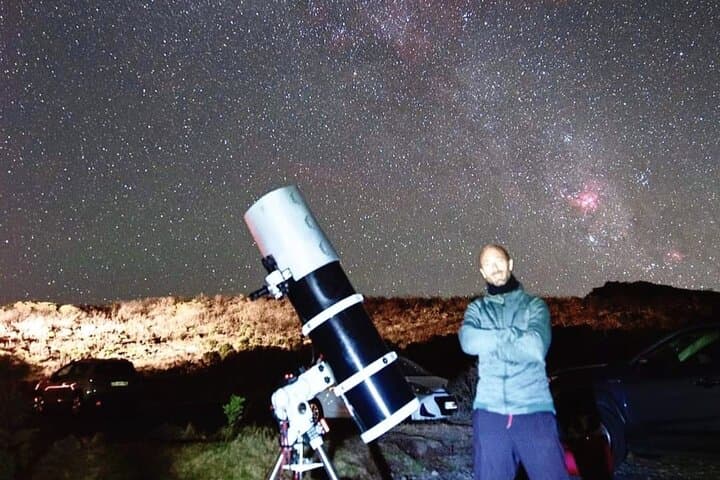
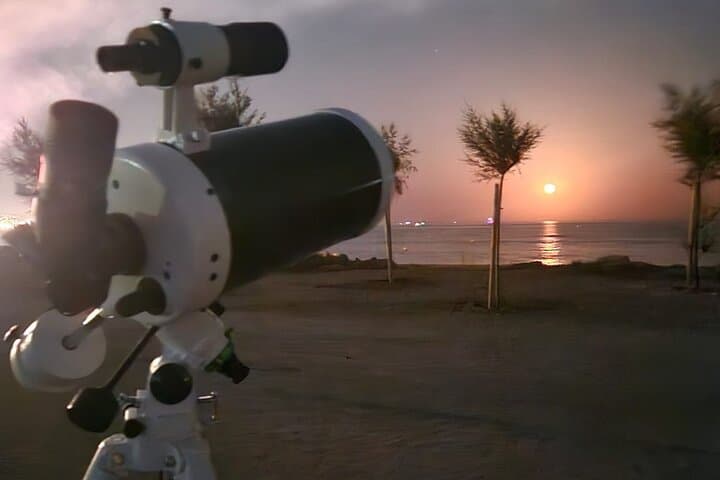
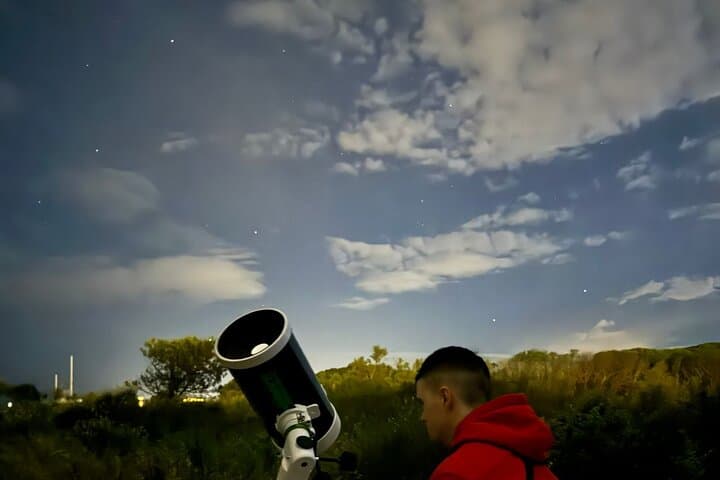
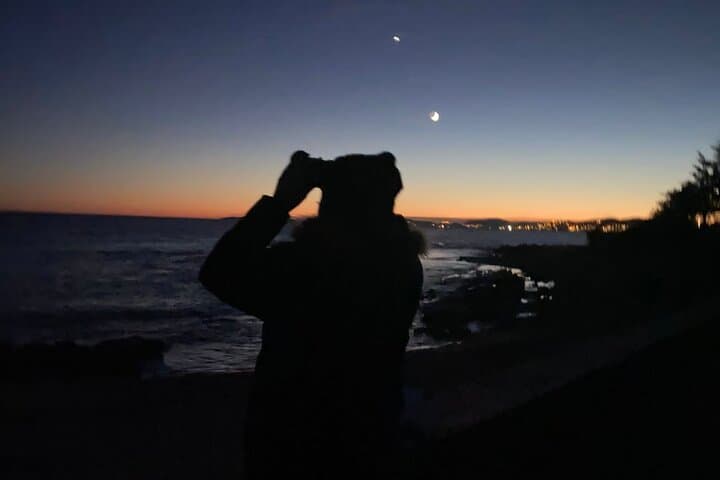
The sun slips behind the Mediterranean and the shoreline exhales—salt on the air, waves keeping time. Five minutes on flat sand or pavement brings you away from streetlights into a pocket of dusk where a guide trains a telescope upward. The first silver edge of the Moon cuts through the blue, then planets, constellations and a scattering of winter/summer stars unfold as a taught, practical tour of the sky.
The sun slips behind the Mediterranean and the shoreline exhales—salt on the air, waves keeping time. Five minutes on flat sand or pavement brings you away from streetlights into a pocket of dusk where a guide trains a telescope upward. The first silver edge of the Moon cuts through the blue, then planets, constellations and a scattering of winter/summer stars unfold as a taught, practical tour of the sky.
Fréjus sits on the Côte d'Azur where Roman roads and amphitheaters still mark the coast; the same clear air that preserved maritime trade now helps stargazing. Geologically the area falls between the red rhyolite of the Esterel hills and the blue of the sea—air clarity and low-lying horizons make for broad sky views. Culturally, evenings here balance promenade culture with quiet appreciation: expect conversational, educational commentary rather than showy spectacle.
Practical guidance: arrive 15–20 minutes before sunset to settle and get a spot near the telescope. Dress in layers—coastal nights can feel several degrees cooler than the day. The 90-minute session involves a short guided walk from the shore into a darker viewing spot, telescope observation of the Moon and planets depending on season, and explanations of constellations and deep-sky objects. Audiovisual aids are minimal; the experience relies on a live guide and optical equipment.
Suitable for families and beginners, the outing is low-impact but weather-dependent—clouds cancel. Bring a small headlamp (red mode preferred), a windproof layer, and curiosity. Expect clear, teachable sky time rather than a crowded observatory experience.