THE ADVENTURE COLLECTIVE® · Independent discovery and booking for outdoor travel

Go deeper into Waitomo's Starburst Cathedral for extended glowworm viewing and tripod-friendly photo opportunities. This guided tour combines karst geology, Māori cultural context, and low-light photography tips for a memorable underground outing.
Go deeper into Waitomo's Starburst Cathedral for extended glowworm viewing and tripod-friendly photo opportunities. This guided tour combines karst geology, Māori cultural context, and low-light photography tips for a memorable underground outing.
You arrive on a damp gravel track, forest noise closing behind you as the path angles toward a dark mouth in the hill. A 300 m walk through ferns and limestone boulders leads to a 30-step descent; then a concrete walkway carries you deeper, where the light falls away and tiny points of bioluminescence open like a hidden sky.
Verified experiences and guided adventures in the surrounding area.
Operated by Waipu Caves Farm Park · Waitomo Village, Waikato
You arrive on a damp gravel track, forest noise closing behind you as the path angles toward a dark mouth in the hill. A 300 m walk through ferns and limestone boulders leads to a 30-step descent; then a concrete walkway carries you deeper, where the light falls away and tiny points of bioluminescence open like a hidden sky.
Geology here is plain and ancient: karst limestone carved over millions of years into chambers, rimstone pools and tight passageways that channel water and life. The cave and its glowworms are woven into local Māori history — the name Waitomo means water passing through a hole — and caves were part of practical and spiritual landscapes for iwi in the region.
The Starburst Cathedral option goes deeper and gives more time for close-up viewing and tripod photography. Expect roughly 20–60 minutes of dedicated dark viewing within a full 3–3.5 hour experience including approach and return. The concrete path and steps make the route broadly accessible for walkers, but the time spent in the dark and the confined environment make it unsuitable for very young children.
Practical guidance: wear sturdy shoes with grip, carry a warm layer (cave temps hover around 10–14°C), and use low-light camera settings or a tripod — flashes disturb the glowworms and ruin long exposure shots. Stay on the path, follow the guide, and keep lights dim to protect the delicate glowworm display. This trip is equal parts natural history and photographic opportunity — enter quiet, move slowly, and let the glowworms do the rest.
easy.
3–4 hours.
Suitable for most fitness levels; you should be able to walk short gravel approaches and descend/ascend 30 steps without difficulty
Yes — the Starburst Cathedral tour explicitly permits tripod use and gives extra time for tripod-based photography, but follow guide instructions about positioning and light use.
This extended tour is not recommended for very young children due to long periods in darkness and the confined environment; check with the operator for age guidance.
The viewing area is very dark; do not use flash photography as it disturbs the glowworms and spoils long-exposure images. Rely on long exposures and low-light settings instead.
No — access requires a 300 m approach, a 30-step descent, and walking 250 m on a concrete path, so it is not wheelchair accessible.
The Waitomo caves formed in karst limestone over millions of years and hold cultural significance for local Māori, who used caves as natural features for travel and resource gathering.
Tours keep to paths and limit lighting to protect glowworm colonies; follow guides, avoid touching formations, and minimise noise and light to reduce impact.
Waipu Caves Farm Park operates guided outdoor trips and adventures with an emphasis on safety, stewardship, and memorable experiences.
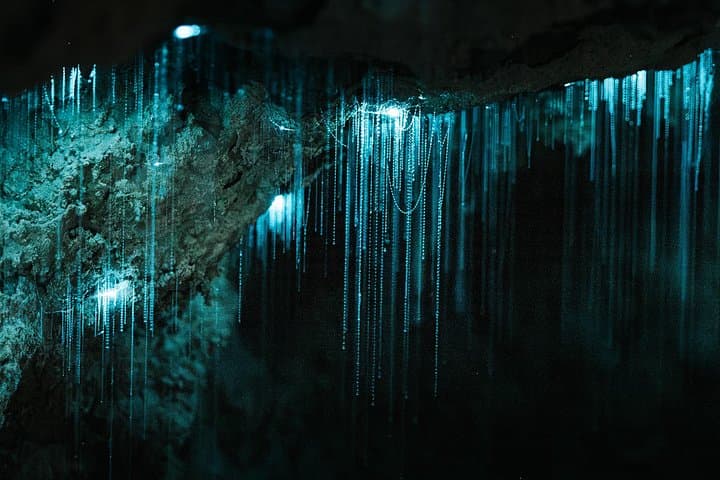
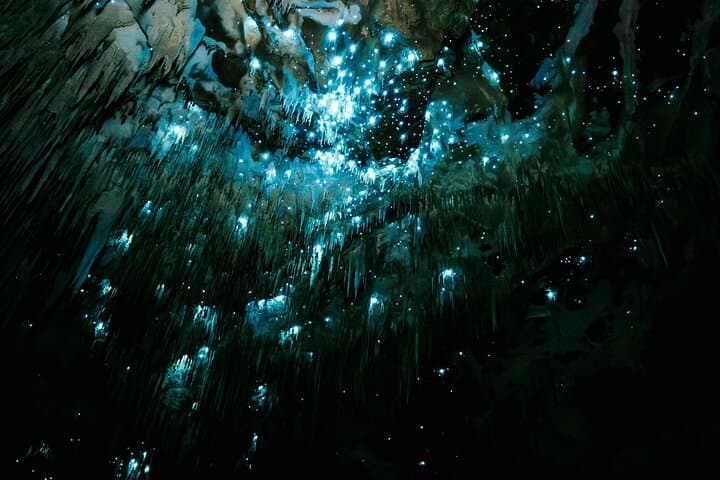
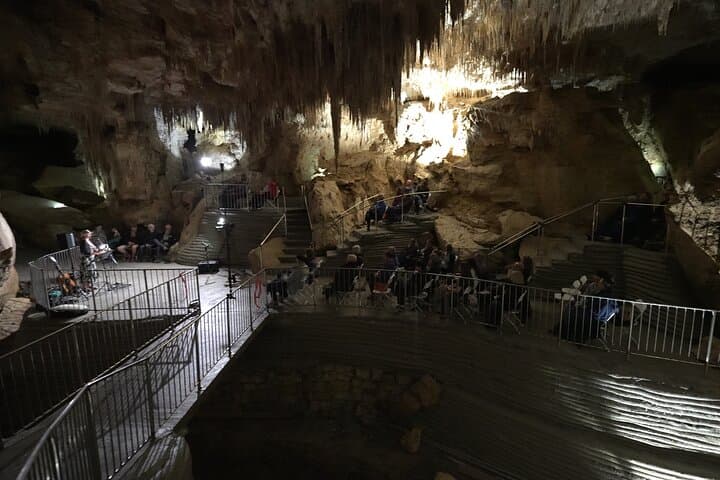
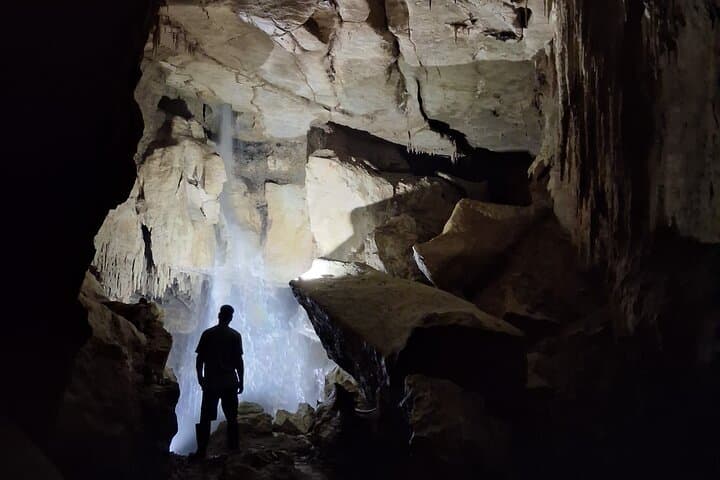
You arrive on a damp gravel track, forest noise closing behind you as the path angles toward a dark mouth in the hill. A 300 m walk through ferns and limestone boulders leads to a 30-step descent; then a concrete walkway carries you deeper, where the light falls away and tiny points of bioluminescence open like a hidden sky.
You arrive on a damp gravel track, forest noise closing behind you as the path angles toward a dark mouth in the hill. A 300 m walk through ferns and limestone boulders leads to a 30-step descent; then a concrete walkway carries you deeper, where the light falls away and tiny points of bioluminescence open like a hidden sky.
Geology here is plain and ancient: karst limestone carved over millions of years into chambers, rimstone pools and tight passageways that channel water and life. The cave and its glowworms are woven into local Māori history — the name Waitomo means water passing through a hole — and caves were part of practical and spiritual landscapes for iwi in the region.
The Starburst Cathedral option goes deeper and gives more time for close-up viewing and tripod photography. Expect roughly 20–60 minutes of dedicated dark viewing within a full 3–3.5 hour experience including approach and return. The concrete path and steps make the route broadly accessible for walkers, but the time spent in the dark and the confined environment make it unsuitable for very young children.
Practical guidance: wear sturdy shoes with grip, carry a warm layer (cave temps hover around 10–14°C), and use low-light camera settings or a tripod — flashes disturb the glowworms and ruin long exposure shots. Stay on the path, follow the guide, and keep lights dim to protect the delicate glowworm display. This trip is equal parts natural history and photographic opportunity — enter quiet, move slowly, and let the glowworms do the rest.