THE ADVENTURE COLLECTIVE® · Independent discovery and booking for outdoor travel

Solve puzzles as you walk 3 miles across Stanford’s iconic campus in a self-guided app-based scavenger hunt. Start at Cantor Arts Museum and move through Memorial Church, Hoover Tower views, a cactus garden and the Rodin sculpture lawn—perfect for solo players or teams up to eight.
Solve puzzles as you walk 3 miles across Stanford’s iconic campus in a self-guided app-based scavenger hunt. Start at Cantor Arts Museum and move through Memorial Church, Hoover Tower views, a cactus garden and the Rodin sculpture lawn—perfect for solo players or teams up to eight.
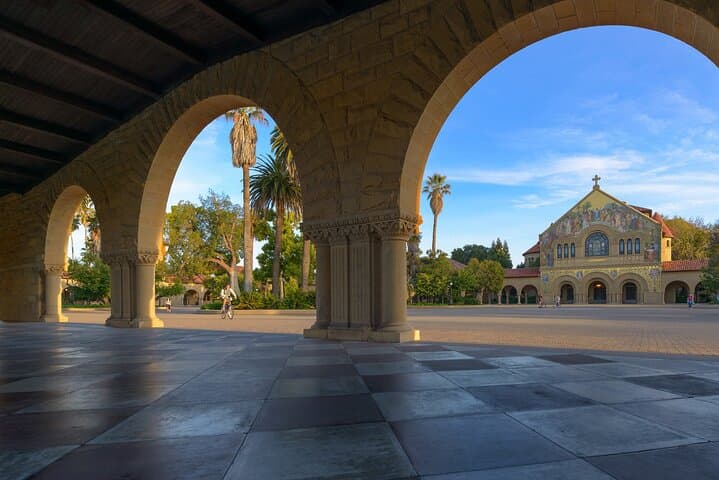
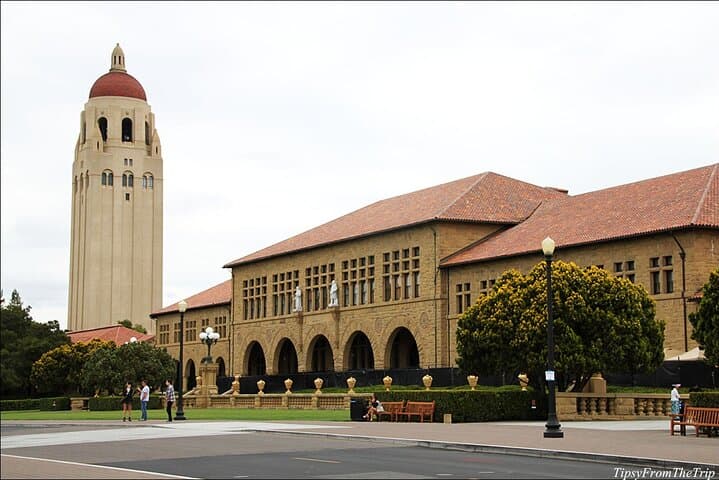
You begin outside the Cantor Arts Museum, the campus air carrying the low hum of bikes and distant toll of Hoover Tower. The app pings; a riddle points you toward Memorial Church. You move across Palm Drive, past palms that lean into the breeze like curious guides, and into a courtyard of sculptures and cactus beds where each stop asks you to look closer — at a plaque, a carving, a line of brick that hints at the next puzzle.
Verified experiences and guided adventures in the surrounding area.
Operated by The Great Game · Stanford, California
You begin outside the Cantor Arts Museum, the campus air carrying the low hum of bikes and distant toll of Hoover Tower. The app pings; a riddle points you toward Memorial Church. You move across Palm Drive, past palms that lean into the breeze like curious guides, and into a courtyard of sculptures and cactus beds where each stop asks you to look closer — at a plaque, a carving, a line of brick that hints at the next puzzle.
Stanford’s story is concrete and human: founded in 1891 by Leland and Jane Stanford, the campus mixes Romanesque and modernist architecture, and the Cantor’s Rodin collection gives the grounds an outdoor gallery quality. Geologically, the campus sits on the San Francisco Peninsula’s alluvial plain with the Santa Cruz foothills framing the horizon to the west.
Culturally the route touches academic rituals — the Memorial Church’s mosaics, Hoover Tower’s observation deck — and quieter campus life in the cactus garden and sculpture lawns. Expect paved paths, short flights of stairs, and roughly 3 miles of walking that most people complete in about 90 minutes at a steady but unhurried pace.
Practical guidance: download The Great Game app at Cantor Arts Museum and register (one player needs the app; teams up to 8). Carry a charged phone and a portable battery, wear comfortable walking shoes, and bring water — parts of the route get direct sun. Public restrooms are available near the Cantor and Main Quad. Start mid-morning to avoid class-change crowds and allow time to pause at viewpoints or the Rodin sculpture garden. This is self-guided: go at your own tempo, solve puzzles, and enjoy Stanford’s mix of open lawn, art, and academic architecture.
easy.
1–2 hours.
Suitable for casual walkers and families; basic stamina for 3 miles of mostly flat walking
Download The Great Game app, register a team near Cantor Arts Museum, and click ‘Stanford University’—one player needs the app to lead the team.
The route covers about 3 miles and most players finish in roughly 90 minutes, though you can go faster or linger at points of interest.
Much of the campus is paved and stroller-friendly; some locations include stairs—plan a slightly modified route if full accessibility is required.
Teams can include 1–8 players on a single registration; larger groups can split into multiple teams and play concurrently.
Stanford University was founded in 1891 by Leland and Jane Stanford; campus architecture reflects turn-of-the-century design alongside modern additions, with several outdoor artworks gifted over generations.
Stick to paved paths and designated lawns, respect museum rules and carry out trash; the campus manages landscaped gardens and collections that benefit from low-impact visitor behavior.
The Great Game operates guided outdoor trips and adventures with an emphasis on safety, stewardship, and memorable experiences.

You begin outside the Cantor Arts Museum, the campus air carrying the low hum of bikes and distant toll of Hoover Tower. The app pings; a riddle points you toward Memorial Church. You move across Palm Drive, past palms that lean into the breeze like curious guides, and into a courtyard of sculptures and cactus beds where each stop asks you to look closer — at a plaque, a carving, a line of brick that hints at the next puzzle.
You begin outside the Cantor Arts Museum, the campus air carrying the low hum of bikes and distant toll of Hoover Tower. The app pings; a riddle points you toward Memorial Church. You move across Palm Drive, past palms that lean into the breeze like curious guides, and into a courtyard of sculptures and cactus beds where each stop asks you to look closer — at a plaque, a carving, a line of brick that hints at the next puzzle.
Stanford’s story is concrete and human: founded in 1891 by Leland and Jane Stanford, the campus mixes Romanesque and modernist architecture, and the Cantor’s Rodin collection gives the grounds an outdoor gallery quality. Geologically, the campus sits on the San Francisco Peninsula’s alluvial plain with the Santa Cruz foothills framing the horizon to the west.
Culturally the route touches academic rituals — the Memorial Church’s mosaics, Hoover Tower’s observation deck — and quieter campus life in the cactus garden and sculpture lawns. Expect paved paths, short flights of stairs, and roughly 3 miles of walking that most people complete in about 90 minutes at a steady but unhurried pace.
Practical guidance: download The Great Game app at Cantor Arts Museum and register (one player needs the app; teams up to 8). Carry a charged phone and a portable battery, wear comfortable walking shoes, and bring water — parts of the route get direct sun. Public restrooms are available near the Cantor and Main Quad. Start mid-morning to avoid class-change crowds and allow time to pause at viewpoints or the Rodin sculpture garden. This is self-guided: go at your own tempo, solve puzzles, and enjoy Stanford’s mix of open lawn, art, and academic architecture.