THE ADVENTURE COLLECTIVE® · Independent discovery and booking for outdoor travel

Learn the basics of standup paddleboarding on Pasir Ris Beach with a two-hour orientation that covers technique, safety, and recovery drills. Ideal for beginners, sessions run in sheltered coastal waters with guided land drills and on-water practice.
Learn the basics of standup paddleboarding on Pasir Ris Beach with a two-hour orientation that covers technique, safety, and recovery drills. Ideal for beginners, sessions run in sheltered coastal waters with guided land drills and on-water practice.
The sun sits low over a shallow shoreline as the South China Sea tugs at your board, daring you to stand. On Pasir Ris Beach the water is usually flat in the mornings, a broad mirror broken only by distant fishing boats and the occasional wingbeat of a heron. Instruction begins on sand—paddle grips, foot placement, and a steadying breath—then moves into the coastal shallows where balance becomes dialogue between body and sea.
Verified experiences and guided adventures in the surrounding area.
Operated by Ohana Beach house · Pasir Ris, Singapore
The sun sits low over a shallow shoreline as the South China Sea tugs at your board, daring you to stand. On Pasir Ris Beach the water is usually flat in the mornings, a broad mirror broken only by distant fishing boats and the occasional wingbeat of a heron. Instruction begins on sand—paddle grips, foot placement, and a steadying breath—then moves into the coastal shallows where balance becomes dialogue between body and sea.
Pasir Ris takes its name from Malay for "white sand," a coastline once dotted with kampong fishing communities. Geologically it’s reclaimed shoreline and soft intertidal flats, which make for forgiving launch zones but also wide exposed mudflats at low tide. Local culture leans recreational: families at the park, anglers at the jetty, and small conservation efforts to protect mangroves and shorebirds.
Practically, this is a two-hour orientation tailored for beginners (minimum 8 years). Expect land drills, basic paddle strokes, turns, bracing, and man-overboard recovery—all conducted within sight of shore. Typical on-water segments use short 200–800 m circuits depending on tide and wind; instructors emphasize tidal awareness and safe launch/recovery.
Bring a quick-dry layer, full water bottle, and reef-safe sunscreen; a leash and PFD are provided. Morning sessions offer calm conditions and cooler winds; afternoons can pick up a sea breeze that challenges new paddlers. Whether you’re chasing core strength or simply the calm of moving over water, Pasir Ris offers a practical, low-stakes place to learn SUP skills and sea smarts.
easy.
2 hours.
Suitable for most activity levels; basic balance and light core strength helpful
No—this orientation is designed for beginners; instructors cover paddle selection, balance, and basic strokes.
The session accepts participants aged 8 and above; minors must be accompanied by an adult.
Participants should be comfortable in the water and ideally know basic swimming; a lifevest is provided for floatation.
The activity has a 24-hour cancellation window for a full refund; instructors may reschedule if conditions are unsafe.
Pasir Ris, Malay for "white sand," was historically a fishing and kampong area; much of the shoreline has been modified but retains recreational and local fishing traditions.
Local groups monitor mangrove patches and shorebirds—avoid trampling vegetation, keep a respectful distance from wildlife, and use reef-safe sunscreen to reduce chemical runoff.
Ohana Beach house operates guided outdoor trips and adventures with an emphasis on safety, stewardship, and memorable experiences.
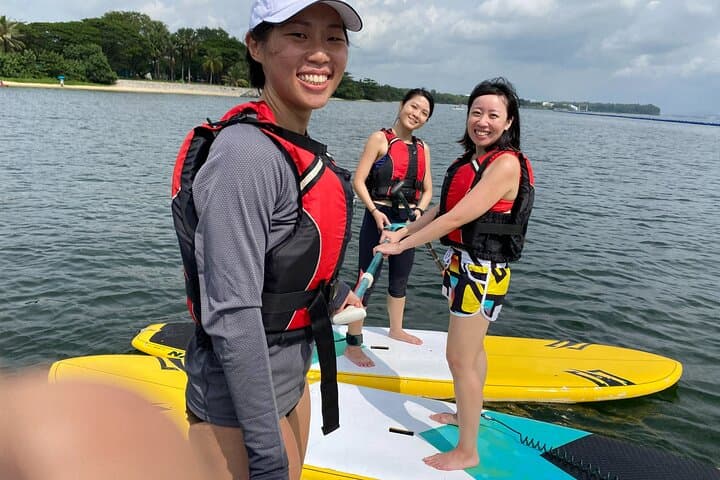


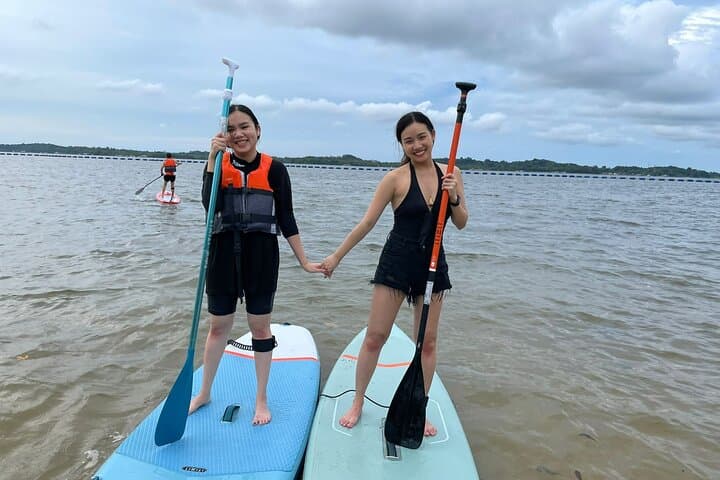
The sun sits low over a shallow shoreline as the South China Sea tugs at your board, daring you to stand. On Pasir Ris Beach the water is usually flat in the mornings, a broad mirror broken only by distant fishing boats and the occasional wingbeat of a heron. Instruction begins on sand—paddle grips, foot placement, and a steadying breath—then moves into the coastal shallows where balance becomes dialogue between body and sea.
The sun sits low over a shallow shoreline as the South China Sea tugs at your board, daring you to stand. On Pasir Ris Beach the water is usually flat in the mornings, a broad mirror broken only by distant fishing boats and the occasional wingbeat of a heron. Instruction begins on sand—paddle grips, foot placement, and a steadying breath—then moves into the coastal shallows where balance becomes dialogue between body and sea.
Pasir Ris takes its name from Malay for "white sand," a coastline once dotted with kampong fishing communities. Geologically it’s reclaimed shoreline and soft intertidal flats, which make for forgiving launch zones but also wide exposed mudflats at low tide. Local culture leans recreational: families at the park, anglers at the jetty, and small conservation efforts to protect mangroves and shorebirds.
Practically, this is a two-hour orientation tailored for beginners (minimum 8 years). Expect land drills, basic paddle strokes, turns, bracing, and man-overboard recovery—all conducted within sight of shore. Typical on-water segments use short 200–800 m circuits depending on tide and wind; instructors emphasize tidal awareness and safe launch/recovery.
Bring a quick-dry layer, full water bottle, and reef-safe sunscreen; a leash and PFD are provided. Morning sessions offer calm conditions and cooler winds; afternoons can pick up a sea breeze that challenges new paddlers. Whether you’re chasing core strength or simply the calm of moving over water, Pasir Ris offers a practical, low-stakes place to learn SUP skills and sea smarts.