THE ADVENTURE COLLECTIVE® · Independent discovery and booking for outdoor travel

Drift five days down the Nile from Luxor to Aswan with guided visits to Karnak, the Valley of the Kings, Kom Ombo and Abu Simbel. Expect daily shore excursions, onboard meals, and a balance of archaeology and relaxed river travel.
Drift five days down the Nile from Luxor to Aswan with guided visits to Karnak, the Valley of the Kings, Kom Ombo and Abu Simbel. Expect daily shore excursions, onboard meals, and a balance of archaeology and relaxed river travel.
Dawn slips along the Nile like a low-angled brushstroke — warm light on mud brick, palm fronds glinting as the cruise slips away from Luxor. On deck, the river pushes you forward; fishermen in small boats nod and guide the scene, while temple façades appear and recede like chapters in a moving book.
Verified experiences and guided adventures in the surrounding area.
Operated by Egyptian Felucca ride On the Nile · Luxor, Luxor Governorate
Dawn slips along the Nile like a low-angled brushstroke — warm light on mud brick, palm fronds glinting as the cruise slips away from Luxor. On deck, the river pushes you forward; fishermen in small boats nod and guide the scene, while temple façades appear and recede like chapters in a moving book.
This five-day, four-night itinerary threads the river’s living history: Karnak’s hypostyle forest and Luxor’s avenue of sphinxes, the tomb-lined cliffs of the Valley of the Kings, the twin temples of Kom Ombo, and the granite-carved majesty of Abu Simbel — relocated stone-by-stone during the Aswan High Dam project. Geology here is immediate: Nile alluvium feeds a green ribbon through limestone and sandstone plateaus, and the temples often perch where ancient rock met water, chosen for visibility and ritual alignment.
Culturally, expect layered rhythms — call to prayer, market barter, felucca sails, and onboard evenings that alternate Egyptian folk music with quiet stargazing. Guides translate hieroglyphs into human stories; small riverside villages offer market stalls and fresh bread.
Practical notes: plan for significant sun and heat — mornings are best for open-air photography and temple walks. Bring sturdy, closed shoes for uneven steps and tomb descents; carry water and a lightweight layer for cooler mornings and evening breezes. Confirm passport-copy requirements ahead and note health restrictions for sensitive travelers. The cruise is paced for sightseeing with regular onshore excursions and comfortable nights aboard — a structured way to experience the Nile’s archaeology and living riverine landscape.
moderate.
5 days (4 nights).
Light-to-moderate walking fitness required—able to climb stairs, walk on uneven temple paths, and board small tender boats.
Yes—most site admissions and all breakfasts, lunches and dinners listed in the itinerary are included; verify specifics at booking for optional or extra-cost excursions.
The tour includes hotel pickup and drop-off and transfers by private air-conditioned vehicle as listed in the inclusions.
Yes—Abu Simbel is part of the five-day route; note this involves a longer overland transfer or optional flight depending on the operator’s plan that day.
This trip is physically easy overall but not recommended for guests with serious back, heart or pregnancy-related restrictions due to stairs and prolonged walking at archaeological sites.
The Nile corridor was the backbone of Pharaonic civilization; many temples were sited to face the river and align with solar and ritual calendars. Abu Simbel was famously relocated during the 1960s Aswan High Dam project.
Large-scale water management and tourism shape modern Nile ecology; support local guides, minimize waste, and avoid single-use plastics to reduce visitor impact.
Egyptian Felucca ride On the Nile operates guided outdoor trips and adventures with an emphasis on safety, stewardship, and memorable experiences.
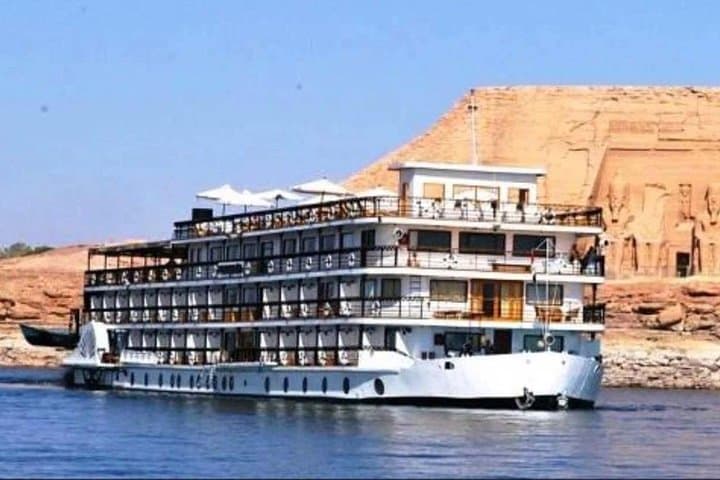


Dawn slips along the Nile like a low-angled brushstroke — warm light on mud brick, palm fronds glinting as the cruise slips away from Luxor. On deck, the river pushes you forward; fishermen in small boats nod and guide the scene, while temple façades appear and recede like chapters in a moving book.
Dawn slips along the Nile like a low-angled brushstroke — warm light on mud brick, palm fronds glinting as the cruise slips away from Luxor. On deck, the river pushes you forward; fishermen in small boats nod and guide the scene, while temple façades appear and recede like chapters in a moving book.
This five-day, four-night itinerary threads the river’s living history: Karnak’s hypostyle forest and Luxor’s avenue of sphinxes, the tomb-lined cliffs of the Valley of the Kings, the twin temples of Kom Ombo, and the granite-carved majesty of Abu Simbel — relocated stone-by-stone during the Aswan High Dam project. Geology here is immediate: Nile alluvium feeds a green ribbon through limestone and sandstone plateaus, and the temples often perch where ancient rock met water, chosen for visibility and ritual alignment.
Culturally, expect layered rhythms — call to prayer, market barter, felucca sails, and onboard evenings that alternate Egyptian folk music with quiet stargazing. Guides translate hieroglyphs into human stories; small riverside villages offer market stalls and fresh bread.
Practical notes: plan for significant sun and heat — mornings are best for open-air photography and temple walks. Bring sturdy, closed shoes for uneven steps and tomb descents; carry water and a lightweight layer for cooler mornings and evening breezes. Confirm passport-copy requirements ahead and note health restrictions for sensitive travelers. The cruise is paced for sightseeing with regular onshore excursions and comfortable nights aboard — a structured way to experience the Nile’s archaeology and living riverine landscape.