THE ADVENTURE COLLECTIVE® · Independent discovery and booking for outdoor travel

Climb the youngest volcano in Central America on a day trip from the port of Corinto. This steep, ash-covered hike rewards effort with crater rims, sulfur-scented air and expansive Pacific views.
Climb the youngest volcano in Central America on a day trip from the port of Corinto. This steep, ash-covered hike rewards effort with crater rims, sulfur-scented air and expansive Pacific views.
You step off the bus where the black cone rises like a fresh wound on the green hills — a pile of cinders that still exhales warm sulfur and a faint metallic tang. The trail begins as shale and fine volcanic ash; each step slips a little, the loose ground daring you forward. Above, the rim cuts the sky and, on a clear day, the Pacific glints to the west.
Verified experiences and guided adventures in the surrounding area.
Operated by Pinolero Tours Nicaragua · León, León Department
You step off the bus where the black cone rises like a fresh wound on the green hills — a pile of cinders that still exhales warm sulfur and a faint metallic tang. The trail begins as shale and fine volcanic ash; each step slips a little, the loose ground daring you forward. Above, the rim cuts the sky and, on a clear day, the Pacific glints to the west.
Cerro Negro is Central America’s recent arrival — born in 1850 and unusually active since, with ash-spewing eruptions and lava that has flowed from lower fractures. The cone is a classic basaltic cinder hill: gravelly slopes, sparse scrub and stark contrasts with the surrounding farmland. Local guides know the vents and craters by sight, and they point out how repeated eruptions reshaped trails and views in decades, not millennia.
Culturally the volcano sits at the edge of everyday life: cattle grazing and coffee farms press close to fields of black sand, and communities shuttle tourists out for day hikes that return them to Corinto in time for the ship.
Practicalities: expect 1–2 hours to the summit over loose ash with roughly 250–400m of elevation gain depending on your start point, and an equal or faster descent if you’re careful. Wear grippy hiking shoes, bring 2L of water, sun protection and a dust gaiter for ash. The route is non-technical but physically demanding; avoid if you have heart or spinal issues. Start early to beat heat and afternoon winds and follow your guide — staying on established paths protects fragile regrowth and keeps you clear of fumaroles.
challenging.
5–7 hours.
You should be in good cardiovascular shape — the hike involves sustained uphill walking on unstable volcanic ash and short steeper sections.
Most groups take 45–90 minutes to reach the summit depending on pace and starting point, with a similar time for descent; the full shore excursion, including transfers, runs about 5–7 hours.
The route is non-technical but consists of loose volcanic ash and cinder that can be slippery; falls happen on descents when hikers go too fast.
Passengers should be reasonably fit; this excursion isn’t recommended for those with heart, spinal, pregnancy or limited mobility restrictions — follow the operator’s contraindications.
Yes — fumarolic gases and a sulfuric scent are common near vents and older craters; guides avoid active fumaroles and monitor conditions for safety.
Cerro Negro first erupted in 1850 and is one of Nicaragua’s most active volcanoes, with roughly two dozen eruptions since its birth and notable activity as recently as 1999.
The cone’s fragile regrowth is vulnerable to erosion from off-trail traffic; stick to marked routes, pack out waste and respect local guides to minimize impact.
Pinolero Tours Nicaragua operates guided outdoor trips and adventures with an emphasis on safety, stewardship, and memorable experiences.
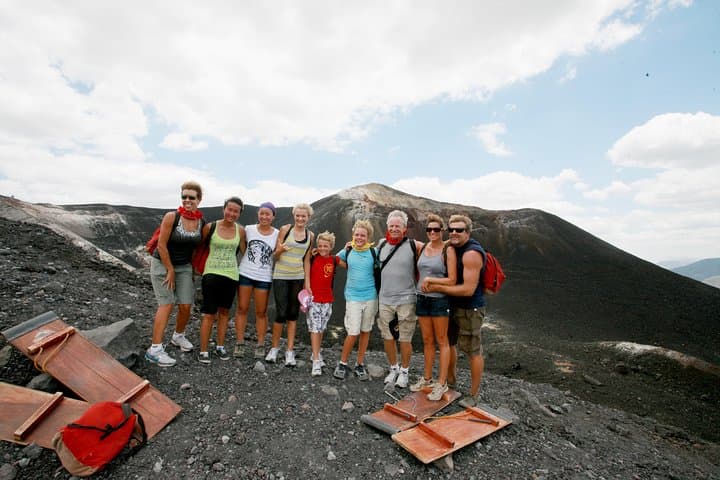
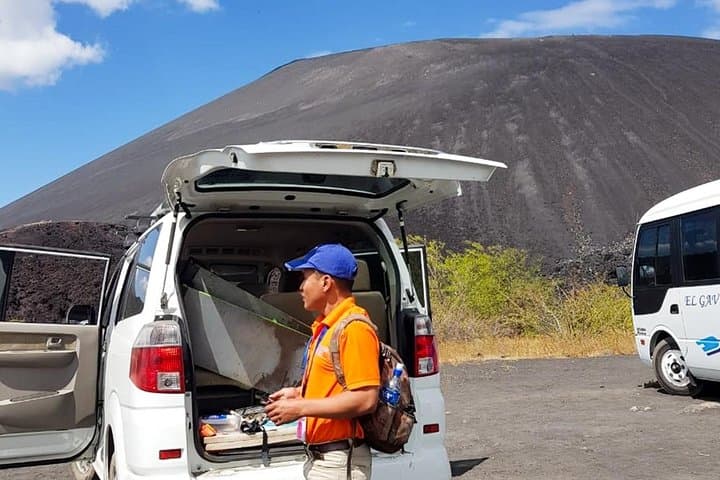
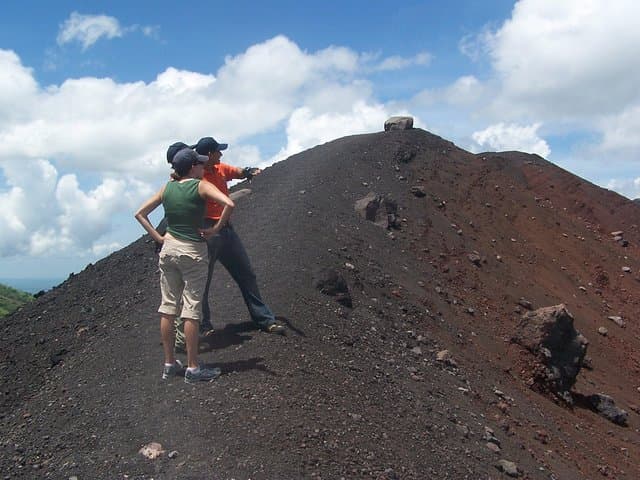
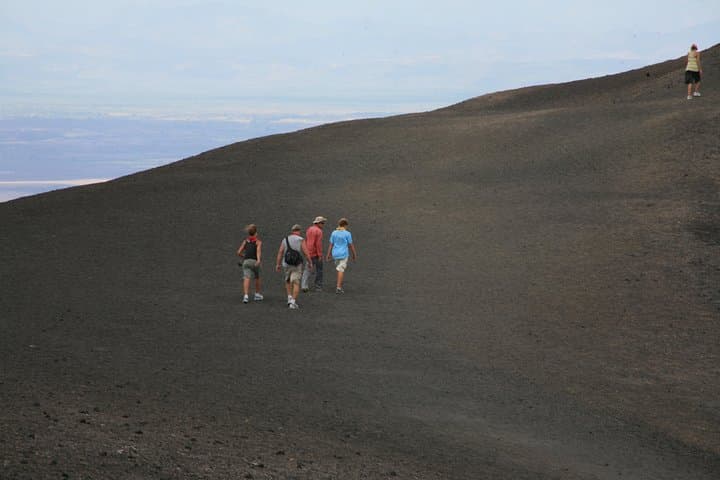
You step off the bus where the black cone rises like a fresh wound on the green hills — a pile of cinders that still exhales warm sulfur and a faint metallic tang. The trail begins as shale and fine volcanic ash; each step slips a little, the loose ground daring you forward. Above, the rim cuts the sky and, on a clear day, the Pacific glints to the west.
You step off the bus where the black cone rises like a fresh wound on the green hills — a pile of cinders that still exhales warm sulfur and a faint metallic tang. The trail begins as shale and fine volcanic ash; each step slips a little, the loose ground daring you forward. Above, the rim cuts the sky and, on a clear day, the Pacific glints to the west.
Cerro Negro is Central America’s recent arrival — born in 1850 and unusually active since, with ash-spewing eruptions and lava that has flowed from lower fractures. The cone is a classic basaltic cinder hill: gravelly slopes, sparse scrub and stark contrasts with the surrounding farmland. Local guides know the vents and craters by sight, and they point out how repeated eruptions reshaped trails and views in decades, not millennia.
Culturally the volcano sits at the edge of everyday life: cattle grazing and coffee farms press close to fields of black sand, and communities shuttle tourists out for day hikes that return them to Corinto in time for the ship.
Practicalities: expect 1–2 hours to the summit over loose ash with roughly 250–400m of elevation gain depending on your start point, and an equal or faster descent if you’re careful. Wear grippy hiking shoes, bring 2L of water, sun protection and a dust gaiter for ash. The route is non-technical but physically demanding; avoid if you have heart or spinal issues. Start early to beat heat and afternoon winds and follow your guide — staying on established paths protects fragile regrowth and keeps you clear of fumaroles.