THE ADVENTURE COLLECTIVE® · Independent discovery and booking for outdoor travel

Stand directly on the planet’s centerline with a private guided visit to the Equator at Kayabwe. This half-day tour blends hands-on physics demonstrations with quick cultural stops and local market flavor.
Stand directly on the planet’s centerline with a private guided visit to the Equator at Kayabwe. This half-day tour blends hands-on physics demonstrations with quick cultural stops and local market flavor.
You step out of the vehicle and the road seems to pause at a painted line—one foot in the northern hemisphere, the other in the southern. Heat hums off the tar; children and vendors gather, cameras click, and the guide points to a simple concrete marker that maps the planet’s most famous invisible seam.
Verified experiences and guided adventures in the surrounding area.
We couldn't find other adventures in this immediate radius right now. Browse our directory for more options.
Browse all experiencesOperated by Gorilla safari uganda · Kayabwe, Mpigi
You step out of the vehicle and the road seems to pause at a painted line—one foot in the northern hemisphere, the other in the southern. Heat hums off the tar; children and vendors gather, cameras click, and the guide points to a simple concrete marker that maps the planet’s most famous invisible seam.
This strip of the Kampala–Masaka highway near Kayabwe marks where 0° latitude crosses Uganda. The place is less about grand geology and more about immediate physics: guides demonstrate tiny centrifugal and gravitational differences with water and bottles so you can see flow direction flip between hemispheres. The equator here became a roadside attraction during colonial mapping and later national tourism development; local craft sellers and informal food stalls are part of the cultural rhythm.
Expect short, flat walks across paved areas and packed dirt; the site is accessible and straightforward, with little elevation change but plenty of sun exposure. The experience is half-science, half-community encounter—listen to the guide’s explanation, buy a cold drink, and try the water-spin demo yourself.
Practical tips: plan for mornings or late afternoons to avoid midday heat and market crowds; bring sun protection, cash for vendors, and a lightweight rain layer during March–May or October–November rains. The visit pairs well with a short-session cultural stop or a longer drive from Kampala. For families and travelers with limited mobility, the site’s paths and parking are accommodating—but expect basic facilities. The reward is simple: a tactile moment on the planet’s centerline and an easy, memorable half-day excursion from Kampala.
easy.
3–5 hours.
Suitable for all fitness levels; minimal walking on flat surfaces
The guided stop typically lasts 30–90 minutes as part of a half-day (3–5 hour) private tour from Kampala, depending on time spent at markets and photo stops.
Yes—paths and parking at the Kayabwe equator markers are generally accessible, but surfaces are basic; check with the operator about vehicle access and assistance.
Any weight difference is imperceptible to an individual—demonstrations show small gravitational effects and water rotation but not a dramatic change in body weight.
Basic restroom facilities and food stalls are common nearby; bring hand sanitizer and small cash for purchases.
The equator marker near Kayabwe grew as a colonial-era survey landmark and later a national roadside attraction where guides interpret geodesy and local culture.
Keep to paved areas, avoid littering, and support local vendors; minimizing single-use plastics and packing out waste helps preserve the roadside environment.
Gorilla safari uganda operates guided outdoor trips and adventures with an emphasis on safety, stewardship, and memorable experiences.


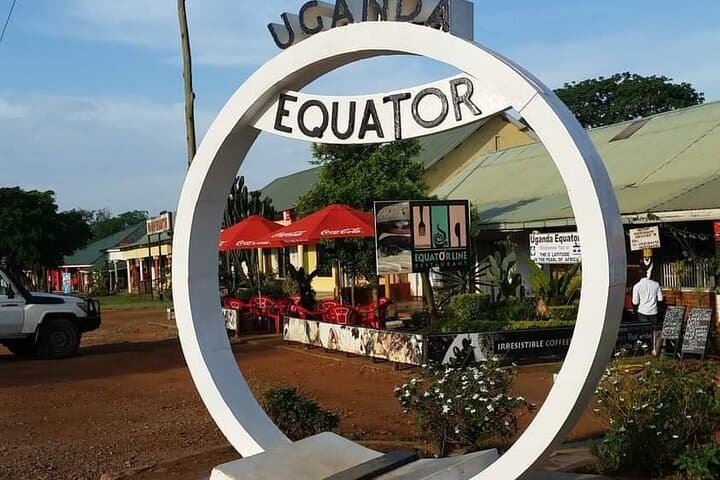
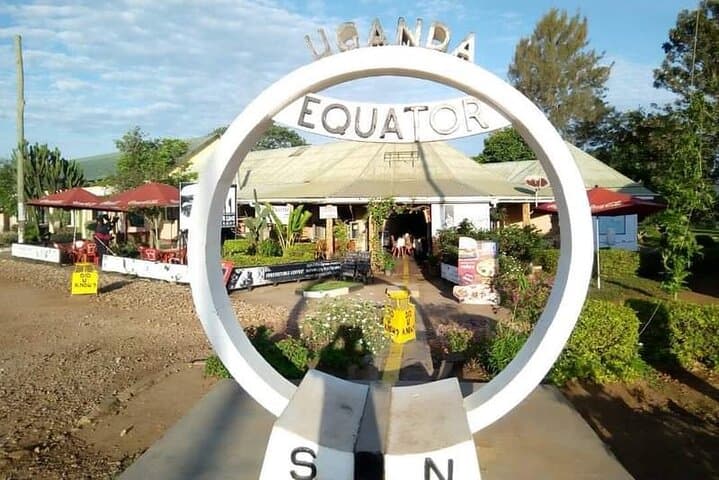
You step out of the vehicle and the road seems to pause at a painted line—one foot in the northern hemisphere, the other in the southern. Heat hums off the tar; children and vendors gather, cameras click, and the guide points to a simple concrete marker that maps the planet’s most famous invisible seam.
You step out of the vehicle and the road seems to pause at a painted line—one foot in the northern hemisphere, the other in the southern. Heat hums off the tar; children and vendors gather, cameras click, and the guide points to a simple concrete marker that maps the planet’s most famous invisible seam.
This strip of the Kampala–Masaka highway near Kayabwe marks where 0° latitude crosses Uganda. The place is less about grand geology and more about immediate physics: guides demonstrate tiny centrifugal and gravitational differences with water and bottles so you can see flow direction flip between hemispheres. The equator here became a roadside attraction during colonial mapping and later national tourism development; local craft sellers and informal food stalls are part of the cultural rhythm.
Expect short, flat walks across paved areas and packed dirt; the site is accessible and straightforward, with little elevation change but plenty of sun exposure. The experience is half-science, half-community encounter—listen to the guide’s explanation, buy a cold drink, and try the water-spin demo yourself.
Practical tips: plan for mornings or late afternoons to avoid midday heat and market crowds; bring sun protection, cash for vendors, and a lightweight rain layer during March–May or October–November rains. The visit pairs well with a short-session cultural stop or a longer drive from Kampala. For families and travelers with limited mobility, the site’s paths and parking are accommodating—but expect basic facilities. The reward is simple: a tactile moment on the planet’s centerline and an easy, memorable half-day excursion from Kampala.