THE ADVENTURE COLLECTIVE® · Independent discovery and booking for outdoor travel

Stand close enough to study David’s chiselled brow and you’ll feel why Florence built an entire language around this sculpture. This small-group Accademia tour pairs focused commentary with practical tips—perfect for first-time museum-goers and seasoned art lovers alike.
Stand close enough to study David’s chiselled brow and you’ll feel why Florence built an entire language around this sculpture. This small-group Accademia tour pairs focused commentary with practical tips—perfect for first-time museum-goers and seasoned art lovers alike.
You step from the sunlit sweep of Piazza delle Belle Arti into a quieter world of stone and silence—the Accademia’s corridors folding you toward a single, commanding figure. Michelangelo’s David fills the space with a presence that makes the room feel like an instrument tuned to his scale; every viewing angle reveals new tensions in muscle and marble.
Verified experiences and guided adventures in the surrounding area.
Operated by Maestro Trips · Florence, Tuscany
You step from the sunlit sweep of Piazza delle Belle Arti into a quieter world of stone and silence—the Accademia’s corridors folding you toward a single, commanding figure. Michelangelo’s David fills the space with a presence that makes the room feel like an instrument tuned to his scale; every viewing angle reveals new tensions in muscle and marble.
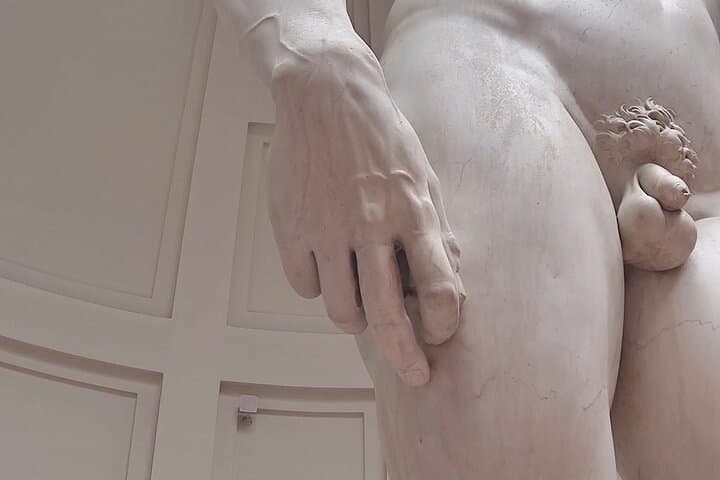
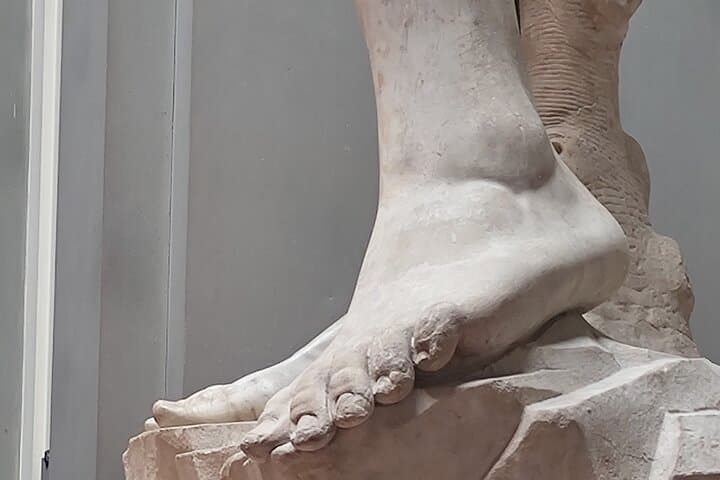
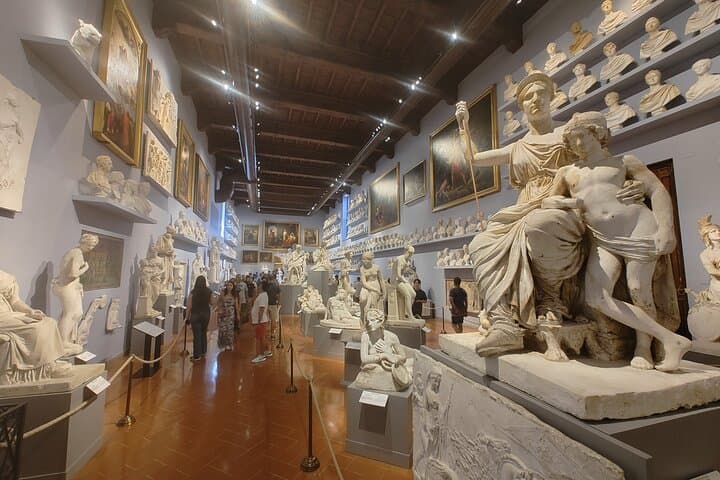
The Accademia was founded in the late 18th century to train Florentine artists; David was moved indoors in 1873 to protect the Carrara marble from weather and pollution. That marble—dense, bluish-white from quarries north of Tuscany—carries the tool marks and corrections that expose Michelangelo’s working process. Beyond David, the gallery houses Michelangelo’s unfinished “Prigioni” and his statue of Saint Matthew, reminders that this is as much a workshop of ideas as a shrine.
Culturally, Florence still orbits these works: expect school groups, scholars and quiet, reverent conversations in multiple languages. Conservators balance access with preservation—climate controls and visitor limits protect fragile surfaces.
Practicalities: tours meet in Piazza delle Belle Arti and run about 60 minutes; entrance ticket is not included (around €20 for adults, reduced rates for minors). Groups are small (up to 19) and radios/headphones are provided for clear commentary. Photography without flash is usually permitted but check on arrival. Arrive 10–15 minutes early, dress for indoor temperature (layers), and avoid touching sculptures. For a focused hour in one of art history’s most intense rooms, this guided visit gives context to technique, politics and the stubborn life of stone.
easy.
1 hour.
Minimal walking and standing; suitable for most fitness levels
No—this tour provides guided commentary and radios/headphones, but the Accademia entrance fee (approximately €20 for adults) is separate and must be purchased either at the museum or online.
The guided visit lasts about 60 minutes and is limited to a small group (up to 19 people) to keep the experience intimate.
Photography without flash is typically permitted, but rules can change—follow on-site signage and staff instructions; flash and tripods are not allowed.
Yes—the operator indicates wheelchair and stroller accessibility; if you have specific mobility needs, note them when booking so staff can assist.
The Accademia was founded in 1784 to train Florentine artists; David was relocated indoors in 1873 to protect the original Carrara marble from weathering.
The gallery uses climate control, restricted access and staff supervision to protect sculptures—avoid touching artworks and support official ticketing channels to fund preservation.
Maestro Trips operates guided outdoor trips and adventures with an emphasis on safety, stewardship, and memorable experiences.
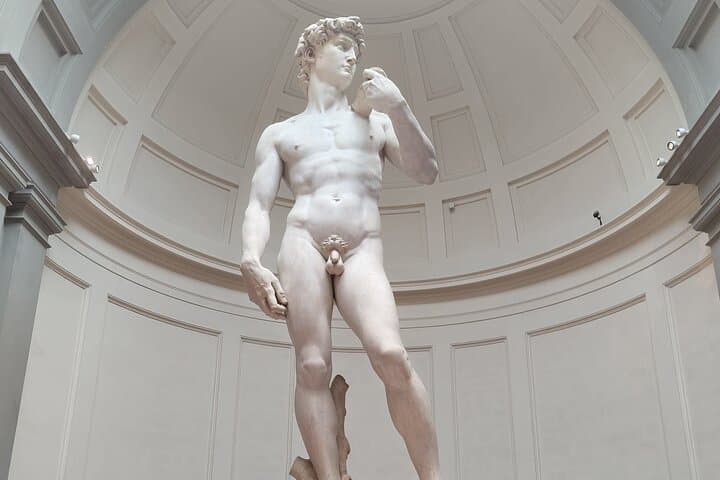
You step from the sunlit sweep of Piazza delle Belle Arti into a quieter world of stone and silence—the Accademia’s corridors folding you toward a single, commanding figure. Michelangelo’s David fills the space with a presence that makes the room feel like an instrument tuned to his scale; every viewing angle reveals new tensions in muscle and marble.
You step from the sunlit sweep of Piazza delle Belle Arti into a quieter world of stone and silence—the Accademia’s corridors folding you toward a single, commanding figure. Michelangelo’s David fills the space with a presence that makes the room feel like an instrument tuned to his scale; every viewing angle reveals new tensions in muscle and marble.
The Accademia was founded in the late 18th century to train Florentine artists; David was moved indoors in 1873 to protect the Carrara marble from weather and pollution. That marble—dense, bluish-white from quarries north of Tuscany—carries the tool marks and corrections that expose Michelangelo’s working process. Beyond David, the gallery houses Michelangelo’s unfinished “Prigioni” and his statue of Saint Matthew, reminders that this is as much a workshop of ideas as a shrine.
Culturally, Florence still orbits these works: expect school groups, scholars and quiet, reverent conversations in multiple languages. Conservators balance access with preservation—climate controls and visitor limits protect fragile surfaces.
Practicalities: tours meet in Piazza delle Belle Arti and run about 60 minutes; entrance ticket is not included (around €20 for adults, reduced rates for minors). Groups are small (up to 19) and radios/headphones are provided for clear commentary. Photography without flash is usually permitted but check on arrival. Arrive 10–15 minutes early, dress for indoor temperature (layers), and avoid touching sculptures. For a focused hour in one of art history’s most intense rooms, this guided visit gives context to technique, politics and the stubborn life of stone.