THE ADVENTURE COLLECTIVE® · Independent discovery and booking for outdoor travel

Take an accessible day trip from Cape Town to Cape Agulhas, the southernmost point of Africa. Experience the lighthouse, coastal geology and seasonal penguin colonies—all on a comfortable full-day drive and guided shore visit.
Take an accessible day trip from Cape Town to Cape Agulhas, the southernmost point of Africa. Experience the lighthouse, coastal geology and seasonal penguin colonies—all on a comfortable full-day drive and guided shore visit.
You step out of the air-conditioned vehicle onto a low, wind-scoured cape where two oceans argue beneath a steel sky. Cape Agulhas feels immediate: wave-scarred rocks, kelp wrack, and a compact white lighthouse that still reads like a navigator’s checkmark. The guide shows the exact marker declaring Africa’s southernmost point; the spray and wind make the geography unmistakable.
Verified experiences and guided adventures in the surrounding area.
Operated by Cape Adventure Tours · Cape Agulhas, Western Cape
You step out of the air-conditioned vehicle onto a low, wind-scoured cape where two oceans argue beneath a steel sky. Cape Agulhas feels immediate: wave-scarred rocks, kelp wrack, and a compact white lighthouse that still reads like a navigator’s checkmark. The guide shows the exact marker declaring Africa’s southernmost point; the spray and wind make the geography unmistakable.
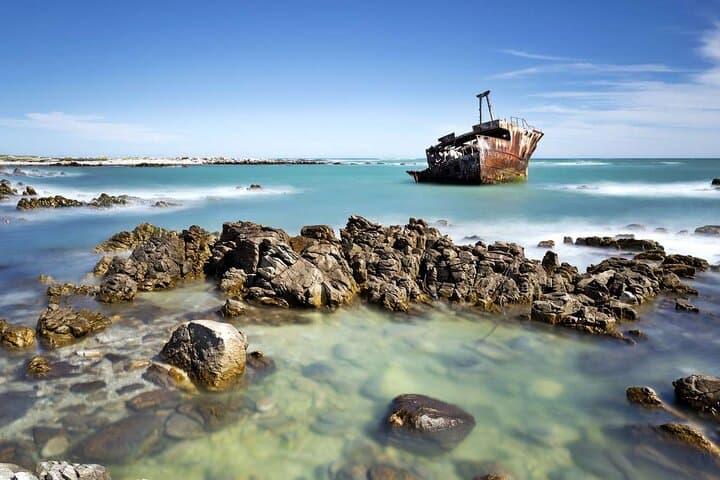
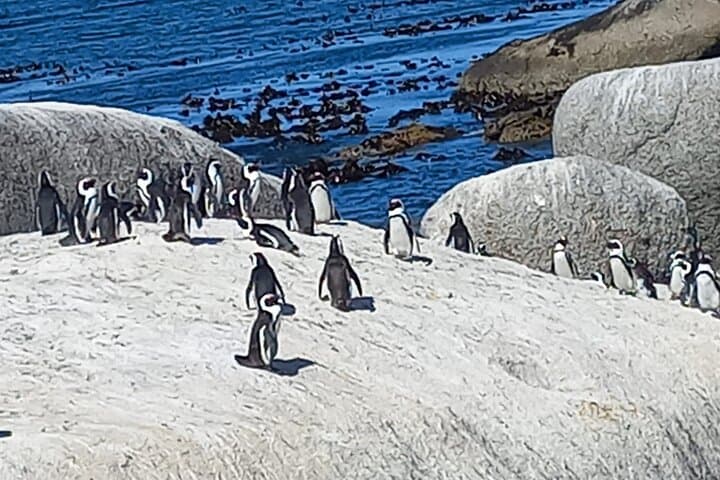
This shoreline is the visible edge of deep geological processes—wave-cut sandstone benches, pebble beaches and scalloped cliffs formed by the meeting of the Agulhas and Benguela currents. The 1848 Cape Agulhas Lighthouse anchors a history of navigation, shipwrecks and coastal settlements; nearby Stony Point hosts a seasonal African penguin colony and local fishing culture. Guide commentary typically weaves maritime history with natural science, explaining why currents collide here and how that shapes both sea life and local livelihoods.
On a full-day tour from Cape Town you’ll travel through vineyards and fynbos, visit the lighthouse, spend time at the marker and visit the penguin viewing area. Terrain is mostly flat coastal paths with short rocky sections—not technical, but often windy and uneven underfoot. Practicals: wear windproof layers, sturdy shoes, and sun protection; carry water and binoculars if you have them. Morning light softens the rocks; afternoon winds strengthen. Follow guides at wildlife viewing areas and keep a respectful distance from penguin colonies. For a single-day outing, this trip pairs accessible logistics with clear, bracing encounters with geography, history and wildlife.
easy.
8 hours.
Suitable for most fitness levels—requires short walks on flat-to-uneven coastal terrain and standing during wildlife viewing.
The tour is a full-day experience (about 8 hours) and typically includes hotel pickup/drop-off from Cape Town, transport in an air-conditioned vehicle, bottled water, a guide, and entrance to the lighthouse and Stony Point penguin viewing.
Yes—Stony Point hosts an African penguin colony; sightings vary seasonally, and viewing occurs from designated boardwalks to protect the birds.
Access depends on operational hours and conservation rules; many tours include an external visit and time around the lighthouse rather than climbing.
The tour notes wheelchair-accessible options and generally flat viewing areas, but coastal paths can be uneven—check with the operator about specific accessibility needs.
The Cape Agulhas Lighthouse (completed 1848) was built in response to frequent shipwrecks; the cape has long been a navigational landmark on global shipping routes.
Penguin colonies are protected and sensitive to disturbance; stick to boardwalks, follow guide rules, and avoid single-use plastics to reduce marine pollution.
Cape Adventure Tours operates guided outdoor trips and adventures with an emphasis on safety, stewardship, and memorable experiences.
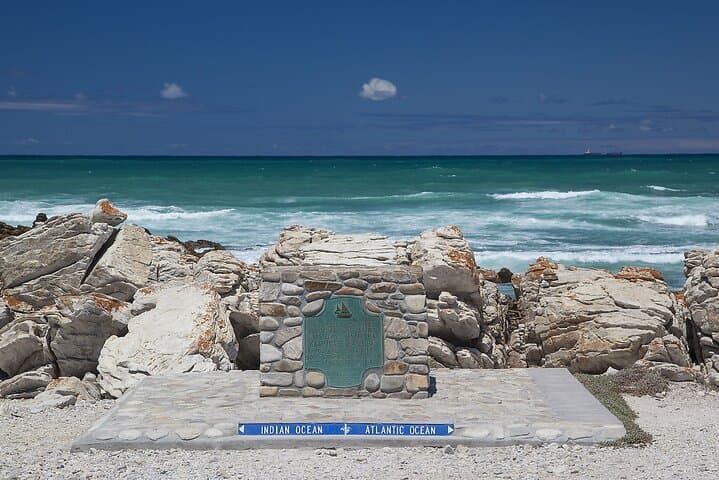
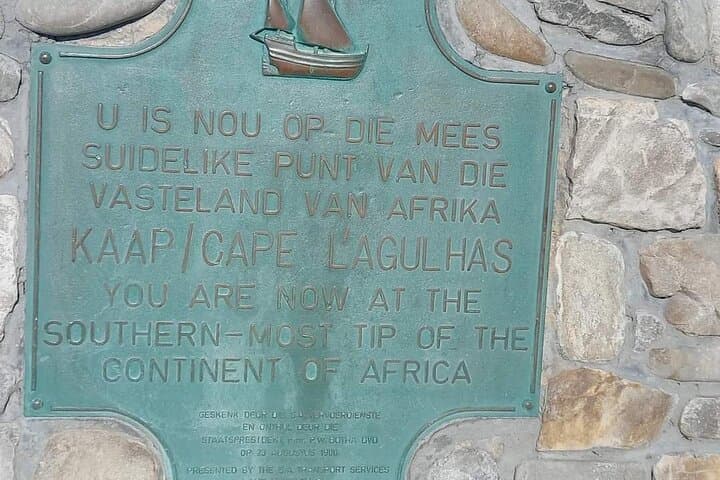
You step out of the air-conditioned vehicle onto a low, wind-scoured cape where two oceans argue beneath a steel sky. Cape Agulhas feels immediate: wave-scarred rocks, kelp wrack, and a compact white lighthouse that still reads like a navigator’s checkmark. The guide shows the exact marker declaring Africa’s southernmost point; the spray and wind make the geography unmistakable.
You step out of the air-conditioned vehicle onto a low, wind-scoured cape where two oceans argue beneath a steel sky. Cape Agulhas feels immediate: wave-scarred rocks, kelp wrack, and a compact white lighthouse that still reads like a navigator’s checkmark. The guide shows the exact marker declaring Africa’s southernmost point; the spray and wind make the geography unmistakable.
This shoreline is the visible edge of deep geological processes—wave-cut sandstone benches, pebble beaches and scalloped cliffs formed by the meeting of the Agulhas and Benguela currents. The 1848 Cape Agulhas Lighthouse anchors a history of navigation, shipwrecks and coastal settlements; nearby Stony Point hosts a seasonal African penguin colony and local fishing culture. Guide commentary typically weaves maritime history with natural science, explaining why currents collide here and how that shapes both sea life and local livelihoods.
On a full-day tour from Cape Town you’ll travel through vineyards and fynbos, visit the lighthouse, spend time at the marker and visit the penguin viewing area. Terrain is mostly flat coastal paths with short rocky sections—not technical, but often windy and uneven underfoot. Practicals: wear windproof layers, sturdy shoes, and sun protection; carry water and binoculars if you have them. Morning light softens the rocks; afternoon winds strengthen. Follow guides at wildlife viewing areas and keep a respectful distance from penguin colonies. For a single-day outing, this trip pairs accessible logistics with clear, bracing encounters with geography, history and wildlife.