THE ADVENTURE COLLECTIVE® · Independent discovery and booking for outdoor travel

Step off the beaten beach path and into St. Lucia’s humid green heart. This guided rainforest walk near Castries offers a short, interpretive trek through volcanic soils, tropical flora, and active birdlife—perfect for travelers seeking an immersive half-day nature experience.
Step off the beaten beach path and into St. Lucia’s humid green heart. This guided rainforest walk near Castries offers a short, interpretive trek through volcanic soils, tropical flora, and active birdlife—perfect for travelers seeking an immersive half-day nature experience.
Mist hangs low under broad-leaf canopies as a guide opens a narrow trail into St. Lucia’s living rainforest. The air is warm and humid; leaves drip and the forest seems to breathe as you move deeper. This is an easy, intimate walk designed to place travelers within the island’s verdant interior rather than atop its famous Pitons.
Verified experiences and guided adventures in the surrounding area.
Mist hangs low under broad-leaf canopies as a guide opens a narrow trail into St. Lucia’s living rainforest. The air is warm and humid; leaves drip and the forest seems to breathe as you move deeper. This is an easy, intimate walk designed to place travelers within the island’s verdant interior rather than atop its famous Pitons.
Geologically, St. Lucia is volcanic—ancient lava flows and erosion shaped steep ridges and the rich, well-drained soils that support dense tropical growth. The walk highlights native and introduced tropical flora—ceiba, ferns, heliconias—and the insect and bird life that depend on them. Culturally, the island’s interior has long supported small-scale agriculture and traditional uses of forest plants; local guides often point out medicinal species and discuss Creole heritage tied to land use.
Expect a mostly shaded route of roughly 1–3 miles (1.5–5 km) with modest elevation changes (generally under a few hundred feet). Trails can be soft and muddy after rain; built steps or simple boardwalks may appear in wetter spots. Wildlife sightings commonly include hummingbirds, tropical songbirds, and a chorus of frogs and insects that animate the understory.
Practical guidance: wear sturdy, closed-toe shoes with good traction, bring a lightweight rain jacket, and carry water—humidity makes exertion feel heavier. Morning departures reduce heat and maximize bird activity; allow 3–4 hours for transport, briefing, and the walk itself. Guides make the route accessible and educational, so come ready to listen and tread respectfully—this is a living ecosystem, not a staged garden.
moderate.
3–4 hours.
Suitable for most moderately fit travelers able to walk 1–3 miles on uneven ground; some balance on roots/rocks helps.
The guided portion typically covers 1–3 miles (1.5–5 km) and is paced as an interpretive, half-day activity including transit and briefing—plan on about 3–4 hours total.
Yes if they are reasonably mobile; guides often adjust pace. Sturdy shoes and frequent rests make the experience accessible to many ages.
Common sightings include hummingbirds, tropical songbirds, frogs, and a range of insects; wildlife is never guaranteed but mornings increase chances.
No technical experience is required—basic mobility and balance on uneven, sometimes muddy terrain are sufficient.
The island’s interior was shaped by volcanic activity and centuries of small-scale agriculture; guides often link plant uses to Afro-Caribbean and indigenous practices.
Trails are maintained to minimize erosion and protect sensitive understory; visitors are encouraged to stay on paths and avoid removing plants or wildlife.
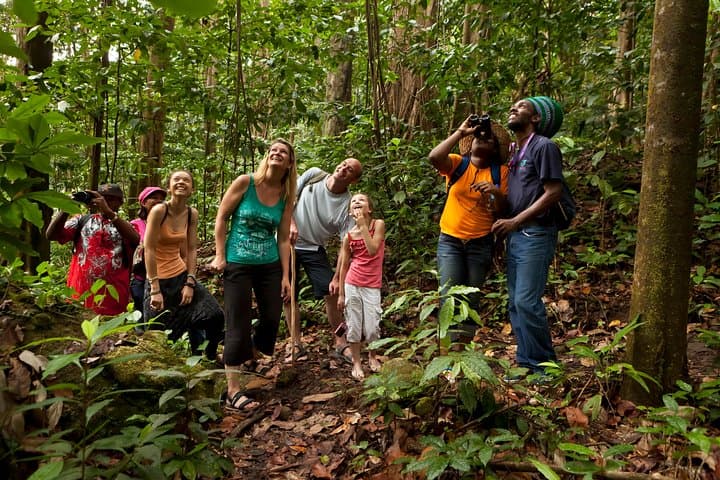
Mist hangs low under broad-leaf canopies as a guide opens a narrow trail into St. Lucia’s living rainforest. The air is warm and humid; leaves drip and the forest seems to breathe as you move deeper. This is an easy, intimate walk designed to place travelers within the island’s verdant interior rather than atop its famous Pitons.
Mist hangs low under broad-leaf canopies as a guide opens a narrow trail into St. Lucia’s living rainforest. The air is warm and humid; leaves drip and the forest seems to breathe as you move deeper. This is an easy, intimate walk designed to place travelers within the island’s verdant interior rather than atop its famous Pitons.
Geologically, St. Lucia is volcanic—ancient lava flows and erosion shaped steep ridges and the rich, well-drained soils that support dense tropical growth. The walk highlights native and introduced tropical flora—ceiba, ferns, heliconias—and the insect and bird life that depend on them. Culturally, the island’s interior has long supported small-scale agriculture and traditional uses of forest plants; local guides often point out medicinal species and discuss Creole heritage tied to land use.
Expect a mostly shaded route of roughly 1–3 miles (1.5–5 km) with modest elevation changes (generally under a few hundred feet). Trails can be soft and muddy after rain; built steps or simple boardwalks may appear in wetter spots. Wildlife sightings commonly include hummingbirds, tropical songbirds, and a chorus of frogs and insects that animate the understory.
Practical guidance: wear sturdy, closed-toe shoes with good traction, bring a lightweight rain jacket, and carry water—humidity makes exertion feel heavier. Morning departures reduce heat and maximize bird activity; allow 3–4 hours for transport, briefing, and the walk itself. Guides make the route accessible and educational, so come ready to listen and tread respectfully—this is a living ecosystem, not a staged garden.