THE ADVENTURE COLLECTIVE® · Independent discovery and booking for outdoor travel

Ride through rain forest, old sugar-mill ruins and banana plantations before cooling off with a swim on a Caribbean beach. This 1–2 hour guided tour suits beginners and mixes local history with hands-on time outdoors.
Ride through rain forest, old sugar-mill ruins and banana plantations before cooling off with a swim on a Caribbean beach. This 1–2 hour guided tour suits beginners and mixes local history with hands-on time outdoors.
The trail opens with the creak of leather and the soft shuffle of hooves as the coastline and forest trade places in the rearview. You ride beneath a canopy where breadfruit and banana leaves shade dappled paths, cross the rusted bones of an old sugar mill, and feel the mangrove roots lean toward you as if to watch the procession pass. The final cadence is the rush of surf — horses eager for a splash — and the warm sand that invites a swim.
Verified experiences and guided adventures in the surrounding area.
Operated by East Coast Riding Stable · Cap Estate (Gros Islet), Gros Islet Quarter
The trail opens with the creak of leather and the soft shuffle of hooves as the coastline and forest trade places in the rearview. You ride beneath a canopy where breadfruit and banana leaves shade dappled paths, cross the rusted bones of an old sugar mill, and feel the mangrove roots lean toward you as if to watch the procession pass. The final cadence is the rush of surf — horses eager for a splash — and the warm sand that invites a swim.
This loop threads together St. Lucia’s layered history: Amerindian settlement sites, colonial sugar estates that shaped the island’s economy, and smallholder banana cultivation that persists today. Geologically the route sits on volcanic soil with low rolling ridges and coastal plains; limestone and coral reefs fringe the shore where you’ll end. Culturally, guides often share stories about local festivals and how land use shifted after emancipation.
Practically, expect 1–2 hours of riding over mixed terrain—packed dirt, grassy savanna, light rooty forest and beach sand—with minimal elevation change but occasional uneven footing. Tours accept beginners; helmets are provided and guides lead at a comfortable pace. Bring closed-toe shoes, reef-safe sunscreen, insect repellent and a change of clothes for the post-ride beach dip. Hydrate before you mount and listen to the guide’s safety briefing: horses know the shoreline and may prefer to move toward the water. Morning light is cooler and calmer; late afternoons bring stronger trade winds and dramatic skies. The experience balances gentle adventure with island history and the satisfying, messy joy of swimming a horse in Caribbean surf.
easy.
1–2 hours.
Basic fitness and balance for mounting and a short, gentle ride; suitable for first-time riders.
No; the tour is designed for riders of all levels and guides match horses to experience.
Yes — helmets are provided and are required for safety during the ride.
Children are welcome but infants below about 3 years are not recommended and some operators may require children to ride with an adult.
Full refund is available if cancelled at least 24 hours before departure; tours may cancel for bad weather.
The coastal route passes remnants of colonial sugar estates and 18th–19th century milling sites that shaped island settlement and labor patterns.
Operators encourage reef-safe sunscreen and limit beach time in sensitive surf zones; stay on established paths to protect coastal vegetation.
East Coast Riding Stable operates guided outdoor trips and adventures with an emphasis on safety, stewardship, and memorable experiences.



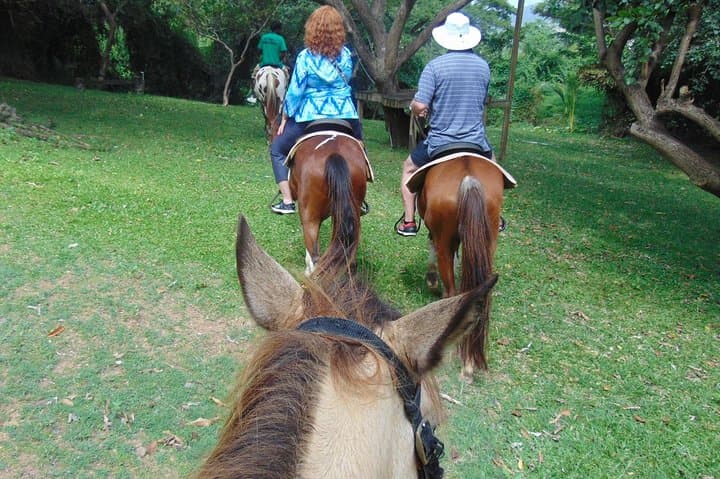
The trail opens with the creak of leather and the soft shuffle of hooves as the coastline and forest trade places in the rearview. You ride beneath a canopy where breadfruit and banana leaves shade dappled paths, cross the rusted bones of an old sugar mill, and feel the mangrove roots lean toward you as if to watch the procession pass. The final cadence is the rush of surf — horses eager for a splash — and the warm sand that invites a swim.
The trail opens with the creak of leather and the soft shuffle of hooves as the coastline and forest trade places in the rearview. You ride beneath a canopy where breadfruit and banana leaves shade dappled paths, cross the rusted bones of an old sugar mill, and feel the mangrove roots lean toward you as if to watch the procession pass. The final cadence is the rush of surf — horses eager for a splash — and the warm sand that invites a swim.
This loop threads together St. Lucia’s layered history: Amerindian settlement sites, colonial sugar estates that shaped the island’s economy, and smallholder banana cultivation that persists today. Geologically the route sits on volcanic soil with low rolling ridges and coastal plains; limestone and coral reefs fringe the shore where you’ll end. Culturally, guides often share stories about local festivals and how land use shifted after emancipation.
Practically, expect 1–2 hours of riding over mixed terrain—packed dirt, grassy savanna, light rooty forest and beach sand—with minimal elevation change but occasional uneven footing. Tours accept beginners; helmets are provided and guides lead at a comfortable pace. Bring closed-toe shoes, reef-safe sunscreen, insect repellent and a change of clothes for the post-ride beach dip. Hydrate before you mount and listen to the guide’s safety briefing: horses know the shoreline and may prefer to move toward the water. Morning light is cooler and calmer; late afternoons bring stronger trade winds and dramatic skies. The experience balances gentle adventure with island history and the satisfying, messy joy of swimming a horse in Caribbean surf.