THE ADVENTURE COLLECTIVE® · Independent discovery and booking for outdoor travel

Float a gentle underground river through hundreds of years of geology and Mayan history. This four-hour tubing trip from Hopkins mixes a short jungle hike, helmeted cave float, and a refreshing swim in the Blue Hole.
Float a gentle underground river through hundreds of years of geology and Mayan history. This four-hour tubing trip from Hopkins mixes a short jungle hike, helmeted cave float, and a refreshing swim in the Blue Hole.
The light from your headlamp picks out a thousand miniature points on the cave ceiling as you push off and let the current carry you deeper into black stone. Cool, clear water laps the side of your tube; the guide's silhouette moves ahead, a steady presence pointing out low arches and the pale rim of a stalagmite like a ruined pillar.
Verified experiences and guided adventures in the surrounding area.
Operated by Bucket List Tours & Transfers Belize · Hopkins Village, Stann Creek District
The light from your headlamp picks out a thousand miniature points on the cave ceiling as you push off and let the current carry you deeper into black stone. Cool, clear water laps the side of your tube; the guide's silhouette moves ahead, a steady presence pointing out low arches and the pale rim of a stalagmite like a ruined pillar.
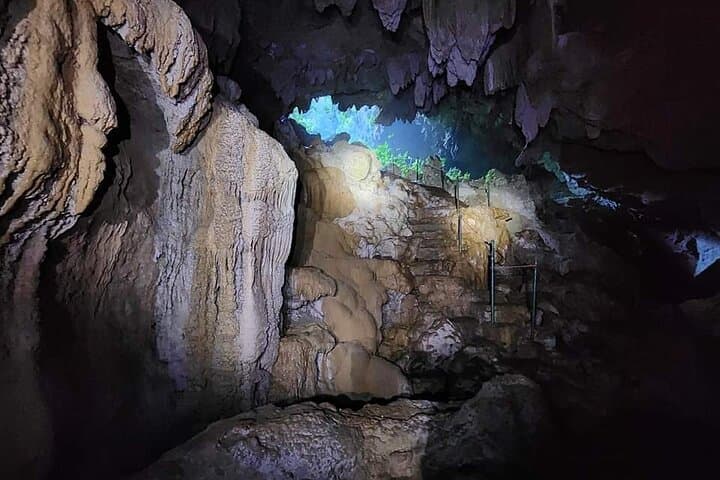
St. Herman’s Cave sits inside Blue Hole National Park and carries a layered history: used by the Maya for ritual and shelter, mapped by early colonial naturalists, and now managed as a protected public site. Geologically, the cave is a limestone cavern carved by an underground river over millennia; expect low ceilings in places, broader chambers elsewhere, and formations that record long, slow shifts of mineral-rich water.
Culturally, guides will usually weave Mayan stories and natural history together—explaining artifacts, burial contexts, and the cave’s place in local folklore—while offering practical safety instructions.
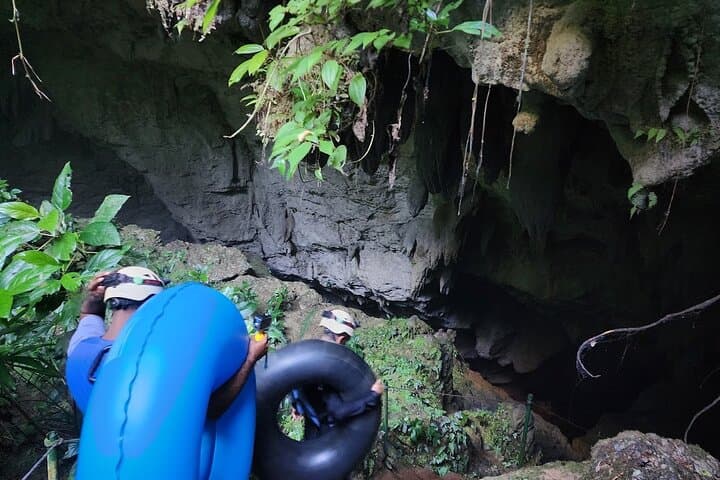
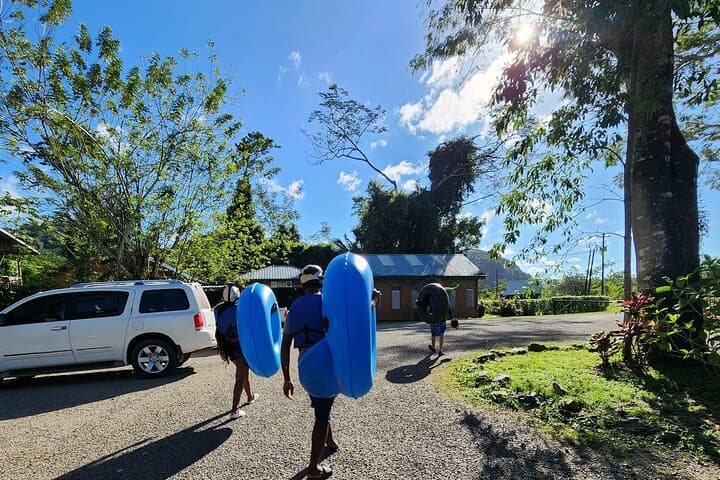
Practically, tubing here is mellow: a short jungle walk in, helmet and lamp required, and a gentle float on slow-moving subterranean water. Bring a waterproof headlamp or use the provided one, wear closed-water shoes with good traction, and secure loose items. Expect about three to four hours total from Hopkins including the drive along the scenic Hummingbird Highway. The cave’s temperature is stable and cool year-round, but trails can be muddy after rain.
Plan for modest fitness—this is not a technical cave expedition—but respect the site: avoid touching formations, pack out trash, and follow your guide’s path. The payoff is simple: drifting through a living geologic archive while learning how people have interacted with the cave for centuries.
easy.
4 hours.
Suitable for most people with basic mobility; requires short hike and ability to climb in/out of a tube
The float inside St. Herman’s Cave typically lasts around 60–90 minutes depending on group pace and which passages are open.
Yes—tubing is generally gentle and family-friendly, but children should be supervised and meet the operator's age and health guidelines.
No prior cave experience is required; guides provide orientation, helmets, and headlamps and lead the route.
Yes—heavy rain can raise water levels or make access unsafe; operators will typically reschedule or refund if conditions force cancellation.
St. Herman’s Cave shows evidence of Maya usage for ritual and burial, and the park protects both geological features and archaeological finds.
The park enforces 'no-touch' rules for formations and limits visitor impact; follow guide instructions and carry out waste to protect delicate cave ecosystems.
Bucket List Tours & Transfers Belize operates guided outdoor trips and adventures with an emphasis on safety, stewardship, and memorable experiences.
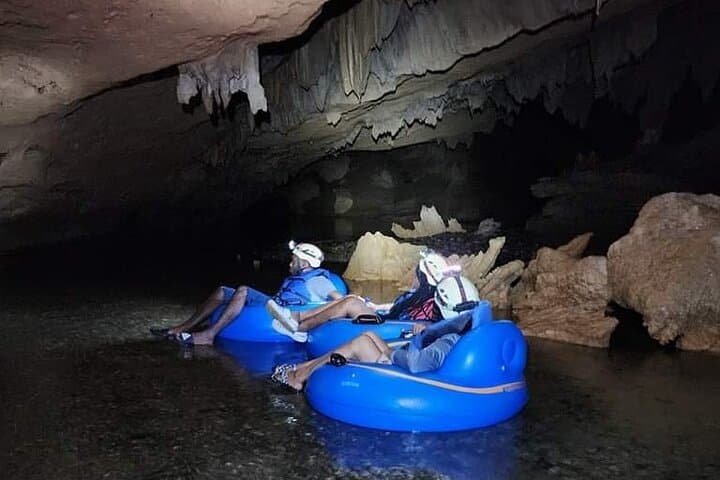
The light from your headlamp picks out a thousand miniature points on the cave ceiling as you push off and let the current carry you deeper into black stone. Cool, clear water laps the side of your tube; the guide's silhouette moves ahead, a steady presence pointing out low arches and the pale rim of a stalagmite like a ruined pillar.
The light from your headlamp picks out a thousand miniature points on the cave ceiling as you push off and let the current carry you deeper into black stone. Cool, clear water laps the side of your tube; the guide's silhouette moves ahead, a steady presence pointing out low arches and the pale rim of a stalagmite like a ruined pillar.
St. Herman’s Cave sits inside Blue Hole National Park and carries a layered history: used by the Maya for ritual and shelter, mapped by early colonial naturalists, and now managed as a protected public site. Geologically, the cave is a limestone cavern carved by an underground river over millennia; expect low ceilings in places, broader chambers elsewhere, and formations that record long, slow shifts of mineral-rich water.
Culturally, guides will usually weave Mayan stories and natural history together—explaining artifacts, burial contexts, and the cave’s place in local folklore—while offering practical safety instructions.
Practically, tubing here is mellow: a short jungle walk in, helmet and lamp required, and a gentle float on slow-moving subterranean water. Bring a waterproof headlamp or use the provided one, wear closed-water shoes with good traction, and secure loose items. Expect about three to four hours total from Hopkins including the drive along the scenic Hummingbird Highway. The cave’s temperature is stable and cool year-round, but trails can be muddy after rain.
Plan for modest fitness—this is not a technical cave expedition—but respect the site: avoid touching formations, pack out trash, and follow your guide’s path. The payoff is simple: drifting through a living geologic archive while learning how people have interacted with the cave for centuries.