THE ADVENTURE COLLECTIVE® · Independent discovery and booking for outdoor travel

Explore the oldest English settlement in the western hemisphere on a three‑hour guided tour from Hamilton. Exclusive interiors, coastal viewpoints and expert storytelling make St. George’s an efficient, immersive cultural stop.
Explore the oldest English settlement in the western hemisphere on a three‑hour guided tour from Hamilton. Exclusive interiors, coastal viewpoints and expert storytelling make St. George’s an efficient, immersive cultural stop.
You step off the air‑conditioned bus into a town that still moves at the cadence of the 17th century: narrow lanes of Bermuda stone, low roofs, and the salt hush from the nearby reef. St. George’s greets you with angled sunlight on pale limestone and a shoreline that seems to dare you to look farther—past the reef, the Atlantic keeps its own secrets.
Verified experiences and guided adventures in the surrounding area.
Operated by Bermuda Heritage Tours · St. George's, St. George's Parish
You step off the air‑conditioned bus into a town that still moves at the cadence of the 17th century: narrow lanes of Bermuda stone, low roofs, and the salt hush from the nearby reef. St. George’s greets you with angled sunlight on pale limestone and a shoreline that seems to dare you to look farther—past the reef, the Atlantic keeps its own secrets.
Founded in 1612, St. George’s is the oldest continuously inhabited English settlement in the Western Hemisphere. Its buildings—limestone laid with mortar and original timber framing—show building methods adapted to hurricane winds and limited resources. The island itself is a remnant of volcanic foundations capped by coral and calcified sand; that geology produces the familiar pink beaches and jagged coastal bluffs you’ll pass en route.
Culture here is compact and tangible: Anglican church bells, Masonic history within the Old State House (1620), and small perfumeries still using island botanicals. Guides weave shipwreck tales, 17th‑century survival, and the later military footprint that shaped Bermuda’s forts.
Practicalities: tours depart Hamilton Ferry Terminal and run about three hours with restroom stops and limited walking on cobblestones. Maximum 18 guests keeps the group nimble. Wear sturdy shoes for uneven lanes, bring sun protection and a water bottle, and expect short, guided interiors of historic sites. If you’re after coastal views with cultural depth—and the possibility of whales beyond the reef—this circuit balances easy access with concentrated history and memorable coastal scenery.
easy.
3 hours.
Suitable for most fitness levels; requires short periods of walking and standing on uneven surfaces.
The tour departs from and returns to the Hamilton Ferry Terminal on Front Street—look for the white "Titan Express" bus.
Yes, the tour includes admission to select interiors such as the Old State House and the historic Anglican church yard where noted.
Infants must sit on laps and small children in strollers are accommodated; the tour involves short walks on uneven pavement and is not recommended for those with significant mobility constraints.
You may glimpse whales beyond the reef from coastal viewpoints, but sightings are seasonal and never guaranteed.
St. George’s was established in 1612 and contains some of the oldest English colonial buildings in the Americas, including an Old State House dating to 1620 and an Anglican parish founded in 1612.
Bermuda’s reefs and coastal habitats are protected; visitors should avoid collecting shells or coral and stay on marked paths to limit erosion and damage.
Bermuda Heritage Tours operates guided outdoor trips and adventures with an emphasis on safety, stewardship, and memorable experiences.
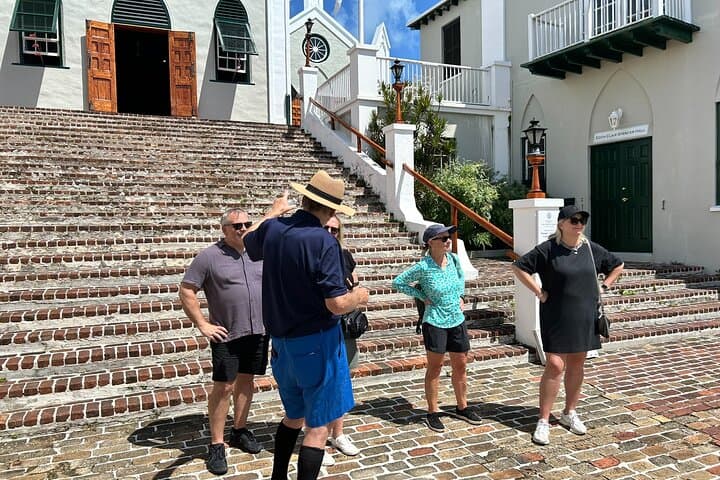
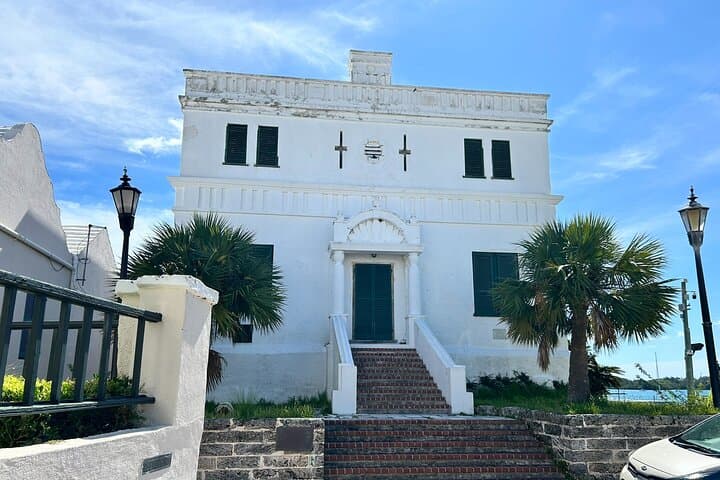
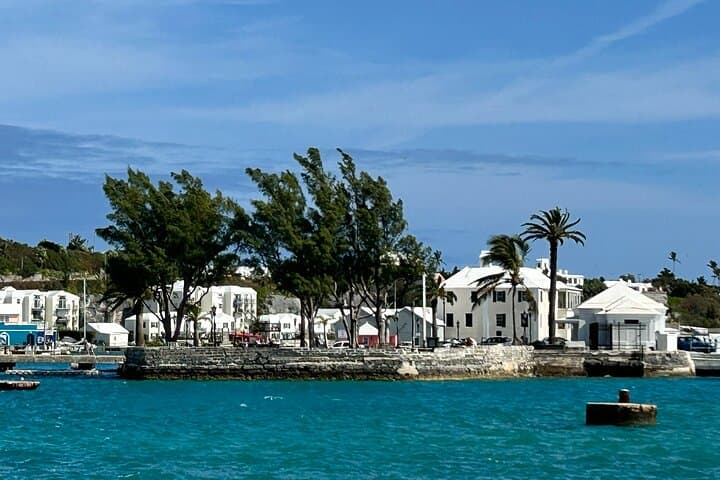
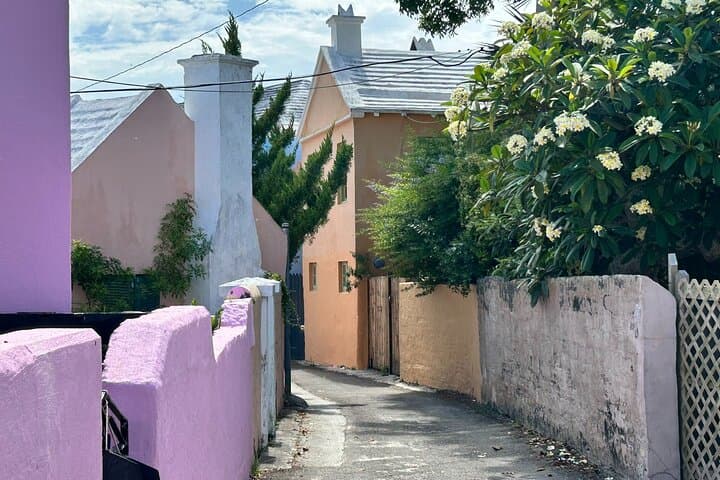
You step off the air‑conditioned bus into a town that still moves at the cadence of the 17th century: narrow lanes of Bermuda stone, low roofs, and the salt hush from the nearby reef. St. George’s greets you with angled sunlight on pale limestone and a shoreline that seems to dare you to look farther—past the reef, the Atlantic keeps its own secrets.
You step off the air‑conditioned bus into a town that still moves at the cadence of the 17th century: narrow lanes of Bermuda stone, low roofs, and the salt hush from the nearby reef. St. George’s greets you with angled sunlight on pale limestone and a shoreline that seems to dare you to look farther—past the reef, the Atlantic keeps its own secrets.
Founded in 1612, St. George’s is the oldest continuously inhabited English settlement in the Western Hemisphere. Its buildings—limestone laid with mortar and original timber framing—show building methods adapted to hurricane winds and limited resources. The island itself is a remnant of volcanic foundations capped by coral and calcified sand; that geology produces the familiar pink beaches and jagged coastal bluffs you’ll pass en route.
Culture here is compact and tangible: Anglican church bells, Masonic history within the Old State House (1620), and small perfumeries still using island botanicals. Guides weave shipwreck tales, 17th‑century survival, and the later military footprint that shaped Bermuda’s forts.
Practicalities: tours depart Hamilton Ferry Terminal and run about three hours with restroom stops and limited walking on cobblestones. Maximum 18 guests keeps the group nimble. Wear sturdy shoes for uneven lanes, bring sun protection and a water bottle, and expect short, guided interiors of historic sites. If you’re after coastal views with cultural depth—and the possibility of whales beyond the reef—this circuit balances easy access with concentrated history and memorable coastal scenery.