THE ADVENTURE COLLECTIVE® · Independent discovery and booking for outdoor travel

Walk two centuries of history in two hours: this guided St. Augustine tour threads cobblestone streets, colonial forts, and Victorian-era architecture into a concise, outdoors-forward introduction to America’s oldest continuously occupied European-founded city.
Walk two centuries of history in two hours: this guided St. Augustine tour threads cobblestone streets, colonial forts, and Victorian-era architecture into a concise, outdoors-forward introduction to America’s oldest continuously occupied European-founded city.
You step off the shaded street and into a city that wears its past openly — flagstones warmed by the sun, Spanish moss swaying above narrow lanes, and the hush of the Castillo looming like an old guard. The guide leads you past the Old City Gates, through St. George Street’s lively storefronts, and toward brick courtyards where footsteps echo the 16th-century arrival of Pedro Menéndez de Avilés.
Verified experiences and guided adventures in the surrounding area.
Operated by A Ghostly Encounter · St. Augustine, Florida
You step off the shaded street and into a city that wears its past openly — flagstones warmed by the sun, Spanish moss swaying above narrow lanes, and the hush of the Castillo looming like an old guard. The guide leads you past the Old City Gates, through St. George Street’s lively storefronts, and toward brick courtyards where footsteps echo the 16th-century arrival of Pedro Menéndez de Avilés.
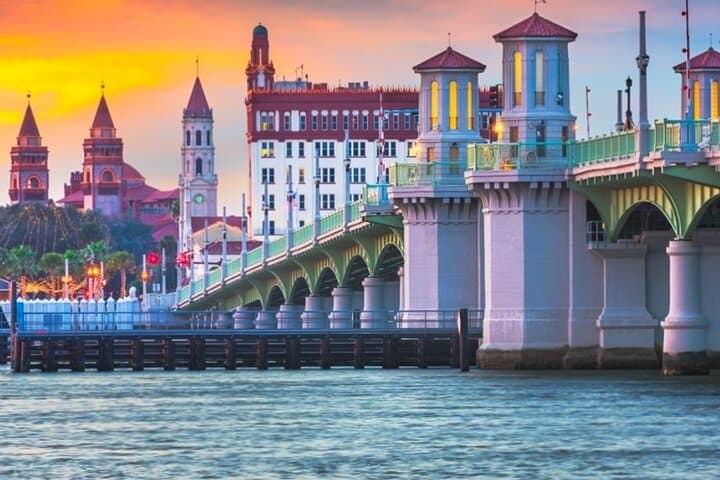
St. Augustine’s layers are visible: coquina fort walls set into tamped-earth foundations, Spanish colonial street plans overlain by later Gilded Age architecture from Henry Flagler’s railroad-era hotels. The city’s cemeteries and churches tell stories of migration, conflict, and faith, while the Lightner Museum holds artifacts that reveal a turn-of-the-century leisure culture built on the waterfront. Geologically, the low-lying Atlantic coast rests on limestone and coquina — soft stone shaped by tides and storms — which explains the chained Oldest Wooden School House and the city’s hurricane-conscious construction.
On this two-hour walking tour you’ll pass key sites and hear compact, grounded histories without long museum stops. Expect cobblestones, brief staircases, and a steady pace that suits most walkers; the group size keeps commentary lively and personal. Wear solid shoes, bring water, and plan for sun or sudden showers depending on season. Morning slots offer cooler light and softer crowds; late afternoon brings golden facades and the chance to extend your exploration into nearby museums or the bayfront. The walk is accessible for most people and a practical way to connect with coastal history before diving deeper into St. Augustine’s museums and waterfront trails.
easy.
2 hours.
Suitable for most fitness levels; you should be comfortable walking on uneven surfaces for about two hours.
The tour lasts about two hours and covers roughly 1–1.5 miles at a steady but relaxed pace, with frequent stops for stories and photos.
The tour is listed as wheelchair- and stroller-accessible, but note that some streets have cobblestones that can be bumpy; contact the operator if you need specific accommodations.
This is a walking history tour that passes many landmarks; admission to paid attractions is typically not included but can be arranged separately.
For a full refund cancel at least 24 hours before the scheduled departure time; cancellations within 24 hours are not refundable.
Founded in 1565 by Spanish admiral Pedro Menéndez de Avilés, St. Augustine is the oldest continuously occupied European-founded settlement in the continental U.S., with layers of Spanish, British, and American influence.
The city sits on fragile coastal limestone and salt marshes; stay on designated paths, avoid disturbing historic structures, and follow Leave No Trace principles to limit erosion and wear on cultural sites.
A Ghostly Encounter operates guided outdoor trips and adventures with an emphasis on safety, stewardship, and memorable experiences.
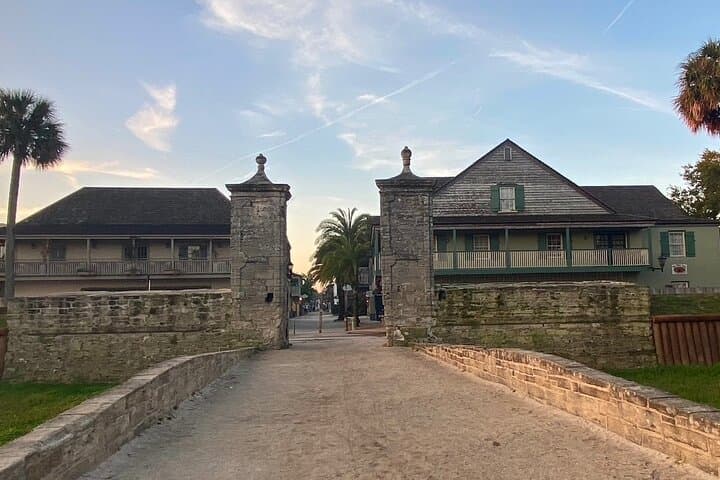


You step off the shaded street and into a city that wears its past openly — flagstones warmed by the sun, Spanish moss swaying above narrow lanes, and the hush of the Castillo looming like an old guard. The guide leads you past the Old City Gates, through St. George Street’s lively storefronts, and toward brick courtyards where footsteps echo the 16th-century arrival of Pedro Menéndez de Avilés.
You step off the shaded street and into a city that wears its past openly — flagstones warmed by the sun, Spanish moss swaying above narrow lanes, and the hush of the Castillo looming like an old guard. The guide leads you past the Old City Gates, through St. George Street’s lively storefronts, and toward brick courtyards where footsteps echo the 16th-century arrival of Pedro Menéndez de Avilés.
St. Augustine’s layers are visible: coquina fort walls set into tamped-earth foundations, Spanish colonial street plans overlain by later Gilded Age architecture from Henry Flagler’s railroad-era hotels. The city’s cemeteries and churches tell stories of migration, conflict, and faith, while the Lightner Museum holds artifacts that reveal a turn-of-the-century leisure culture built on the waterfront. Geologically, the low-lying Atlantic coast rests on limestone and coquina — soft stone shaped by tides and storms — which explains the chained Oldest Wooden School House and the city’s hurricane-conscious construction.
On this two-hour walking tour you’ll pass key sites and hear compact, grounded histories without long museum stops. Expect cobblestones, brief staircases, and a steady pace that suits most walkers; the group size keeps commentary lively and personal. Wear solid shoes, bring water, and plan for sun or sudden showers depending on season. Morning slots offer cooler light and softer crowds; late afternoon brings golden facades and the chance to extend your exploration into nearby museums or the bayfront. The walk is accessible for most people and a practical way to connect with coastal history before diving deeper into St. Augustine’s museums and waterfront trails.