THE ADVENTURE COLLECTIVE® · Independent discovery and booking for outdoor travel

Explore the oldest continuously occupied European settlement in the continental U.S. at your own pace with a location-aware audio app. Follow GPS-guided narration from Ponce de León’s statue to the Castillo de San Marcos and discover the layered history of St. Augustine.
Explore the oldest continuously occupied European settlement in the continental U.S. at your own pace with a location-aware audio app. Follow GPS-guided narration from Ponce de León’s statue to the Castillo de San Marcos and discover the layered history of St. Augustine.
You step from sun-warmed brick into a street that has watched oceans and empires pass. The Atlantic breeze tugs at your jacket and the Plaza de la Constitución hums with the footfall of visitors and locals; the app pings, and a narrator begins to weave names—Ponce de León, Minorcans, Red Coats—into the geometry of streets and stone.
Verified experiences and guided adventures in the surrounding area.
Operated by WalknTours · St. Augustine, Florida
You step from sun-warmed brick into a street that has watched oceans and empires pass. The Atlantic breeze tugs at your jacket and the Plaza de la Constitución hums with the footfall of visitors and locals; the app pings, and a narrator begins to weave names—Ponce de León, Minorcans, Red Coats—into the geometry of streets and stone.
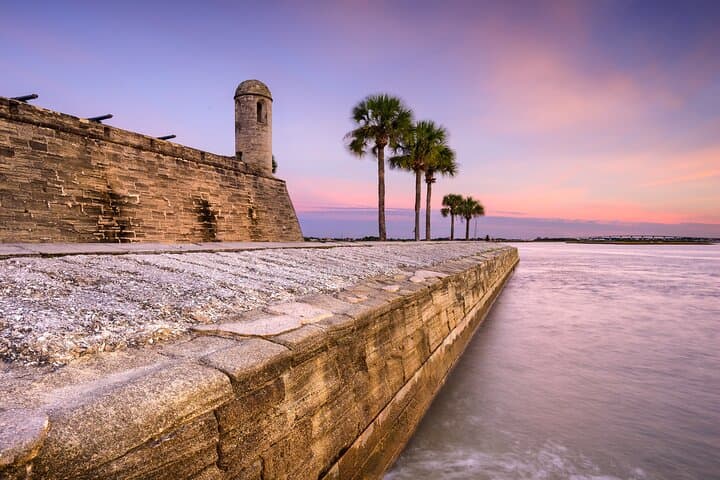
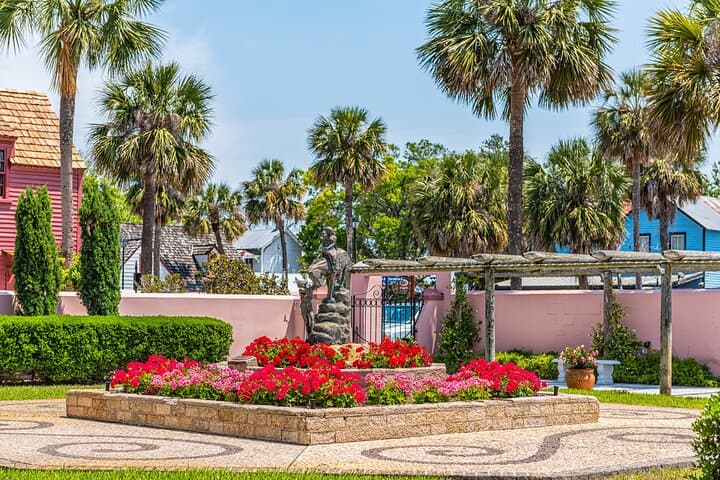
St. Augustine is the oldest continuously occupied European-founded settlement in the continental U.S., established in 1565. Its shoreline geology is defined by coquina—soft limestone made of shell fragments—visible in the pale walls of the Castillo de San Marcos. Layers of Spanish, British and American influence sit side-by-side: narrow lanes that once channeled cannon crews now host cafes and galleries, and the Greek shrine speaks to immigrant threads that shaped the town.
The self-guided app leads you from the Ponce statue through the city gates, past the oldest wooden schoolhouse and down the famously narrow alleys. Narration and music set pace so you can pause at a shrine, duck into a courtyard or linger where the harbor calls your name.
Practical notes: allow 50–65 minutes, start where the app suggests, and factor in extra time for museums or a slow lunch. Sidewalks include cobblestone and uneven surfaces; bring sun protection, a full phone battery and earbuds. The tour never expires, so you can return to any stop. Walk deliberately—this is both an urban history lesson and a coastal stroll, where the past is carved in stone and the sea keeps nudging the story forward.
easy.
50–65 minutes.
Light urban walking; suitable for most fitness levels but requires mobility on uneven surfaces and short inclines.
No—the tour is self-guided and can be started anytime; the app is location-aware so it paces narration to your movement.
Much of downtown is flat, but expect cobblestones, narrow passages and occasional steps—check specific points ahead if you require full accessibility.
The narrated path takes about 50–65 minutes if followed continuously; you can pause, skip or revisit stops at will—the content remains available after purchase.
The app uses GPS; download and set up before you go and allow location permissions—having offline map/data or a local Wi‑Fi connection helps, but some features may require connectivity.
Founded by the Spanish in 1565, St. Augustine’s Castillo de San Marcos was built of local coquina in the late 17th century to guard the harbor and still stands as a coastal stronghold.
Historic preservation and coastal resilience are priorities—stay on provided paths, avoid touching ruins and respect wildlife; tourism footprint is reduced by choosing reusable water and supporting local conservation efforts.
WalknTours operates guided outdoor trips and adventures with an emphasis on safety, stewardship, and memorable experiences.


You step from sun-warmed brick into a street that has watched oceans and empires pass. The Atlantic breeze tugs at your jacket and the Plaza de la Constitución hums with the footfall of visitors and locals; the app pings, and a narrator begins to weave names—Ponce de León, Minorcans, Red Coats—into the geometry of streets and stone.
You step from sun-warmed brick into a street that has watched oceans and empires pass. The Atlantic breeze tugs at your jacket and the Plaza de la Constitución hums with the footfall of visitors and locals; the app pings, and a narrator begins to weave names—Ponce de León, Minorcans, Red Coats—into the geometry of streets and stone.
St. Augustine is the oldest continuously occupied European-founded settlement in the continental U.S., established in 1565. Its shoreline geology is defined by coquina—soft limestone made of shell fragments—visible in the pale walls of the Castillo de San Marcos. Layers of Spanish, British and American influence sit side-by-side: narrow lanes that once channeled cannon crews now host cafes and galleries, and the Greek shrine speaks to immigrant threads that shaped the town.
The self-guided app leads you from the Ponce statue through the city gates, past the oldest wooden schoolhouse and down the famously narrow alleys. Narration and music set pace so you can pause at a shrine, duck into a courtyard or linger where the harbor calls your name.
Practical notes: allow 50–65 minutes, start where the app suggests, and factor in extra time for museums or a slow lunch. Sidewalks include cobblestone and uneven surfaces; bring sun protection, a full phone battery and earbuds. The tour never expires, so you can return to any stop. Walk deliberately—this is both an urban history lesson and a coastal stroll, where the past is carved in stone and the sea keeps nudging the story forward.