THE ADVENTURE COLLECTIVE® · Independent discovery and booking for outdoor travel

Cruise the narrow, lantern-lit streets of St. Augustine on a 60-minute open-air electric cart that pairs researched true-crime and pirate tales with close-up views of the city’s oldest blocks. Arrive early, bundle up for night breezes, and be ready for storytelling that makes the past feel immediate.
Cruise the narrow, lantern-lit streets of St. Augustine on a 60-minute open-air electric cart that pairs researched true-crime and pirate tales with close-up views of the city’s oldest blocks. Arrive early, bundle up for night breezes, and be ready for storytelling that makes the past feel immediate.
The electric cart glides through a humid coastal night, headlights cutting a narrow ribbon past Spanish moss and coquina walls. You feel the city tilt between centuries — colonial forts, brick streets, and lantern-lit doorways — while a guide leans into stories that make the past step forward: pirate raids, true crime murders, and lingering hauntings that residents still talk about.
Verified experiences and guided adventures in the surrounding area.
Operated by GhoSt Augustine · St. Augustine, Florida
The electric cart glides through a humid coastal night, headlights cutting a narrow ribbon past Spanish moss and coquina walls. You feel the city tilt between centuries — colonial forts, brick streets, and lantern-lit doorways — while a guide leans into stories that make the past step forward: pirate raids, true crime murders, and lingering hauntings that residents still talk about.
St. Augustine is the oldest continuously occupied European settlement in the continental United States (founded 1565). Its geology — coquina rock and low-lying barrier island topography — shaped where people lived and where violence unfolded, from waterfront skirmishes to cramped south-end alleys. Culturally the city carries a layered Spanish, British and American mix that surfaces in architecture, place names, and oral histories the guides reference.
This 60-minute open-air ride covers both north and south downtown, moving into narrow streets inaccessible to larger vehicles. Expect stops or slow rolls by documented sites: a suspected murder scene, pirate lore near the waterfront, and tight residential lanes where the cart’s low speed makes every creak and shadow part of the show.
Practical notes: tours depart from 162 St. George Street inside the Heritage Walk Mall; arrive 10–15 minutes early. The cart is exposed to wind and spray on cooler nights — bring a light jacket and closed-toe shoes. Photography is fine but respectful silence helps when storytellers visit private or solemn spots. Tickets often sell out for evening slots; book ahead and check cancellation windows. This is atmospheric, low-impact night touring — more storytelling than spine-tingling peril — ideal for history-minded travelers who prefer an active, guided way to learn the darker side of a living, coastal city.
easy.
1 hour.
Suitable for most fitness levels; accessible for riders who can step on/off a low electric cart
The tour is approximately 60 minutes and travels through downtown St. Augustine, including both north and south historic districts and narrow south-end streets.
Tours depart from 162 St. George Street, Suite 19, inside the Heritage Walk Mall and return to the same location for pickup/drop-off.
The cart is low-impact and suitable for many ages, but guests should be able to board/step down from the vehicle; contact the operator about specific mobility needs.
Yes—photos are allowed, but guides ask that you avoid bright flashes or shining lights into private homes and quiet moments out of respect.
Founded in 1565, St. Augustine’s streets reflect Spanish colonial planning, British interludes, and centuries of maritime commerce—factors that influenced where conflicts and hauntings took shape.
The historic district operates under preservation guidelines to protect fabric and character; visitors are encouraged to stick to public paths and minimize light/noise to reduce impact.
GhoSt Augustine operates guided outdoor trips and adventures with an emphasis on safety, stewardship, and memorable experiences.
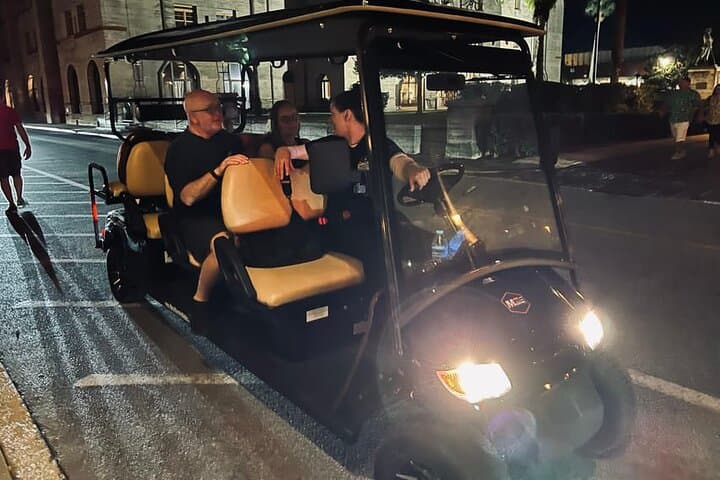
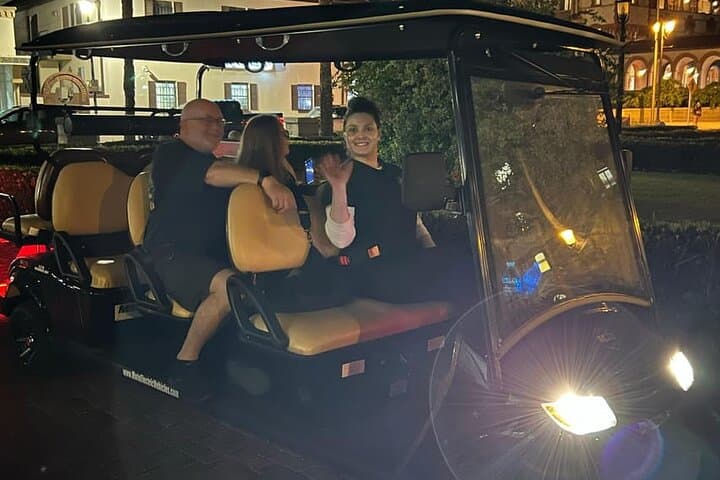
The electric cart glides through a humid coastal night, headlights cutting a narrow ribbon past Spanish moss and coquina walls. You feel the city tilt between centuries — colonial forts, brick streets, and lantern-lit doorways — while a guide leans into stories that make the past step forward: pirate raids, true crime murders, and lingering hauntings that residents still talk about.
The electric cart glides through a humid coastal night, headlights cutting a narrow ribbon past Spanish moss and coquina walls. You feel the city tilt between centuries — colonial forts, brick streets, and lantern-lit doorways — while a guide leans into stories that make the past step forward: pirate raids, true crime murders, and lingering hauntings that residents still talk about.
St. Augustine is the oldest continuously occupied European settlement in the continental United States (founded 1565). Its geology — coquina rock and low-lying barrier island topography — shaped where people lived and where violence unfolded, from waterfront skirmishes to cramped south-end alleys. Culturally the city carries a layered Spanish, British and American mix that surfaces in architecture, place names, and oral histories the guides reference.
This 60-minute open-air ride covers both north and south downtown, moving into narrow streets inaccessible to larger vehicles. Expect stops or slow rolls by documented sites: a suspected murder scene, pirate lore near the waterfront, and tight residential lanes where the cart’s low speed makes every creak and shadow part of the show.
Practical notes: tours depart from 162 St. George Street inside the Heritage Walk Mall; arrive 10–15 minutes early. The cart is exposed to wind and spray on cooler nights — bring a light jacket and closed-toe shoes. Photography is fine but respectful silence helps when storytellers visit private or solemn spots. Tickets often sell out for evening slots; book ahead and check cancellation windows. This is atmospheric, low-impact night touring — more storytelling than spine-tingling peril — ideal for history-minded travelers who prefer an active, guided way to learn the darker side of a living, coastal city.