THE ADVENTURE COLLECTIVE® · Independent discovery and booking for outdoor travel

Explore St. Augustine’s haunted side from the comfort of an electric golf cart—75 minutes of stories, short stops at the Castillo and historic cemeteries, and complimentary photos. Perfect for travelers who want atmospheric history without the long walk.
Explore St. Augustine’s haunted side from the comfort of an electric golf cart—75 minutes of stories, short stops at the Castillo and historic cemeteries, and complimentary photos. Perfect for travelers who want atmospheric history without the long walk.
A humid Atlantic wind lifts cold flecks of story off the cobbles as the electric cart hums to life at Plaza de la Constitución. Streetlamps throw long shadows across Flagler-era ironwork while a guide’s voice stitches together reports of footsteps in empty corridors, orbs in the graveyard and sightings at the old college. The city feels like a character—its walls hold memory, its plazas hold pauses.
Verified experiences and guided adventures in the surrounding area.
Operated by St Augustine Land and Sea Tours · St. Augustine, Florida
A humid Atlantic wind lifts cold flecks of story off the cobbles as the electric cart hums to life at Plaza de la Constitución. Streetlamps throw long shadows across Flagler-era ironwork while a guide’s voice stitches together reports of footsteps in empty corridors, orbs in the graveyard and sightings at the old college. The city feels like a character—its walls hold memory, its plazas hold pauses.
St. Augustine is the nation’s oldest continuously occupied European settlement, founded in 1565; the Spanish fortifications, Victorian hotels and narrow streets are the physical echoes of four centuries. Geology here is coastal plain—sandy soils and low-relief bluffs that meet the Matanzas River—so historic structures sit close to the water and to layers of human history. Local culture blends Spanish, British and Gullah influences, and evening storytelling is part theatrical, part folklore preservation.
Practical guidance: the shared 75-minute tour covers Flagler College, Castillo de San Marcos, Huguenot and Tolomato cemeteries, Charlotte Street and other downtown hotspots; several short stops let passengers step out for photos. Vehicles are electric carts—easy on the knees but expect to climb in and out. Tours run year-round; evenings are cooler and more atmospheric but can be breezy. Bring a charged phone or camera; complimentary photos are included. Wear closed-toe shoes for quick exits, and a light layer after sundown. For groups larger than standard capacity contact the operator. The route is suitable for most visitors but is not a wheelchair-accessible ramped vehicle—ask ahead about specific accessibility needs. Book in advance for weekend nights during peak season.
easy.
1–1.5 hours.
Suitable for most fitness levels; must be able to step into a low vehicle and stand briefly during stops.
Yes—children can join but infants must sit on an adult’s lap; strollers are accommodated when folded for boarding.
Participants must step in and out of the vehicle; it is not a fully wheelchair-accessible ramped vehicle—contact the operator to discuss needs.
Service animals are allowed, but pets are not; notify the operator in advance to confirm arrangements.
No—this is a narrated driving tour with short stops; admission to museums or paid attractions is not included.
Founded in 1565, St. Augustine’s layered history includes Spanish, British and American eras—Flagler’s Gilded Age hotels reshaped the city’s waterfront and left many of the sites tied to local ghost lore.
Visitors should respect fragile historic fabric and cemetery grounds; stick to pathways, avoid touching artifacts and support local preservation efforts by following posted rules.
St Augustine Land and Sea Tours operates guided outdoor trips and adventures with an emphasis on safety, stewardship, and memorable experiences.
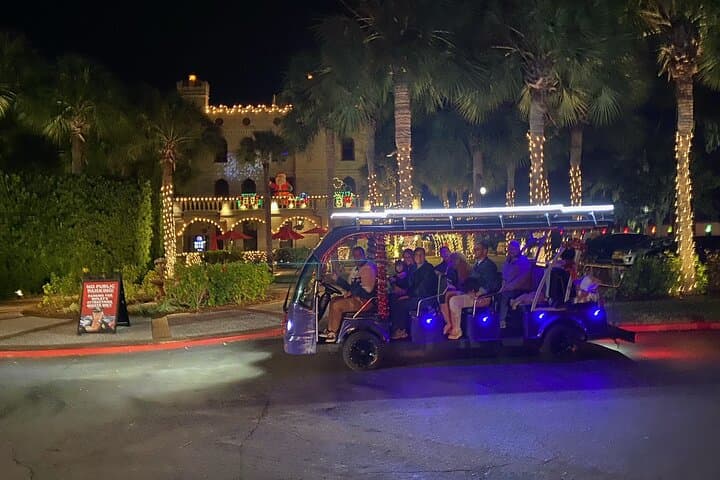
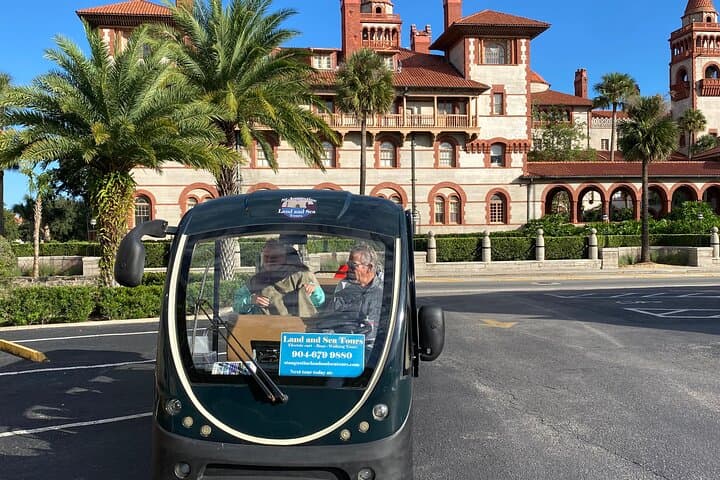
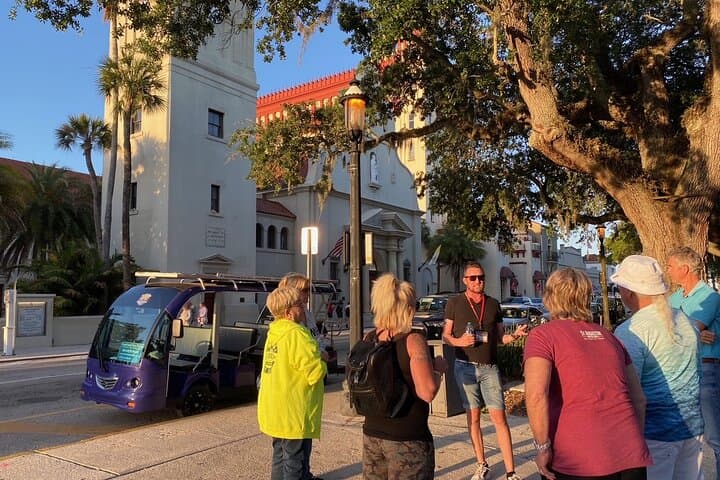
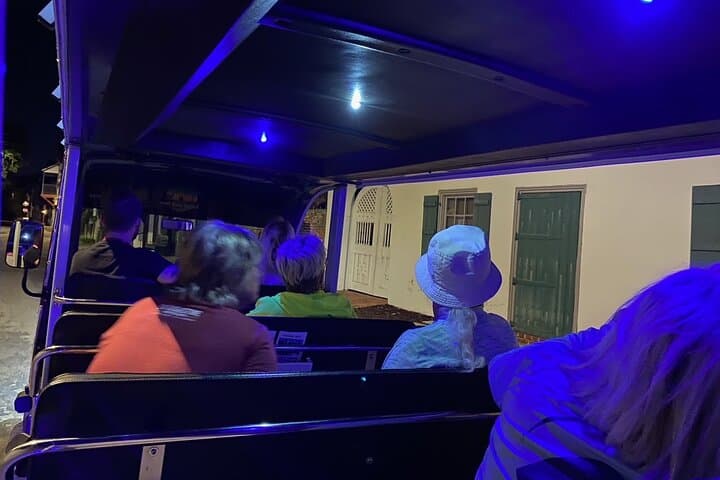
A humid Atlantic wind lifts cold flecks of story off the cobbles as the electric cart hums to life at Plaza de la Constitución. Streetlamps throw long shadows across Flagler-era ironwork while a guide’s voice stitches together reports of footsteps in empty corridors, orbs in the graveyard and sightings at the old college. The city feels like a character—its walls hold memory, its plazas hold pauses.
A humid Atlantic wind lifts cold flecks of story off the cobbles as the electric cart hums to life at Plaza de la Constitución. Streetlamps throw long shadows across Flagler-era ironwork while a guide’s voice stitches together reports of footsteps in empty corridors, orbs in the graveyard and sightings at the old college. The city feels like a character—its walls hold memory, its plazas hold pauses.
St. Augustine is the nation’s oldest continuously occupied European settlement, founded in 1565; the Spanish fortifications, Victorian hotels and narrow streets are the physical echoes of four centuries. Geology here is coastal plain—sandy soils and low-relief bluffs that meet the Matanzas River—so historic structures sit close to the water and to layers of human history. Local culture blends Spanish, British and Gullah influences, and evening storytelling is part theatrical, part folklore preservation.
Practical guidance: the shared 75-minute tour covers Flagler College, Castillo de San Marcos, Huguenot and Tolomato cemeteries, Charlotte Street and other downtown hotspots; several short stops let passengers step out for photos. Vehicles are electric carts—easy on the knees but expect to climb in and out. Tours run year-round; evenings are cooler and more atmospheric but can be breezy. Bring a charged phone or camera; complimentary photos are included. Wear closed-toe shoes for quick exits, and a light layer after sundown. For groups larger than standard capacity contact the operator. The route is suitable for most visitors but is not a wheelchair-accessible ramped vehicle—ask ahead about specific accessibility needs. Book in advance for weekend nights during peak season.