THE ADVENTURE COLLECTIVE® · Independent discovery and booking for outdoor travel

Walk 90 minutes through America’s oldest city from the Castillo de San Marcos to Flagler College with a licensed local guide. This free tour covers the major sights, local stories and practical history—ideal for first-time visitors who want a concise orientation.
Walk 90 minutes through America’s oldest city from the Castillo de San Marcos to Flagler College with a licensed local guide. This free tour covers the major sights, local stories and practical history—ideal for first-time visitors who want a concise orientation.
You step off the Bridge of Lions and the Atlantic breeze finds you—salt on the air, gulls arguing overhead, and the pale face of the Castillo de San Marcos rising from Matanzas Bay. The 90-minute free walking tour threads through cobbled streets, pauses beneath the cathedral’s bell tower and moves past Flagler’s ornate 1888 hotel-turned-college, turning architecture and weather into an immediate story.
Verified experiences and guided adventures in the surrounding area.
Operated by St. Augustine Free Walking Tour · St. Augustine, Florida
You step off the Bridge of Lions and the Atlantic breeze finds you—salt on the air, gulls arguing overhead, and the pale face of the Castillo de San Marcos rising from Matanzas Bay. The 90-minute free walking tour threads through cobbled streets, pauses beneath the cathedral’s bell tower and moves past Flagler’s ornate 1888 hotel-turned-college, turning architecture and weather into an immediate story.
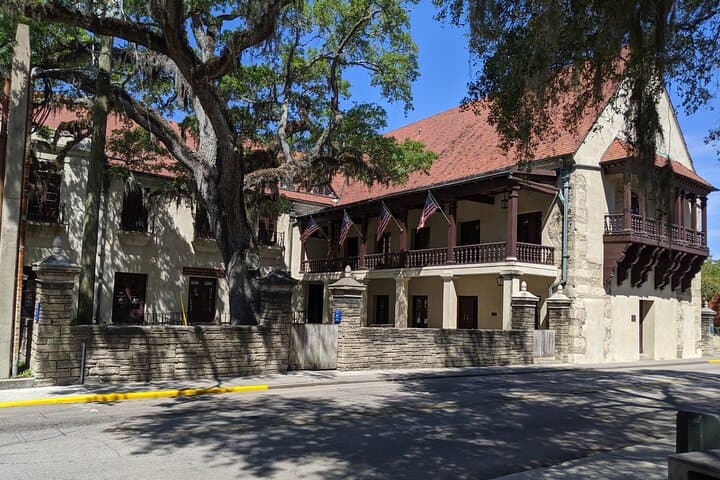
St. Augustine is the oldest continuously occupied European-established settlement in the continental United States, founded in 1565. Its layered history—Spanish, British and Gilded Age American—shows in coquina stone walls, narrow plazas and the ironwork of the colonial waterfront. Geologically the coast is a low-lying limestone platform; that soft coquina gave builders both a material to shape and a vulnerability to tides and storms.
Local culture still centers on the plaza and the waterfront, where street performers, small museums and family-run eateries share space with historic homes. Guides point out hidden details: early map lines etched into the town square, Flagler’s electric innovations, and the old shipping route that made the city a strategic port.
Practical guidance: the route covers mostly flat, wheelchair-accessible pavement with short stops at key landmarks. Wear sturdy walking shoes, carry water and a hat for sun exposure, and plan for crowds midday—early morning or late afternoon tours feel fresher. Because guides work on tips, bring cash or a digital tip ready. The tour gives a compact, orientation-rich primer on a city that rewards deeper exploration afterward.
easy.
1.5 hours (90 minutes).
Suitable for most fitness levels; expect light standing and walking on paved surfaces
Yes; the itinerary notes wheelchair-accessible surfaces and most stops are reachable on paved routes—notify the operator of needs when booking.
No; the walking tour points out and discusses these sites but does not include museum or fort admissions.
Tipping is discretionary; typical amounts range from $5–$15 per person depending on group size and guide quality—larger groups may tip more.
Infants and small children in strollers are welcome; service animals are allowed. Pets typically are not advised due to tour length and heat.
Founded in 1565 by Pedro Menéndez de Avilés, St. Augustine retains colonial-era forts and plazas that reflect Spanish, British and American periods.
Coquina stone and low coastal elevations make heritage and shoreline vulnerable to erosion and sea-level rise; support local preservation groups and follow posted guidelines to protect fragile sites.
St. Augustine Free Walking Tour operates guided outdoor trips and adventures with an emphasis on safety, stewardship, and memorable experiences.
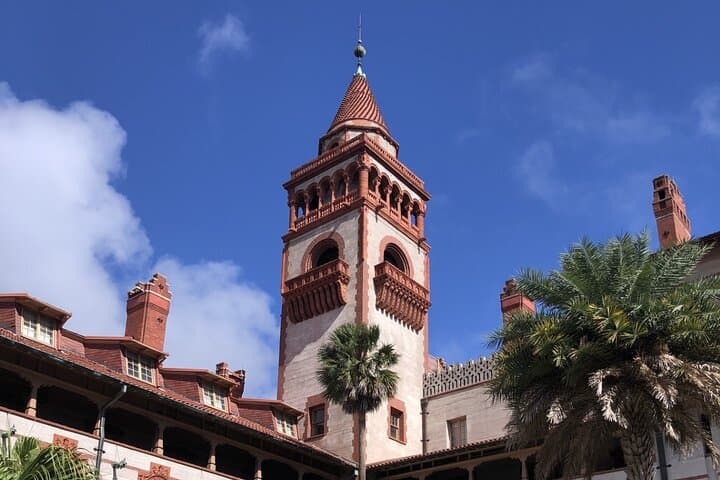
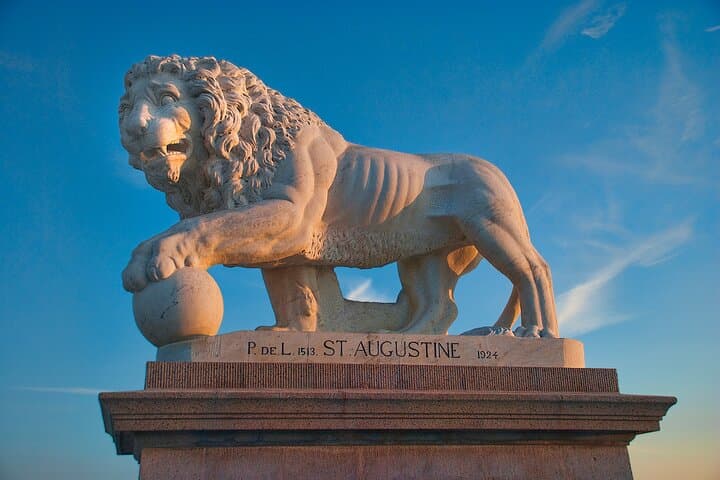
You step off the Bridge of Lions and the Atlantic breeze finds you—salt on the air, gulls arguing overhead, and the pale face of the Castillo de San Marcos rising from Matanzas Bay. The 90-minute free walking tour threads through cobbled streets, pauses beneath the cathedral’s bell tower and moves past Flagler’s ornate 1888 hotel-turned-college, turning architecture and weather into an immediate story.
You step off the Bridge of Lions and the Atlantic breeze finds you—salt on the air, gulls arguing overhead, and the pale face of the Castillo de San Marcos rising from Matanzas Bay. The 90-minute free walking tour threads through cobbled streets, pauses beneath the cathedral’s bell tower and moves past Flagler’s ornate 1888 hotel-turned-college, turning architecture and weather into an immediate story.
St. Augustine is the oldest continuously occupied European-established settlement in the continental United States, founded in 1565. Its layered history—Spanish, British and Gilded Age American—shows in coquina stone walls, narrow plazas and the ironwork of the colonial waterfront. Geologically the coast is a low-lying limestone platform; that soft coquina gave builders both a material to shape and a vulnerability to tides and storms.
Local culture still centers on the plaza and the waterfront, where street performers, small museums and family-run eateries share space with historic homes. Guides point out hidden details: early map lines etched into the town square, Flagler’s electric innovations, and the old shipping route that made the city a strategic port.
Practical guidance: the route covers mostly flat, wheelchair-accessible pavement with short stops at key landmarks. Wear sturdy walking shoes, carry water and a hat for sun exposure, and plan for crowds midday—early morning or late afternoon tours feel fresher. Because guides work on tips, bring cash or a digital tip ready. The tour gives a compact, orientation-rich primer on a city that rewards deeper exploration afterward.