THE ADVENTURE COLLECTIVE® · Independent discovery and booking for outdoor travel

Leave the coral coast for a day and follow a desert road to one of Christianity’s oldest monastic sites. This full-day trip from Hurghada combines a guided monastery tour, a spring-side walk and an optional climb to St. Anthony’s cave.
Leave the coral coast for a day and follow a desert road to one of Christianity’s oldest monastic sites. This full-day trip from Hurghada combines a guided monastery tour, a spring-side walk and an optional climb to St. Anthony’s cave.
You arrive as the desert light sharpens the ridgelines: a long ribbon of road leaves the Red Sea behind and opens onto ochre hills whispering of centuries. The Monastery of Saint Anthony sits low against a rocky amphitheater, whitewashed buildings and a squat bell tower framed by a thin, perennial creek that still bisects the compound.
Verified experiences and guided adventures in the surrounding area.
Operated by Sjptours Hurghada · Hurghada, Red Sea Governorate
You arrive as the desert light sharpens the ridgelines: a long ribbon of road leaves the Red Sea behind and opens onto ochre hills whispering of centuries. The Monastery of Saint Anthony sits low against a rocky amphitheater, whitewashed buildings and a squat bell tower framed by a thin, perennial creek that still bisects the compound.
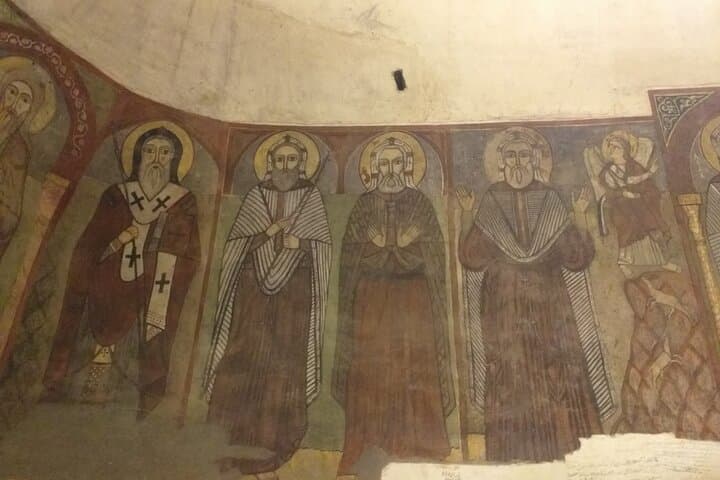
Founded in the fourth century, the monastery is one of the oldest Coptic monastic communities in the world. Its walls hold carved stones and icons layered with centuries of worship; the geology here is granite and schist folded into steep ridges, the kind of terrain that funneled hermits into sheltered caves. Cultural rhythms are slow—bells, incense, and the measured work of monks who will often walk guests through liturgy, agriculture and the monastery’s small garden.
The tour often includes a walk around the old church, the running spring, and the panoramic terraces. For those who choose it, a steep climb of roughly 1,200 carved steps leads to St. Anthony’s cave—an hour up for most, thirty minutes down—rewarding with a compact, stark view of the Eastern Desert.
Practical notes: plan an early start from Hurghada (3–4 hours round trip driving), bring sun protection and water, and wear shoes that grip stone stairs. Photography is welcome, but observe the monks’ spaces and dress codes. The visit blends history, quiet landscape, and an immersive look at monastic life—an accessible day trip that feels like stepping into a very old, living chapter of Egypt’s Christian past.
moderate.
8–10 hours.
Reasonable mobility required; able to walk uneven ground and climb up to 1,200 steps if desired.
Expect roughly 2.5–3 hours each way depending on traffic and stops; total tour time is typically 8–10 hours.
No—the climb is optional; it’s about 1,200 steps and can take up to an hour to ascend for active visitors.
Entrance to the monastery is included in many tours, but check the specific booking; lunch is typically not included and is arranged en route.
The monastery compound has accessible areas and the guide can show them, but the cave ascent is not suitable for those with mobility limitations.
Founded in the fourth century, the monastery grew around the hermit tradition of St. Anthony and became a center for Coptic monasticism for centuries.
Water is scarce and the site uses limited resources; visitors are encouraged to minimize waste, stay on paths and avoid disturbing local plantings.
Sjptours Hurghada operates guided outdoor trips and adventures with an emphasis on safety, stewardship, and memorable experiences.
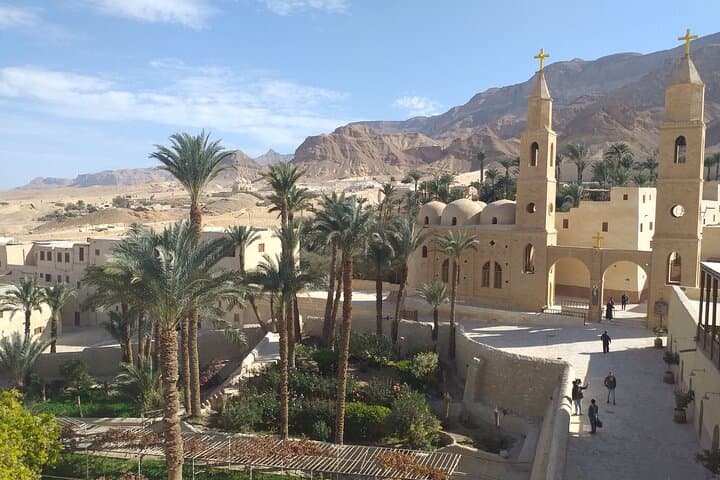
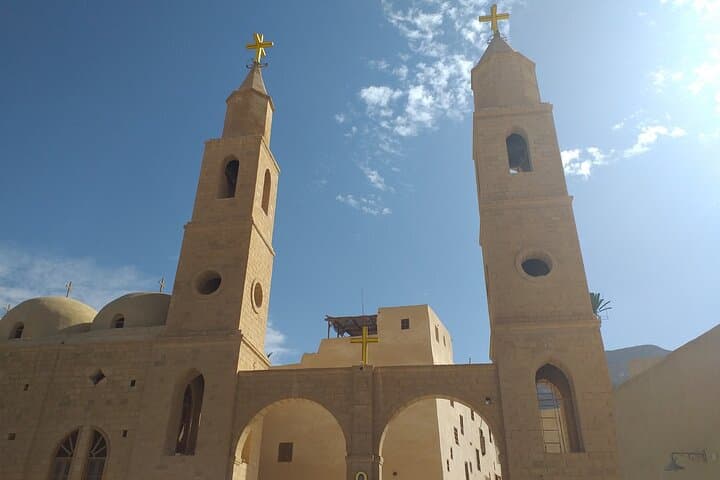
You arrive as the desert light sharpens the ridgelines: a long ribbon of road leaves the Red Sea behind and opens onto ochre hills whispering of centuries. The Monastery of Saint Anthony sits low against a rocky amphitheater, whitewashed buildings and a squat bell tower framed by a thin, perennial creek that still bisects the compound.
You arrive as the desert light sharpens the ridgelines: a long ribbon of road leaves the Red Sea behind and opens onto ochre hills whispering of centuries. The Monastery of Saint Anthony sits low against a rocky amphitheater, whitewashed buildings and a squat bell tower framed by a thin, perennial creek that still bisects the compound.
Founded in the fourth century, the monastery is one of the oldest Coptic monastic communities in the world. Its walls hold carved stones and icons layered with centuries of worship; the geology here is granite and schist folded into steep ridges, the kind of terrain that funneled hermits into sheltered caves. Cultural rhythms are slow—bells, incense, and the measured work of monks who will often walk guests through liturgy, agriculture and the monastery’s small garden.
The tour often includes a walk around the old church, the running spring, and the panoramic terraces. For those who choose it, a steep climb of roughly 1,200 carved steps leads to St. Anthony’s cave—an hour up for most, thirty minutes down—rewarding with a compact, stark view of the Eastern Desert.
Practical notes: plan an early start from Hurghada (3–4 hours round trip driving), bring sun protection and water, and wear shoes that grip stone stairs. Photography is welcome, but observe the monks’ spaces and dress codes. The visit blends history, quiet landscape, and an immersive look at monastic life—an accessible day trip that feels like stepping into a very old, living chapter of Egypt’s Christian past.