THE ADVENTURE COLLECTIVE® · Independent discovery and booking for outdoor travel

Drive the Firth of Forth, stroll Anstruther’s harbor, and cross the Swilcan Bridge on a private day tour from Edinburgh that pairs engineering, medieval ruins, and golf history. Ideal for travelers who want focused sightseeing with room to customize.
Drive the Firth of Forth, stroll Anstruther’s harbor, and cross the Swilcan Bridge on a private day tour from Edinburgh that pairs engineering, medieval ruins, and golf history. Ideal for travelers who want focused sightseeing with room to customize.
You step out of the city air into salt and wind as the road unfurls toward the Firth of Forth—three bridges punctuating the skyline like chapters in Scotland’s engineering story. The driver-guide eases the group to viewpoints where the iron lattice of the UNESCO-listed Forth Bridge throws long shadows across the water, and the newer spans slice a modern line through the estuary.
Verified experiences and guided adventures in the surrounding area.
Operated by Ed Private Tours · St Andrews, Scotland
You step out of the city air into salt and wind as the road unfurls toward the Firth of Forth—three bridges punctuating the skyline like chapters in Scotland’s engineering story. The driver-guide eases the group to viewpoints where the iron lattice of the UNESCO-listed Forth Bridge throws long shadows across the water, and the newer spans slice a modern line through the estuary.
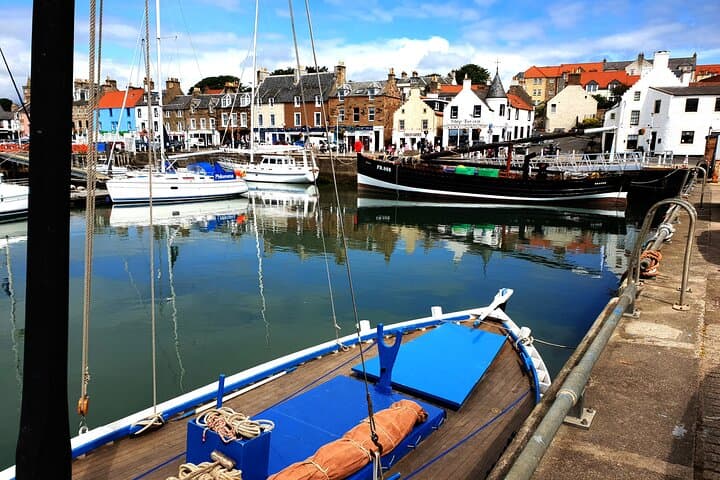
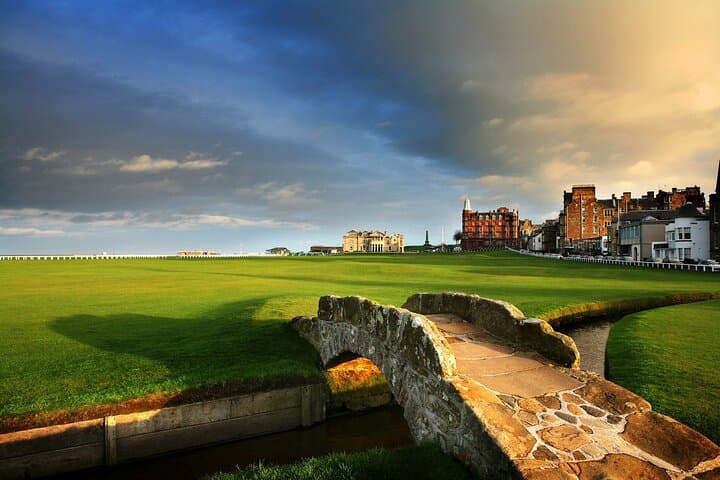
The route moves east into fishing villages such as Anstruther, where harbors and smoked-fish shops testify to a maritime economy that shaped the coastline. St Andrews arrives with stone streets, the stone hulks of a 12th‑century cathedral, and the Old Course—where low dunes and wind-hardened fairways made golf a game of survival and skill. Falkland Palace, a royal retreat with Renaissance rooms and formal gardens, closes the loop on centuries of noble life in Fife.
Geology here is simple and visible: sedimentary sandstone and siltstone undercut by the North Sea, cliffs and beaches sculpted by tidal energy that will insist you move with it. Culture appears in university cloisters, the hurried cadence of students, and the plate of fish and chips at the harbor.
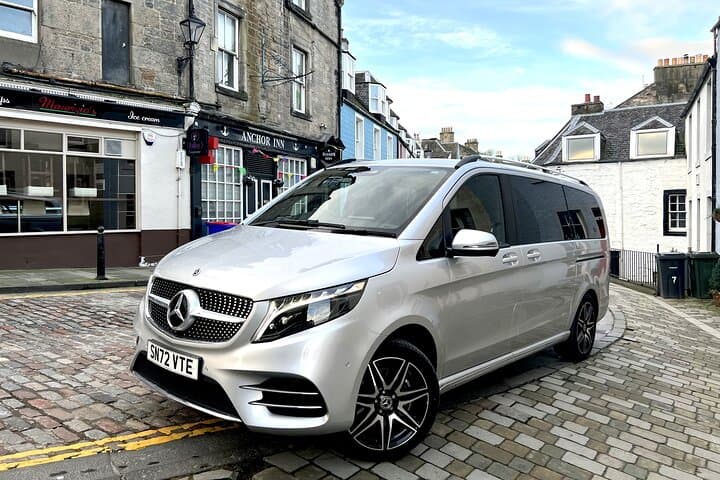
Practicalities: this private, 8‑hour tour runs from Edinburgh with air‑conditioned transport, bottled water, and child booster seats available; some sites charge entry (castle ~£7.50, Falkland Palace ~£13). Expect short walks on uneven stone, coastal wind, and flexible stop times—carry layers, waterproof footwear, and permission to customize the itinerary if you need more time at any single site.
easy.
8 hours.
Suitable for most fitness levels; involves multiple short walks (10–60 minutes) on uneven ground.
The tour is approximately 8 hours and typically departs from central Edinburgh (West Register Office area); exact pickup details are provided the day before.
No—admission to St Andrews Castle and Falkland Palace is usually not included; expect roughly £7.50 and £13 respectively depending on season.
Children aged 5+ are welcome with booster seats available; the tour involves short walks on uneven surfaces so limited mobility travelers should contact the operator to discuss accessibility options.
Yes—this private small-group tour can be adjusted within the time available; discuss priorities with your guide when booking or at pickup.
St Andrews grew from an 8th‑century religious center into a medieval university town; its cathedral ruins and university buildings chart Scotland’s ecclesiastical and academic history.
Coastal erosion and trampling on dune habitats are active concerns—keep to marked paths, avoid disturbing bird nesting sites, and follow local leave-no-trace guidance.
Ed Private Tours operates guided outdoor trips and adventures with an emphasis on safety, stewardship, and memorable experiences.

You step out of the city air into salt and wind as the road unfurls toward the Firth of Forth—three bridges punctuating the skyline like chapters in Scotland’s engineering story. The driver-guide eases the group to viewpoints where the iron lattice of the UNESCO-listed Forth Bridge throws long shadows across the water, and the newer spans slice a modern line through the estuary.
You step out of the city air into salt and wind as the road unfurls toward the Firth of Forth—three bridges punctuating the skyline like chapters in Scotland’s engineering story. The driver-guide eases the group to viewpoints where the iron lattice of the UNESCO-listed Forth Bridge throws long shadows across the water, and the newer spans slice a modern line through the estuary.
The route moves east into fishing villages such as Anstruther, where harbors and smoked-fish shops testify to a maritime economy that shaped the coastline. St Andrews arrives with stone streets, the stone hulks of a 12th‑century cathedral, and the Old Course—where low dunes and wind-hardened fairways made golf a game of survival and skill. Falkland Palace, a royal retreat with Renaissance rooms and formal gardens, closes the loop on centuries of noble life in Fife.
Geology here is simple and visible: sedimentary sandstone and siltstone undercut by the North Sea, cliffs and beaches sculpted by tidal energy that will insist you move with it. Culture appears in university cloisters, the hurried cadence of students, and the plate of fish and chips at the harbor.
Practicalities: this private, 8‑hour tour runs from Edinburgh with air‑conditioned transport, bottled water, and child booster seats available; some sites charge entry (castle ~£7.50, Falkland Palace ~£13). Expect short walks on uneven stone, coastal wind, and flexible stop times—carry layers, waterproof footwear, and permission to customize the itinerary if you need more time at any single site.