THE ADVENTURE COLLECTIVE® · Independent discovery and booking for outdoor travel

Turn flashes into names — this SSI Fish ID Specialty pairs classroom basics with two guided dives off Tenerife’s southern lava reefs. Learn family-level ID, survey techniques and practical dive planning in a single half-day course.
Turn flashes into names — this SSI Fish ID Specialty pairs classroom basics with two guided dives off Tenerife’s southern lava reefs. Learn family-level ID, survey techniques and practical dive planning in a single half-day course.
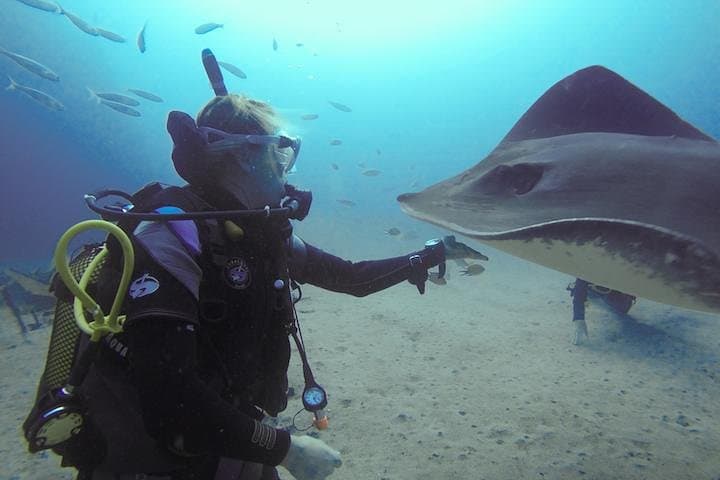
Surface glare on the Atlantic eases as your instructor points to a flash of yellow through the kelp — the first moment the course delivers: a name for the shape you’ve been admiring.
Verified experiences and guided adventures in the surrounding area.
Operated by GooDiving · Golf del Sur, Tenerife
Surface glare on the Atlantic eases as your instructor points to a flash of yellow through the kelp — the first moment the course delivers: a name for the shape you’ve been admiring.
This SSI Fish Identification Specialty in Tenerife pairs classroom fundamentals with two guided dives off the island’s southern coast, where lava-formed reefs and submerged boulder fields concentrate reef life. The curriculum focuses on family-level ID, key visual markers, and survey techniques so you stop guessing and start recognizing: body shapes, fin counts, and behavioural cues that cross oceans even when colors differ.
Tenerife’s coastline is volcanic — pillow lavas and cliffs create crevices, ledges, and microhabitats that support wrasse, parrotfish and small octopus. The course sits inside the archipelago’s long maritime history: local fishermen and modern marine biologists alike have long relied on an intimate knowledge of species distributions.
Practically, expect a half-day commitment (about four hours), supplied learning materials, equipment hire and minivan pickup in the Golf del Sur area. You’ll practice ID techniques on pre-dive briefings, apply them across two shallow-to-moderate dives, and learn survey organization and recordkeeping.
Bring a logbook or waterproof slate, practice neutral buoyancy beforehand, and time the course outside of the windiest afternoons for calmer surface intervals. The payoff is immediate: the next reef you visit, a glance becomes recognition, and your dives gain a new, purposeful rhythm.
easy.
3–4 hours.
Suitable for people in basic swimming shape; comfortable being in open water and able to perform simple surface swims.
Open Water certification is recommended so you can complete the in-water survey dives, though some operators may allow confined-water participation for non-certified students—check with the provider.
The program is approximately four hours and includes two guided identification dives plus accompanying briefing and study materials.
Yes — SSI issues a specialty recognition documenting your completed learning and dive experience, useful for future dive planning and logbooks.
Yes; basic scuba equipment hire is included, but many divers bring a personal mask and logbook for comfort and accuracy.
Tenerife’s coast is the product of repeated volcanic flows; those lava formations have created complex reef structures that support rich local fisheries and diving sites.
Several dive sites around Tenerife are managed with no-take pockets and strong local awareness; practice zero-touch diving, record sightings responsibly, and avoid anchoring on reefs.
GooDiving operates guided outdoor trips and adventures with an emphasis on safety, stewardship, and memorable experiences.
Surface glare on the Atlantic eases as your instructor points to a flash of yellow through the kelp — the first moment the course delivers: a name for the shape you’ve been admiring.
Surface glare on the Atlantic eases as your instructor points to a flash of yellow through the kelp — the first moment the course delivers: a name for the shape you’ve been admiring.
This SSI Fish Identification Specialty in Tenerife pairs classroom fundamentals with two guided dives off the island’s southern coast, where lava-formed reefs and submerged boulder fields concentrate reef life. The curriculum focuses on family-level ID, key visual markers, and survey techniques so you stop guessing and start recognizing: body shapes, fin counts, and behavioural cues that cross oceans even when colors differ.
Tenerife’s coastline is volcanic — pillow lavas and cliffs create crevices, ledges, and microhabitats that support wrasse, parrotfish and small octopus. The course sits inside the archipelago’s long maritime history: local fishermen and modern marine biologists alike have long relied on an intimate knowledge of species distributions.
Practically, expect a half-day commitment (about four hours), supplied learning materials, equipment hire and minivan pickup in the Golf del Sur area. You’ll practice ID techniques on pre-dive briefings, apply them across two shallow-to-moderate dives, and learn survey organization and recordkeeping.
Bring a logbook or waterproof slate, practice neutral buoyancy beforehand, and time the course outside of the windiest afternoons for calmer surface intervals. The payoff is immediate: the next reef you visit, a glance becomes recognition, and your dives gain a new, purposeful rhythm.