THE ADVENTURE COLLECTIVE® · Independent discovery and booking for outdoor travel

Pedal past Dal Lake and into the Zabarwan foothills on a 50 km day tour that pairs gentle climbs with Mughal gardens and a dawn floating market. Expect paved village roads, short steep sections and steady cultural highlights.
Pedal past Dal Lake and into the Zabarwan foothills on a 50 km day tour that pairs gentle climbs with Mughal gardens and a dawn floating market. Expect paved village roads, short steep sections and steady cultural highlights.
Dawn breaks over Dal Lake and the shikaras are silhouettes against a pale gold horizon. Cyclists move off with the air still cool, pedals turning along lakeside paths where the Himalayas loom like an attentive audience. The route threads around Dal Lake, climbs into the Zabarwan foothills and drops into terraced Mughal gardens that open like stages — Nishat, Cheshma Shahi, Pari Mahal — each with its own stone steps, fountains and viewlines.
Verified experiences and guided adventures in the surrounding area.
Operated by MTB Kashmir · Srinagar, Jammu and Kashmir
Dawn breaks over Dal Lake and the shikaras are silhouettes against a pale gold horizon. Cyclists move off with the air still cool, pedals turning along lakeside paths where the Himalayas loom like an attentive audience. The route threads around Dal Lake, climbs into the Zabarwan foothills and drops into terraced Mughal gardens that open like stages — Nishat, Cheshma Shahi, Pari Mahal — each with its own stone steps, fountains and viewlines.
These gardens date to the 17th century when Mughal patrons shaped Srinagar’s slopes into geometric terraces fed by natural springs. Geologically, the Zabarwan Range is a compact ridge of resistant rock above the Kashmir Valley; expect short steep pitches rather than long alpine climbs — cumulative elevation gain on a 50 km loop is moderate with a few sustained ascents to viewpoints.
Culturally the route crosses neighborhoods where houseboats, morning markets and chai stalls keep time with the day. The floating vegetable market early in the morning is a practical snapshot of local life.
Practical guidance: this is a full-day ride (3–7 hours depending on stops), mostly on paved or well-packed village roads with occasional gravel shoulders. Guides and support vehicles are standard; carry hydration, sun protection and a light layer for wind on exposed ridgelines. Start early to avoid traffic and to see the market at dawn. Mechanical support is usually available but basic bike-handling skills and comfort with short climbs will make the day easier. Respect local customs when stopping in residential areas and avoid littering on lake shores to protect the fragile wetland ecology.
moderate.
3–7 hours.
Suitable for riders with regular cycling experience and basic endurance; you should be comfortable riding up to 50 km with short climbs.
The tour covers about 50 km with moderate cumulative elevation and a few short steep climbs; total time ranges 3–7 hours depending on stops.
Yes — high-quality mountain bikes (Trek Marlin 6 frame sizes) and helmets are typically provided along with a mechanic and guide support.
Yes—guides can pace the group and a support vehicle is available, but basic cycling fitness and confidence on mixed roads are recommended.
If you start at dawn you can experience the floating market on Dal Lake when vendors arrive in shikaras to trade produce.
Many of Srinagar’s Mughal gardens were laid out in the 17th century by royal patrons; their terraced plans use natural springs from the Zabarwan hills.
Dal Lake and surrounding wetlands face pressure from pollution and invasive weeds; avoid plastic waste, stick to marked paths and choose operators who support local cleanup efforts.
MTB Kashmir operates guided outdoor trips and adventures with an emphasis on safety, stewardship, and memorable experiences.
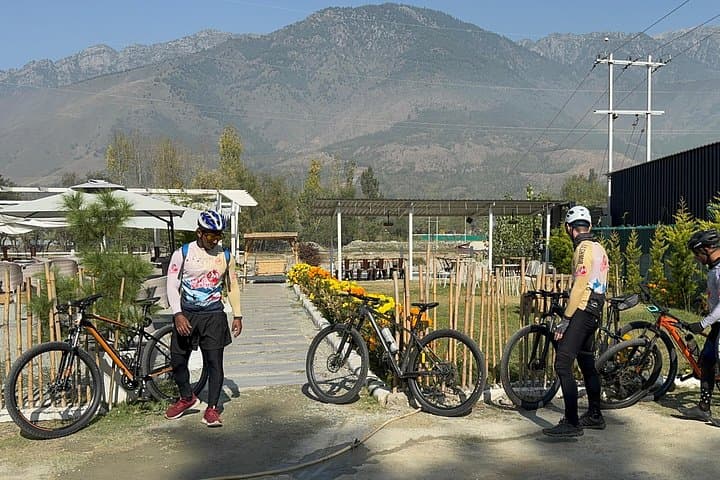
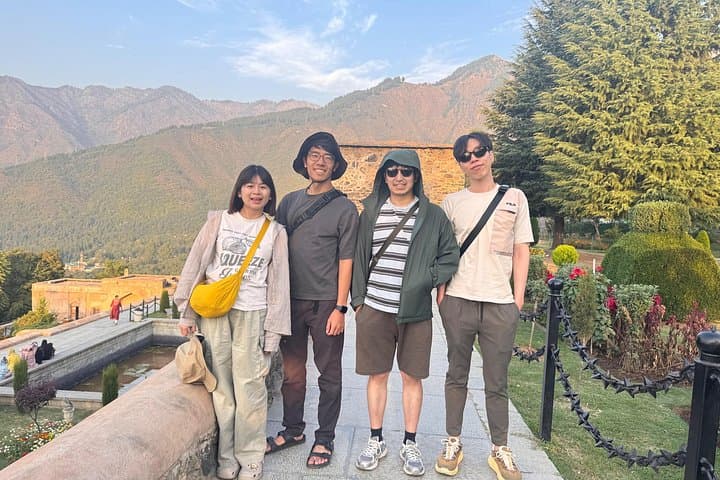
Dawn breaks over Dal Lake and the shikaras are silhouettes against a pale gold horizon. Cyclists move off with the air still cool, pedals turning along lakeside paths where the Himalayas loom like an attentive audience. The route threads around Dal Lake, climbs into the Zabarwan foothills and drops into terraced Mughal gardens that open like stages — Nishat, Cheshma Shahi, Pari Mahal — each with its own stone steps, fountains and viewlines.
Dawn breaks over Dal Lake and the shikaras are silhouettes against a pale gold horizon. Cyclists move off with the air still cool, pedals turning along lakeside paths where the Himalayas loom like an attentive audience. The route threads around Dal Lake, climbs into the Zabarwan foothills and drops into terraced Mughal gardens that open like stages — Nishat, Cheshma Shahi, Pari Mahal — each with its own stone steps, fountains and viewlines.
These gardens date to the 17th century when Mughal patrons shaped Srinagar’s slopes into geometric terraces fed by natural springs. Geologically, the Zabarwan Range is a compact ridge of resistant rock above the Kashmir Valley; expect short steep pitches rather than long alpine climbs — cumulative elevation gain on a 50 km loop is moderate with a few sustained ascents to viewpoints.
Culturally the route crosses neighborhoods where houseboats, morning markets and chai stalls keep time with the day. The floating vegetable market early in the morning is a practical snapshot of local life.
Practical guidance: this is a full-day ride (3–7 hours depending on stops), mostly on paved or well-packed village roads with occasional gravel shoulders. Guides and support vehicles are standard; carry hydration, sun protection and a light layer for wind on exposed ridgelines. Start early to avoid traffic and to see the market at dawn. Mechanical support is usually available but basic bike-handling skills and comfort with short climbs will make the day easier. Respect local customs when stopping in residential areas and avoid littering on lake shores to protect the fragile wetland ecology.