THE ADVENTURE COLLECTIVE® · Independent discovery and booking for outdoor travel

Travel from Sarajevo to Srebrenica for a solemn, curator-led study tour of the Potočari Memorial and museum. This full-day trip pairs a mountain drive with first-hand testimony and time at the memorial cemetery.
Travel from Sarajevo to Srebrenica for a solemn, curator-led study tour of the Potočari Memorial and museum. This full-day trip pairs a mountain drive with first-hand testimony and time at the memorial cemetery.
The bus eases out of Sarajevo and the city’s edge folds into karst hills and spruce-dark ridges. Windows frame a slow-changing landscape: river-cut valleys, small stone hamlets, and a high road that gives occasional, raw views over the Drina River. By the time the group reaches Potočari, the air feels deliberate—cool, quiet, and heavy with history.
Verified experiences and guided adventures in the surrounding area.
Operated by Meet Bosnia Travel · Srebrenica, Republika Srpska
The bus eases out of Sarajevo and the city’s edge folds into karst hills and spruce-dark ridges. Windows frame a slow-changing landscape: river-cut valleys, small stone hamlets, and a high road that gives occasional, raw views over the Drina River. By the time the group reaches Potočari, the air feels deliberate—cool, quiet, and heavy with history.
Srebrenica is a place where geography meets geopolitics. Once an industrial town and UN-declared safe area, it became the site of the July 1995 massacre that is widely recognized as genocide. The memorial complex at Potočari—whose cemetery holds over 6,500 identified victims—opened in 2003 and includes a contemporary museum, curator-led exhibits, and a Memorial Room where survivor testimony is preserved.
The drive itself is instructive: the eastern Bosnian highlands reveal limestone ridges, mixed forests, and scattered Orthodox and Muslim villages that reflect the region’s layered culture. Guides commonly frame what you see with concise histories of the breakup of Yugoslavia and the role of international forces during the war.
Practically, expect a full day: round-trip transport from Sarajevo, museum time with a curator, cemetery visit, and a simple local lunch. The tour emphasizes respectful behavior—silence at gravesites, no intrusive photography during testimonies—and provides emotional context through survivor accounts.
Bring warm layers, a charged phone, and patience for reflection. This is not a sightseeing tick-box; it is a study in memory, accountability, and the long work of rebuilding communities.
easy.
10 hours.
Suitable for most fitness levels; the day involves sitting during transport and short, gentle walks at sites
The tour is a full-day excursion of about 10 hours round-trip, including a roughly 2.5-hour drive each way and time at the museum and memorial.
Children are allowed but must be accompanied by an adult; the subject matter can be emotionally difficult and may not be appropriate for young children.
Yes — the itinerary includes curator-led exhibits and recorded or live survivor accounts in the Memorial Room; guides provide historical context throughout the day.
Dining options are limited to local cafés or a simple lunch provided by the tour; travelers may want to notify the operator of dietary needs in advance.
Srebrenica was declared a UN safe area in the early 1990s but in July 1995 became the site of mass killings; the Potočari memorial opened in 2003 to inter identified victims and preserve survivor testimony.
Visitors are asked to treat memorial markers and exhibits with care; supporting local museums and survivor-led projects helps fund ongoing identifications and community programs.
Meet Bosnia Travel operates guided outdoor trips and adventures with an emphasis on safety, stewardship, and memorable experiences.

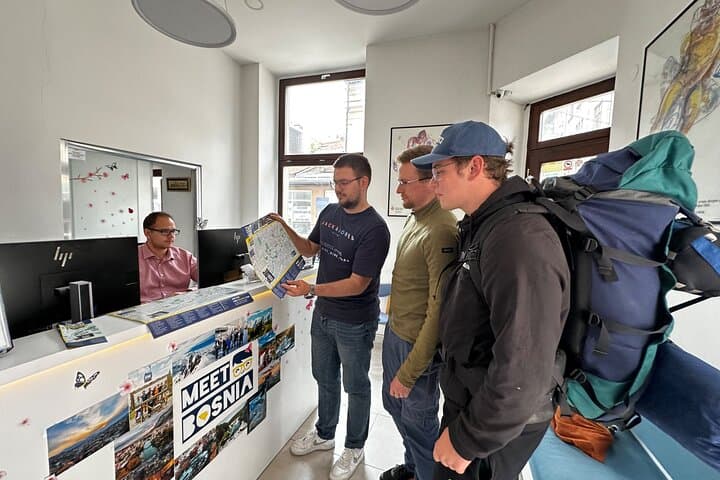


The bus eases out of Sarajevo and the city’s edge folds into karst hills and spruce-dark ridges. Windows frame a slow-changing landscape: river-cut valleys, small stone hamlets, and a high road that gives occasional, raw views over the Drina River. By the time the group reaches Potočari, the air feels deliberate—cool, quiet, and heavy with history.
The bus eases out of Sarajevo and the city’s edge folds into karst hills and spruce-dark ridges. Windows frame a slow-changing landscape: river-cut valleys, small stone hamlets, and a high road that gives occasional, raw views over the Drina River. By the time the group reaches Potočari, the air feels deliberate—cool, quiet, and heavy with history.
Srebrenica is a place where geography meets geopolitics. Once an industrial town and UN-declared safe area, it became the site of the July 1995 massacre that is widely recognized as genocide. The memorial complex at Potočari—whose cemetery holds over 6,500 identified victims—opened in 2003 and includes a contemporary museum, curator-led exhibits, and a Memorial Room where survivor testimony is preserved.
The drive itself is instructive: the eastern Bosnian highlands reveal limestone ridges, mixed forests, and scattered Orthodox and Muslim villages that reflect the region’s layered culture. Guides commonly frame what you see with concise histories of the breakup of Yugoslavia and the role of international forces during the war.
Practically, expect a full day: round-trip transport from Sarajevo, museum time with a curator, cemetery visit, and a simple local lunch. The tour emphasizes respectful behavior—silence at gravesites, no intrusive photography during testimonies—and provides emotional context through survivor accounts.
Bring warm layers, a charged phone, and patience for reflection. This is not a sightseeing tick-box; it is a study in memory, accountability, and the long work of rebuilding communities.